Unknown's avatar

About shepherdbryan

My passion is to disciple and see men discipled in every area of their life to see the multiplication principle actually work in a 100 year generational blessing. As go men in the church, so goes the church. As go men in the nation, so goes the nation. Fortunately, because men have often not taken their spiritual role to the limit, God has raised up many godly women to carry the torch where men have laid it aside. May God rapidly raise up men for the next generation of leaders to the Fourth Generation of spiritual leaders! As men lead in a godly way, women will follow in a godly way and that people will be blessed of the Lord.

Q & A: How do you Evaluate Music?

This Question and Answer serves as suggested answers regarding the Message Based Discussion Questions from the message presented on April 28, 2013. These are only suggestions and there is room for many more in discussion groups. The manuscript for the message was posted on April 29, 2013.

How do you Evaluate Music?
Ephesians 4:29


What music is appropriate to worship God?
1)      Music communicates meaning Ex. 32:17-19
  • Music communicates war Ex. 32:17-19 
  • Music communicates refreshment 1 Sam. 16:14, 17-18, 23
  • Music communicates emotionally
    • Laments Job 30:31; Love song Is. 5:1
2)      Music communicates by association like a symbol
  • A symbol communicates something
  • Conventional Association
  • Natural Association
 3)  Evaluate music by Scripture Eph. 4:29

  • There is both edifying and corrupt communication Eph. 4:29
  • Bad association can corrupt 1 Cor. 15:33
  • Associate with what edifies 1 Cor. 10:23 
  • Application:
  • 1 Cor. 8:4, 9-13   

Corrupt
Edifying
 
Avoid at all times
Fitting
Unfitting
Negative Association
Positive Association
 
Avoid for this occasion
Room for preferences

Evaluate your music by Scripture to what is fitting for the King!
Philippians 4:8-9
 

Message Based Discussion Questions
1)      What kinds of music do you like?
Digging Deeper:
2)      According to Ephesians 5:18-20, how is the Christian to be filled?  __________________  What will be the result if a Christian is filled with the Holy Spirit?  What will that look like in Church?
3)      What idea is found in both Eph. 5:20 and Rom. 1:21? ________________________  What is the contrast between the two verses?  What will be true of the believer who is filled with the Holy Spirit compared to the unbeliever who is not filled?  So, if a believer is not giving thanks, what does that say about his life?
4)      As a reference to Satan, what does Ezek. 28:12-15 say Satan was good at (cf. 28:13c)? ______________________________  How do you suppose this might have caused his fall?
Applying the message to life:
5)      If music is like a plate that serves food, why should the plate fit the occasion?
6)      What are several examples of conventional associations in regard to music?  When you hear a particular song, what do you think of without hearing the lyrics?
7)      If there is room for preference, how do I discern what I should not listen to in life? 

Message Based Discussion Questions

1)      What kinds of music do you like?

a)      Classical, Country Western, Big Band, Traditional church music, Contemporary, Gregorian chants, Men’s Chorale and Military Marches.

b)      I like most music, depending on the setting, but there are some that seem corruptible.

Digging Deeper:

2)      According to Ephesians 5:18-20, how is the Christian to be filled?  __with the Spirit; dependence upon Him__  What will be the result if a Christian is filled with the Holy Spirit?  What will that look like in Church?

a)      The result will be speaking to one another in psalms and hymns and spiritual songs , i.e. singing to one another.  We will be giving thanks to God for the salvation we enjoy, the relationship with God and the opportunity to serve Him in worship.

b)      It will look like a unified chorus of people singing to God, while also singing to and for each other.  There will be joy on their faces as they consider what can happen in life when God the Holy Spirit is filling (controlling)(Gal. 5:22-23).  People will warmly welcome and encourage each other, exhorting to love and good deeds and talking about God’s mighty deeds.
 

3)      What idea is found in both Eph. 5:20 and Rom. 1:21? _giving thanks to God__  What is the contrast between the two verses?  What will be true of the believer who is filled with the Holy Spirit compared to the unbeliever who is not filled?  So, if a believer is not giving thanks, what does that say about his life?

a)      The contrast between the verses is the contrast of the Spirit-filled believer and the rebellious unbeliever.

b)       The Spirit-filled believer will be in the habit of giving thanks in everything (1 Thes. 5:18) and displaying a thankful heart in prayer (Phil. 4:6) rather than grumbling (Phil. 2:14).  The unbeliever who is not filled might give thanks for benefits he gets, but he doesn’t see how God works things together for good and doesn’t thank God in all situations for His watch-care and provision.  The unbeliever certainly doesn’t give thanks in singing to God.  He doesn’t glorify God as God and he exchanges the glory of the Father for the corruptions of the creature.

c)      If a believer is not giving thanks, he is not filled with the Spirit.   He is living a carnal, fleshly life.  He is depending on himself and he is not living by faith.  He is living in sin, even though he is a child of God (1 Cor. 3:1-3).

4)      As a reference to Satan, what does Ezek. 28:12-15 say Satan was good at (cf. 28:13c)? _ The workmanship of your timbrels and pipes –this refers to his musical abilities, both instrumentally and vocally___  How do you suppose this might have caused his fall?

a)      He was leading worship of God among the angels.  He had the voice of a pipe (pipes) organ. With the power of music, he led 1/3 of the angels to rebel against God and thus be condemned. 

b)      Somehow this may have led to his arrogance of ability and leadership to cause the angels to fall.  Note Is. 14:12-14. 

Applying the message to life: 

5)      If music is like a plate that serves food, why should the plate fit the occasion?

a)      The dish is the medium or mechanism that delivers the food.

b)      The dish conveys meaning to the food and to the occasion.

c)      A paper plate is great for picnics; fine china is fitting for a king and special occasions.

d)     Music also says something about the occasion and the truth that it (music) serves.


6)      What are several examples of conventional associations in regard to music?  When you hear a particular song, what do you think of without hearing the lyrics?

a)      Movie scores, like “Out of Africa” convey the great vastness of the continent of Africa or “Star Wars” the majesty of space or “The Sound of Music” that lifts the heart to the mountains. Other associations might include:

i)        Snare drum with marching

ii)      Salpinx trumpet marked pronouncements and fanfare of something important.

iii)    Flute playing soft, gentle flowing emotional music, but it can also play strong alive Scottish music.

iv)    Star Spangled Banner represents freedom, men and women who fought and died for liberty.

v)      Music of “Jesus Loves Me” is universal.

vi)    Lullaby for putting babies to sleep as gentle quieting music.

vii)  Hard Rock and Roll for rebellion and sex.

viii)            Death Metal for raging angry rebellion.

b)      When I hear the song, I think of the symbol it conveys.  For example:

i)        Soft music – caring, soothing

ii)      Death Metal for raging madness.  Maybe this would be good for soldiers going into battle when hand-to-hand combat is expected.  What do you think?

iii)    Put in different words and the original meaning is still what comes out.  Put different words to music and the message may not change.  How loud or powerful is the music compared to the lyrics.  For example, the lyrics of “Amazing Grace” fit the metrics of “House of the Rising Sun,” but the words are not a good fit for the music, because the music and lyrics of “House of the Rising Sun” carries dark meaning from the drug years of the 60s and 70s.


7)      If there is room for preference, how do I discern what I should not listen to in life?

a)      First go to the lyrics. If they are not appropriate, then avoid.

b)      Then consider how secular artists describe their music.  Many Hard Rock artists define their music is about rebellion and sexuality.  What is the meaning behind other music like Death Metal or Hip hop or other forms of music?  Do we want to be named by them?  Just because Christian lyrics can be put to modes or forms of music, is it wise?

c)      Then, and from the beginning, stay in Scripture searching for the holiness of God and ask what is appropriate for carrying the truth of God’s Word and exalting a holy God.  It is not a question of what I (my flesh) like(s).  What honors the Lord? 

Question: Do Extraterrestials Exist?


Do Extraterrestrials Exist?

Good Morning America reported that 80 million Americans believe in extraterrestrials.1  Stephen Bassett, who leads the Citizen Hearing Foundation, blames the “truth embargo” on the Cold War for why Congress hasn’t investigated the issue.2  He reports that there are over 3,500 pilot sightings, but the pilots are not allowed to speak publicly by the Air Force.  Apparently, there will be hearings at the National Press Club regarding government cover-ups at Roswell, New Mexico, which is the 1947 “UFO crash site.” 

A June 2012 National Geographic survey shows that 36 percent of Americans believe aliens have visited Earth.  And 80 percent believe the government is withholding evidence.3  Many question those who question the evidence.  They claim that highly respected testimonials will be given by Apollo Astronaut Edgar Mitchell, former Canadian Minister of Defense Paul Hellver, USAF Captain Robert Salla (commander of Nuclear Missile Silo), and New York University, Rochester Professor Richard Dolan at the National Press Club. And what about Area 51 in Nevada?  This is a secretive military installation just 100 miles from Las Vegas. 

How do you make sense of all this unexplainable information and the alleged sightings?  We either don’t trust our government or we have a great deal of trust or respect for alien stealth.

            The Apostle Paul explained that these kinds of things would happen.  He recorded it in Romans 1. He writes,

20 For since the creation of the world His invisible attributes are clearly seen, being understood by the things that are made, even His eternal power and Godhead, so that they are without excuse,
 21 because, although they knew God, they did not glorify Him as God, nor were thankful, but became futile in their thoughts, and their foolish hearts were darkened.
 22 Professing to be wise, they became fools,
 23 and changed the glory of the incorruptible God into an image made like corruptible man– and birds and four-footed animals and creeping things.
 24 Therefore God also gave them up to uncleanness, in the lusts of their hearts, to dishonor their bodies among themselves,
 25 who exchanged the truth of God for the lie, and worshiped and served the creature rather than the Creator, who is blessed forever. Amen.
 26 For this reason God gave them up to vile passions. For even their women exchanged the natural use for what is against nature.
 27Likewise also the men, leaving the natural use of the woman, burned in their lust for one another, men with men committing what is shameful, and receiving in themselves the penalty of their error which was due. (Rom. 1:20-27)

Note several things. First, God’s invisible attributes are clearly seen (all-power, infinite creativity, merciful love, justice, unchangeable, etc.) by mankind, so they should acknowledge God (Rom. 1:20).  But, secondly, man did not glorify Him as God and was not thankful for all that God did and does to provide for salvation. So mankind became empty (futile) in his thoughts and his heart was darkened, so he could not understand the truth and would believe the lie (Rom. 1:21). Thirdly, mankind thinks he is so wise to determine the answers himself, rather than seeking truth from God, he becomes foolish (Rom. 1:22).  Fourthly, mankind changes his focus from the infinite God to his own man-made focus, whether “four-footed” animals or extraterrestrials (Rom. 1:23).  So, God gives mankind over to that way of thinking and it results in all sorts of immorality and distortions in thinking (Rom. 1:24).  Man wants something other than the holiness of God, so God allows man to pursue what he wants in order to show that man will never be satisfied with anything, if it is something other than God Himself.  Fifthly, mankind continues to buy into the world’s lies and focuses on the world around him rather than depend on God for all answers (Rom. 1:25).  Sixthly, we see one of the results of mankind pursuing what is not natural because he is foolish, his heart is darkened, because he wants what he wants when he wants it (Rom. 1:26-27).

            Friends, the extraterrestrials exist.  And they are another life form. Additionally, they are not of an earthly form.  They are part of the angelic realm called demons.  Demons can manifest themselves in a variety of forms. Paul writes that we battle against these spiritual forces, For we do not wrestle against flesh and blood, but against principalities, against powers, against the rulers of the darkness of this age1, against spiritual hosts of wickedness in the heavenly places.” (Eph. 6:12)  They purpose to deceive people, as Paul writes, “…with all unrighteous deception among those who perish, because they did not receive the love of the truth, that they might be saved.” (2 Thes. 2:10)  In other words, their purpose is to blind people to the Truth, so they will believe the lie, rather than the Truth and be saved from judgment to come.

            Why are they becoming more prevalent today?  It is more prevalent, because man is turning away from God in greater numbers.  When people dabble in the occult, witchcraft, psychics and fascination with the bizarre, God allows greater manifestations to demonstrate if people are not dependent on Him, they will become captivated by “extraterrestrials.”  It was after World War II, there was an attraction to eastern mysticism.  Additionally, the ease of world travel has made it much more accessible for people to bring back to the United States an appeal for answers other than the Truth of God’s Word. Drug addiction has taken many people on trips far worse than world travel with resultant devastation in objective, divine thinking. Astrology and sexual immorality replace a love of Truth and our Divine Creator, which makes room for further darkness in thinking. 

            Extraterrestials exist, but they are of the spirit world, not this world.  Search in the Scriptures and God will give you all the answers you need!


Question: If not me, who?

If not me, who?
 

I remember some of the sermons growing up and one of the significant ones was from Isaiah 6.  My pastor, Pastor Johnson, gave a message from Isaiah 6:1-8.  It reads,

In the year that King Uzziah died, I saw the Lord sitting on a throne, high and lifted up, and the train of His robe filled the temple.
 2 Above it stood seraphim; each one had six wings: with two he covered his face, with two he covered his feet, and with two he flew.
 3 And one cried to another and said: “Holy, holy, holy is the LORD of hosts; The whole earth is full of His glory!”
 4 And the posts of the door were shaken by the voice of him who cried out, and the house was filled with smoke.
 5 So I said: “Woe is me, for I am undone! Because I am a man of unclean lips, And I dwell in the midst of a people of unclean lips; For my eyes have seen the King, The LORD of hosts.”
 6 Then one of the seraphim flew to me, having in his hand a live coal which he had taken with the tongs from the altar.
 7 And he touched my mouth with it, and said: “Behold, this has touched your lips; Your iniquity is taken away, And your sin purged.”
 8 Also I heard the voice of the Lord, saying: “Whom shall I send, And who will go for Us?” Then I said, “Here am I! Send me.”   (Is. 6:1-8)

It is interesting that only one attribute of God is ever mentioned three times in a row and that is God’s holiness.  It is mentioned here in Isaiah 6:3 and also Revelation 4:8.  God is holy!  And therefore He is worthy for my response to please Him in any and every way.  However, I didn’t learn that until only recently.

            When I heard the sermon on this passage, maybe 42 years ago, it was the last verse that caught my attention and the Holy Spirit used that verse and message to persuade me commit my life to the Lord Jesus Christ. I asked myself the question, “Would I be willing to say, ‘Here I am! Send me!’” to the Lord?   I had no idea what that might mean, yet I knew I really had no choice.  He is God. 

            Then I had to ask myself, “If not me, who?”  Furthermore, I needed to ask the question, “At what point would I be willing to go?”  Or, “If not now, when?”

            What about you?  Are you willing to say, “If not me, who?” and “If not now, when?”  We Christians don’t mind connectingwith other people in a home group or church service.  We don’t mind serving the Lord in a variety of ways.  We don’t mind being equipped for service and helping out either at church or another Christian brother or sister in need.  We don’t mind learning more Scripture or practical application in service.  That is all relatively easy. Here is the real question, “Where is your fruit of multiplication?” 

            These three words compose the vision statement I developed for our church last year: Connect, Equip, Multiply:

  • Connecting together to worship God                                              1 Cor. 12:19-25
  • Equipping together in grace to be more like Christ                       Eph. 4:11-14
  • Multiplying together with the gospel to reach the world               Matt 28:18-20

Here is the question you need to ask yourself, “Who is following you so that you are investing in them?”  Your investment in them will multiply and influence future generations for the kingdom.  What is your fruit? Jesus said,I am the vine, you are the branches. He who abides in Me, and I in him, bears much fruit; for without Me you can do nothing.” (John 15:5) Is there multiplying fruit in your life?  Jesus also said,

19 “Go therefore1 and make disciples of all the nations, baptizing them in the name of the Father and of the Son and of the Holy Spirit,
 20 “teaching them to observe all things that I have commanded you; and lo, I am with you always, even to the end of the age.” Amen (Matt. 28:19-20)

Are you living a safe life of connecting and being equipped?  I praise the Lord that you are connecting and being equipped! The real Christian life is in multiplying yourself!  Multiplication is essential, so that many others will transition into future generations just like a maple tree sends out thousands of seeds to plant hundreds of trees.  Seek to become equipped to disciple others to multiply your influence in the future generations.

            Ask yourself, “If not me, who?”  And “If not now, when?”

MSG: How do you Evaluate Music?

This message was presented on April 28, 2013 as the fourth of four messages on “Music and Worship.”

How do you Evaluate Music?
Ephesians 4:29 

Harold Best, Dean of Music at Wheaton College, wrote, “There is nothing un-Christian or anti-Christian about any kind of music. By the same token, there is no such thing as Christian music. If there were, what would it be?”  This is a very popular position to take among Christians today. Is music completely neutral?   Because Scripture does not define a style of music, can we define what is Christian and what is not? What music is appropriate to worship God?

Let’s begin by noting that music communicates meaning and provide some examples. 

1)      Music communicates meaning Ex. 32:17-19 

a)      Music communicates war Ex. 32:17-19   

Joshua heard some kind of noise and it sounded like “the noise of war.”

And when Joshua heard the noise of the people as they shouted, he said to Moses, “There is a noise of war in the camp. (Ex. 32:17)

He likely went on red alert, putting his hand on his sword ready to defend the people.  Joshua thought it sounded like chaos and the tumult of war, but Moses knew the sound was something else.  

Moses knew, because the Lord told him, that the people had turned to an idol.

18 But he said: “It is not the noise of the shout of victory, Nor the noise of the cry of defeat, But the sound of singing I hear.”
 19 So it was, as soon as he came near the camp, that he saw the calf and the dancing. So Moses’ anger became hot, and he cast the tablets out of his hands and broke them at the foot of the mountain. (Ex. 32:18-19)

It was the sound of war, and used in worship.  Joshua associated it with war. This passage says nothing about the kind or style of music, but just that it suggested strong associations in Joshua’s mind.  Music also suggests a contrast of refreshment. 

b)     Music communicates refreshment 1 Sam. 16:1-23 

King Saul disobeyed God’s command to destroy the Amalekites  and Samuel told him the kingdom would be torn from him.  Samuel anointed David as king of Israel and “…the Spirit of the LORD departed from Saul, and a distressing spirit from the LORD troubled him.” (1Sa 16:14) This is likely a troubling spirit, just as when a person is angry, the devil gets a foothold and can influence your life. Ephesians 4:26-27 uses anger as the mechanism that opens the door for Satan’s influence, but any sin, like rebellion or worry can likely open that door.

Saul was astute enough to understand the power of music and requested someone to help him when he was struggling with life.

17 So Saul said to his servants, “Provide me now a man who can play well, and bring him to me.”
 18 Then one of the servants answered and said, “Look, I have seen a son of Jesse the Bethlehemite, who is skillful in playing, a mighty man of valor, a man of war, prudent in speech, and a handsome person; and the LORD is with him.” ( 1 Sam. 16:17-18)

The music addressed Saul’s emotions and provided a temporary calm.

And so it was, whenever the spirit from God was upon Saul, that David would take a harp and play it with his hand. Then Saul would become refreshed and well, and the distressing spirit would depart from him. (1 Sam. 16:23) 

This passage implies that music calmed Saul with peace and serenity to bring about a change of emotions, however, it did not cause a change of heart or bring about repentance.  Saul reveals no sign of repentance.  In fact, his heart becomes hardened as he reacts to God blessing David’s leadership as a soldier.  There are other ways music communicates.  

c)      Music communicates emotionally  

Some music is used for laments or mourning.  For example, Job writes, “My harp is turned to mourning, And my flute to the voice of those who weep.” (Job 30:31)  There is also particular music that is used for love songs as Isaiah wrote the music for God’s love for Israel, “Now let me sing to my Well-beloved A song of my Beloved regarding His vineyard: My Well-beloved has a vineyard On a very fruitful hill.” (Is. 5:1)

The Bible uses many musical instruments to describe certain emotional states.  For example, the harp is used for mourning and the flute for weeping and wailing.  These are universal emotions that all peoples share. 

Scripture implies that music communicates meaning, but not how it does. How does music communicate as a medium (or mechanism) of communication? 

2)      Music communicates by association like a symbol 

a)      A symbol communicates something 

We use symbols everywhere.  For example, what does a USA flag communicate?


What does a rose communicate? 

Symbols have associations according the culture in which it is used. Scott Aniol wrote, “Music is not emotion; it is merely symbols of emotion.  Music communicates certain moods and emotions to us because we associate its symbols with various emotional states” (Worship in Song, 62) 

There are two ways symbols communicate meaning.  One is by “Conventional Association” and another is by “Natural Association.” 

b)     Conventional Association 

Conventional Association is when a symbol is used by a particular group of people for connecting to another idea.  For example, some symbolism is man-made like “red, white and blue.”  When I asked my three-year-old granddaughter what that stood for, she said, “The American flag!”  I said, “Yes, you are right!”  Then I asked her, “What if we were in Paris, France.  What would “red, white and blue” stand for?”  She said, “The American flag!”  I responded, “Yes, it would mean that to us, but in France, the French flag is red, white and blue and the French people would think of their flag.  Then I asked her one more question, “If we were in Russia, and I said, “What does “red, white and blue” stand for?  She said, “The American flag!”  I answered, “Yes, it would mean that to us, but to the Russian people it would stand for their Russian flag.”  I added, “All three flags are made of red, white and blue, but there are different arrangements of the colors.” 

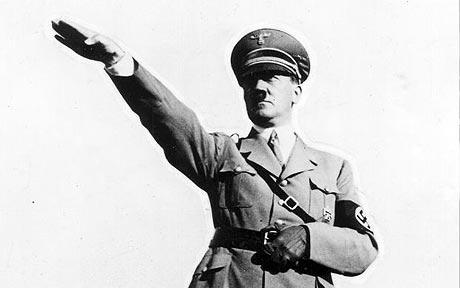
What about raising your right arm at a straight 45o angle in front of your body.  Is that associated with anything?  Remember the German Nazi salute? 


The salute is associated with terrible times.  In fact, just this Spring, one Greek soccer player has been banned from his country’s national team for life after making a Nazi salute during a game.

What about Rossini’s overture to the opera William Tell?

What picture is often associated with that music? 


How about a picture of the Lone Ranger? 


What does this song remind you of? 


http://www.hymnsite.com/lyrics/umh731.sht  Yes, “Glorious Things of Thee are Spoken.”  Shortly after World War II, an American missionary used that song in a church service in England.  Unfortunately, a British man who was visiting the missionary’s church,  stood up and stomped out. Why did he leave so abruptly? There was nothing wrong with the music in itself, because it is a great hymn of faith, but to that British man, he knew it as the German National Anthem and it was clearly associated with wickedness. 

c)      Natural Association 

There are also natural associations that we make.  For example, dark looming clouds are associated with a coming storm,

Or the symbol of a curve in the road is associated with curves in the road,


Or even a frown is associated with sadness,


They are universal symbols that convey a meaning without a word spoken.

There are some kinds of natural associations from the dynamics, tone colors, rhythms and tempos of music to help us feel a certain way.  Natural associations must fit with the context, or that kind or style of music is not used.  For example, Mendelssohn’s wedding march is not played at a football game; it is played in a church.  You will hear different kinds of music  at a tavern and the songs played in an nursery where babies are will be much different.  Again, they are universal around the world, in most cases. 

Consider the kinds of musical scores used for movies.  The scores are written to enhance the moods and emotions with a given scene regardless of the age, demographic, culture or gender of the audience.  For example,


What does this evoke?


 This is the “Star Wars” theme song.  The language used changes from country to country, but the music stays the same.  Or what about,


Sound of music.

So what does this mean?  Music by its nature is a form of communication, Music possesses some natural meanings and also conventional meanings by association.  At the heart of music is communication.  Some times the conventional association corresponds to the natural meaning like Pachelbel’s Canon in D.


The point is music communicates through symbolic associations and such association can be either conventional or natural, depending upon whether or not they correspond to something that occurs naturally in all human experience.

Now, add lyrics to a musical selection, and we have two additional layers of meaning: the obvious content of the text and the poetic “mood.” We must remember that symbolic meaning (in this case, the meaning music conveys), if it is natural, always trumps the text. This is extremely important. For instance, if I were to approach my wife with a frown, furrowed brow, and loud tone of voice (natural symbols of anger) and say to her, “I love you,” my negative tone of voice and body language would certainly overpower the positive meaning of the statement. The medium trumps the words, no matter what the words are. The same is true for music. So we must take Scripture, apply what we know to music. 

3)      Evaluate music by Scripture Eph. 4:29 

a)      There is both edifying and corrupt communication Eph. 4:29

29 Let no corrupt word proceed out of your mouth, but what is good for necessary edification, that it may impart grace to the hearers. (Eph. 4:29)

This is a great verse on communication.  The word “corrupt” means “rotten,” “causing to become foul,” or “putrid.”   Consequently, we should have lyrics that edify, not that corrupt.  Would we even want to have music that has lyrics that promote sexual immorality, impurity sensuality,…etc.?

19 Now the works of the flesh are evident, which are: adultery1, fornication, uncleanness, lewdness,
 20idolatry, sorcery, hatred, contentions, jealousies, outbursts of wrath, selfish ambitions, dissensions, heresies,
 21envy, murders1, drunkenness, revelries, and the like; of which I tell you beforehand, just as I also told you in time past, that those who practice such things will not inherit the kingdom of God. (Gal. 5:19-21) 

Lyrics that would promote sin are obviously something we wouldn’t want.  In fact, Paul becomes clear that we should be very careful to not let that be named among us.

3 But fornication and all uncleanness or covetousness, let it not even be named among you, as is fitting for saints;
 4neither filthiness, nor foolish talking, nor coarse jesting, which are not fitting, but rather giving of thanks. (Eph. 5:3-4)

God doesn’t want  things like foolish talk and crude joking. It is not even to be named among them. But are the lyrics the only thing we should judge as Christians?  Since music is a medium of communication through emotional metaphors, music can communicate the kinds of emotions that naturally represent sinful deeds.

b)     Bad association can corrupt 1 Cor. 15:33

Scripture is clear that we should avoid bad company.  Paul writes, “Do not be deceived: ‘Evil company corrupts good habits.’“(1 Cor 15:33)  If evil company corrupts, can music not corrupt? If music promotes certain kinds of emotions, is it any different than hanging around with the wrong kinds of friends?

As Christians, we are to avoid any kind of corrupt communication, this would include music that promotes a cacophony of sounds, whether by sinful lyrics or emotions of music associated with sin. Instead a Christian’s communication must be edifying. As Paul writes, “Let no corrupt word proceed out of your mouth, but what is good for necessary edification, that it may impart grace to the hearers.” (Eph. 4:29)  Christians are called to use edifying music. 

Note Paul’s desire to run to the righteous standard of God, rather than be satisfied with what is “not sinful.”  He writes, “All things are lawful for me, but not all things are helpful; all things are lawful for me, but not all things edify.”(1 Cor. 10:23)  Paul makes a distinction between what is “lawful” and what is “edifying.”  He is saying that we shouldn’t be content with what is lawful.  We shouldn’t fill our lives with what is “neutral.”  As Paul says, “…but not all things edify.”  Rather than asking the question, “What’s wrong with it?”  we should really be asking, “What’s right with it?”  What does this music communicate?

Listen to music that expresses noble affections as a way of approving what is good and “good music promotes good morals.”  So how do we make application to music from these principles?

This should cause us to realize there are two kinds of music.  There is one kind that is edifying and one that is corrupt.  This does not mean that music is black and white as we might like it to be.  Where music has liberty, there will be great choices for preference. 

 Corrupt
Edifying
Avoid at all times
Room for preference


This does not mean, as stated, music is black and white, but there is communication, and therefore music, that communicates corruption and some that edifies.  For example, a child wouldn’t eat rotten, smelling food.  They know better by their senses.  But if left to himself, what would a child eat?  He would eat what tastes good, not necessarily what IS good.  If you put a plate of mixed vegetables and a box of Long’s donuts, what would the child eat?  He’d eat the donuts far quicker than the vegetables!  They taste better to me too! The same is true for music.   

c)      Associate with what edifies 1 Cor. 10:23 

The next question is, “Is this song or style fitting for this circumstance? When I was three years old, struggling with God’s plan for my life, trying to figure out who I was going to marry in life and what I was going to do, I couldn’t sleep.  My mom would take me on her lap and sing a lullaby. I still remember her sweet, comforting voice.  I had a tough time going to sleep and her singing helped me to relax.  But how fitting is that lullaby at a basketball game?  A John Philip Sousa March is great for the military, marching or a pep band, but would it be fitting to put my granddaughter to sleep?

So when it comes to sacred music, we have to ask, “What is fitting for this occasion?”  For example, if we were to express joy, like the joy Paul talks about in Philippians 4:4, “Rejoice in the Lord always, again, I say rejoice!”  Would that be done in a flippant, care-free frivolity or would it be done with a majestic, sober, stand-tall praise?  What kind of music captures David dancing before the ark as it was entering Jerusalem?  Or what kind of music would you use for a court jester doing a little ditty?  They certainly wouldn’t be the same.  Why do we say that music is neutral?  Is it because we like certain kinds of music in the same way my taste buds would prefer to eat Long’s donuts rather than asparagus?  What music expresses or communicates what is appropriate for expressing God’s truth?

This requires that we expand the chart.  There is corrupt music that we should avoid at all times in worshipping God.  I would  say music like “Death Metal.”  Under the category of Edifying, there is music that would be “Unfitting” for worshiping God, but may be okay on another occasion. That should be avoided for that occasion of worshiping God.  Under the “Fitting” category, there is great room for preferences. 

Corrupt
Edifying
Avoid at all times
Fitting
Unfitting
Room for preferences
Avoid for this occasion


Evaluating musical style carries great importance, because it is what you are using to express biblical truth!  You are using a medium to communicate God’s Word!  We should pay particular attention to the kind of music we use to sing God’s Word.  Let me illustrate.  I treat my Bible carefully. I don’t knowingly put anything upon my Bible.  I won’t put another book on it, or even my notes on it.  I will store notes in my Bible, but not on it.  I don’t want anything to be “above” my Bible in any way.  I also never put my Bible on the floor.  My Bible is holy and precious.  I try to treat it like it is the most valuable thing I have.  I would not give a Bible to a child and let him treat it anyway he wants.  I would give a Bible to a child, even a picture Bible, but I would put parameters on how it is treated and stored so the child would learn to treat God’s word as holy. 

Let me illustrate the importance of music in another way. Let us say you are serving baked chicken.  You are having a picnic at a park and have chicken, potato salad, beans and carrots.  What would you serve it on?  You would likely use a paper plate.  That is fitting for the occasion. That is appropriate. But if you were to have Governor Pence to your home for baked chicken, would it be fitting to use paper plates at the dining table if you had dishes in the cabinet? Regardless of what you think of Governor Pence, and I have a great deal of respect, his position as governor deserves your best.

Music is like the dish for delivering the truth. We consider the music style, because we are concerned about the truth and those who hear the truth.  Therefore, we want to make sure the music is edifying and fitting.  We have to decide what is fitting for those who hear.  Ultimately we must make it fitting for our holy, sovereign and merciful God. What musical style is fitting for a time of corporate worship?

There is one more area that must be considered.  We need to consider conventional and natural associations.  Paul addressed love in 1 Corinthians 8.  Some of the Corinthian believers were bothered about eating meat, because they had come out of a cult, whereby the meat at certain meat markets had been used for worshiping idols.  Some of the excess meat, which wasn’t consumed in the idolatrous worship, was sold to the public and it happened to be good meat. This is what Paul said about that.

4 Therefore concerning the eating of things offered to idols, we know that an idol is nothing in the world, and that there is no other God but one. (1 Cor. 8:4)

For Paul, where the meat came from didn’t matter, because there is nothing to idols, so he wouldn’t make any association to idolatry and the meat. However, because some in Corinth associated the meat with idols, the association reminder would cause them to think, “Maybe there is nothing wrong with the idols,” and they would slip back into thinking about the idols and even worship them. They are what Paul described as the “weaker brother.” 

Yet by the end of the chapter, Paul says, “I’ll not eat meat if it causes my brother to stumble.”  Why  did Paul conclude that?  The meat carried a conventional association to pagan worship and the immoral activities that occurred there.  If Paul ate the meat, that would indicate to a weaker brother that Paul was endorsing the practices of pagan worship.  Paul and most believers knew better, but the weaker brother did not think the way Paul and you do.  The meat is not the problem. The problem is the conventional association.

9 But beware lest somehow this liberty of yours become a stumbling block to those who are weak.
 10 For if anyone sees you who have knowledge eating in an idol’s temple, will not the conscience of him who is weak be emboldened to eat those things offered to idols?
 11 And because of your knowledge shall the weak brother perish, for whom Christ died?
 12 But when you thus sin against the brethren, and wound their weak conscience, you sin against Christ.
 13Therefore, if food makes my brother stumble, I will never again eat meat, lest I make my brother stumble. (1 Cor. 8:9-13)

 The same is true with musical choices. That is what happened when the British chap stomped out of a missionary’s church service over the song, “Glorious things of Thee are spoken.”  If a kind of song is strongly associated with a particular sinful lifestyle then don’t use it.  Especially consider children.  What kind of music are we feeding to children?  If you give them what they like all the time, what happens if you give them healthy, wholesome music?  Will they reject it?  We need to be discerning.

Consider where spiritual maturity enters the picture. Paul, who is spiritually mature makes a clear case that he is willing to deny what he should be willing to enjoy for the sake of the gospel.  Paul notes that he has several rights in 1 Corinthians 9.  He gave up the right to financial support from most churches in 1 Corinthians 9:4.  He gave up the right to marriage in 1 Corinthians 9:5.  And, as a spiritual leader, he was supposed to make his living from leading, teaching and giving the Word to churches and pastors, so he was exempt from manual labor, but he gave up that right in 1 Corinthians 9:6.  He makes no use of any of these rights.  For some reason, receiving money from churches, taking a wife and refraining from manual labor had conventional associations that would have hindered evangelism. He was willing to give up freedoms to win some to Christ for the sake of the gospel.  He said, “…to the weak I became as1 weak, that I might win the weak. I have become all things to all men, that I might by all means save some.” (1 Cor.  9:22) 

The principle would apply to musical choices when an otherwise good song or musical style would hinder evangelistic endeavors because of some kind of conventional association.  A mark of spiritual maturity is the choice to give up a legitimate right for the sake of others.  So now the chart looks like this:

Corrupt
Edifying
 
Avoid at all times
Fitting
Unfitting
Negative Association
Positive Association
 
Avoid for this occasion
Room for preferences

 Evaluating music is important because truth is important and we are using music to convey God’s truth!  Just like the plate we use to serve a delicious meal is important for the occasion, so music selection is important for the occasion. It is up to us to discern and to determine the meaning, appropriateness, associations of songs and style and then make wise decisions about what music is chosen. This is key: God is more interested in the process of discernment than the style, because it shows we are dependent on Him.

However, someone might say, “I can’t help what I like.” “I eat junk food, but my wife fixes healthy food.  What do I do?”  My taste buds may like a certain kind of food, but I must ask , “What is best for me?”  I, and you, can learn to eat what is healthy. 

We like what we know.  We can learn something new and that becomes what we know.  If what we know is healthy, then we will change what we are eating and begin to eat more healthily. We can change what we like, by changing what we know.  Spend time with what is wholesome and your tastes can change.  In fact, we are obligated to love what God loves,

8 Finally, brethren, whatever things are true, whatever things are noble, whatever things are just, whatever things are pure, whatever things are lovely, whatever things are of good report, if there is any virtue and if there is anything praiseworthy– meditate on these things.
 9 The things which you learned and received and heard and saw in me, these do, and the God of peace will be with you. (Phil. 4:8-9)

Here’s the conclusion: 

Evaluate your music by Scripture to what is fitting for the King!


Message Based Discussion Questions

1)      What kinds of music do you like?

Digging Deeper:

2)      According to Ephesians 5:18-20, how is the Christian to be filled?  __________________  What will be the result if a Christian is filled with the Holy Spirit?  What will that look like in Church?

3)      What idea is found in both Eph. 5:20 and Rom. 1:21? ________________________  What is the contrast between the two verses?  What will be true of the believer who is filled with the Holy Spirit compared to the unbeliever who is not filled?  So, if a believer is not giving thanks, what does that say about his life?

4)      As a reference to Satan, what does Ezek. 28:12-15 say Satan was good at (cf. 28:13c)? ______________________________  How do you suppose this might have caused his fall?

Applying the message to life:

5)      If there is room for preference, how do I discern what I should not listen to in life?

6)      What are several examples of conventional associations in regard to music?  When you hear a particular song, what do you think of without hearing the lyrics?

7)      If music is like a plate that serves food, why should the plate fit the occasion?


*I am indebted to Scott Aniol for his excellent instruction a the Chafer Theological Seminary Pastor’s Conference March 4-6, 2013 in Houston, Texas at the West Houston Bible Church.  Much of the thinking and content was derived from Scott’s presentation at that conference.  His book, “Worship in Song” is an excellent resource for thinking through the issues.  I’ll have a book review on his book shortly.

Words: Half-Full or Half-Empty

Words: Half-Full or Half-Empty


I have to admit that I used to be a half-empty kind of person.  I really never liked that.  Why look at life like it is half-empty?  Actually, it’s pretty normal to see life half-empty.  There is only so much land to go around; once it’s gone, you have to wait for someone to sell some. There are only 24 hours in a day; once it’s gone, you have to start a new day and the old day can never be relived. There is only so much money a person normally makes each month; once it’s gone, you have to wait for the next month, because only the government can print more money.

Then I realized that is really dumb, because if something is only half gone, there is still half of it still there that can be enjoyed! That seems like a much better approach to life!

Okay, let’s change perspective and see how God will stretch out the use of that blessing… Oh, what does it mean that God might stretch it out?  Sure, God can grace us out to use what is available to multiply blessings in incredible ways in His way, in His timing and in His blessing. 

Jesus said well that He didn’t want us to live like paupers. He said, “I have come that they may have life and they may have it more abundantly.”(John 10:10b)  Jesus doesn’t want us to live a half-empty OR a half-full life – He wants us to live a more abundantlife!  The problem is we too often look at the material side of life as the measure of abundance.  We look at how much property we have, money we stash, cars we drive, clothes we wear, places we go, or things we own.  Those are so mundane, common, ordinary and routine.

Jesus wants us to look at life from His perspective. Let us consider several abundant aspects of God’s blessing. First, consider the grace that abounds to the believer, because of the death of the Lord Jesus,

19 For as by one man’s disobedience many were made sinners, so also by one Man’s obedience many will be made righteous.
 20 Moreover the law entered that the offense might abound. But where sin abounded, grace abounded much more,
 21 so that as sin reigned in death, even so grace might reign through righteousness to eternal life through Jesus Christ our Lord. (Rom. 5:19-21)

Grace abounds to the believer who was condemned, but is set free from the penalty and power of sin! Is there something on earth worth that?!?

            Secondly, consider the hope that abounds to the believer.  The writer to the Hebrews records,

16 For men indeed swear by the greater, and an oath for confirmation is for them an end of all dispute.
 17 Thus God, determining to show more abundantly to the heirs of promise the immutability of His counsel, confirmed it by an oath,
 18 that by two immutable things, in which it is impossible for God to lie, we might have strong consolation, who have fled for refuge to lay hold of the hope set before us.
 19 This hope we have as an anchor of the soul, both sure and steadfast, and which enters the Presence behind the veil,
 20where the forerunner has entered for us, even Jesus, having become High Priest forever according to the order of Melchizedek. (Heb. 6:16-20)

Additionally, consider,

13 Now may the God of hope fill you with all joy and peace in believing, that you may abound in hope by the power of the Holy Spirit. (Rom. 15:13)

What is more valuable in dismal times and tribulation?  Hope!  God gives us abounding hope!

            Thirdly, consider the Lord’s intercessory work on your behalf!  The writer to the Hebrews states, “Therefore He is also able to save to the uttermost those who come to God through Him, since He always lives to make intercession for them. (Heb. 7:25)  He not only saves to the uttermost from reaches of condemnation, He continues to make intercession! What on earth could be more valuable than having the Lord Jesus Christ make intercession for you?!?

            Fourthly, consider the abundant entrance that every believer will have into the everlasting kingdom of Jesus,

8 For if these things are yours and abound, you will be neither barren nor unfruitful in the knowledge of our Lord Jesus Christ.
 9 For he who lacks these things is shortsighted, even to blindness, and has forgotten that he was cleansed from his old sins.
 10 Therefore, brethren, be even more diligent to make your call and election sure, for if you do these things you will never stumble;
 11 for so an entrance will be supplied to you abundantly into the everlasting kingdom of our Lord and Savior Jesus Christ. (2 Pet. 1:8-11)

What on earth is more valuable that an abundant entrance into the Lord’s kingdom?!?

            Fifthly, consider His abundant mercy given to every believer at the moment of salvation in the Lord Jesus Christ,

Blessed be the God and Father of our Lord Jesus Christ, who according to His abundant mercy has begotten us again to a living hope through the resurrection of Jesus Christ from the dead, (1 Pet. 1:3)

All of us need that mercy.

            Sixthly, Jesus Christ enables us overwhelmingly to conquer sin and trials in life as we trust Him.  Paul writes, that we are more than conquerors, “Yet in all these things we are more than conquerors through Him who loved us.” (Rom. 8:37)  Who doesn’t want that kind of success?

            And seventhly, He is able to do exceedingly abundantly beyond all that we can think, let alone do, if we trust in Him.  Read what Paul writes,

Now to Him who is able to do exceedingly abundantly above all that we ask or think, according to the power that works in us,

 21 to Him be glory in the church by Christ Jesus to all generations, forever and ever. Amen. (Eph. 3:20-21)

God is infinite, so our finite minds are not able to comprehend what God is able to do if we just trust in Him.

            “Is it half-empty or half-full?” is not the question.  The question is “Will you trust God’s abundance and enjoy His presence”?

SGL: Leadership: Casting Vision

Small Group Leadership: Casting Vision


Leading a small group is the next best thing after leading someone to trust in Jesus Christ as Savior.  It is the adventure of watching the Lord work through you leading others on their spiritual journey to knowing Jesus.  There are victories and setbacks.  There are amazing testimonies of God’s grace and there are the disappointments of people choosing to become distracted in the American Disneyland.

            Leading a small group is definitely about leading a discussion with a group of people, but there are also many other responsibilities of the Small Group Leader.  One of those responsibilities is “Casting Vision.” Casting Vision helps people understand many things about themselves, about spiritual growth and about building in the lives of others.  Too many times people come only for what they are going to get out of the small group.  Thankfully, God can use that motivation to get people to join a small group, but God desires that leaders cast a vision to think outside of themselves.  What are some of the purposes of a small group leader “casting vision” to people in the small group?

First, life is not about them (John 5:19, 30).  A small group leader must lead in such a way that the people enjoy going, enjoy the discussion and the challenges and enjoy taking steps of responsibility in the group. In the process, the leader must help people see there is a bigger picture of why there are small groups and the intentional discipleship involved.

Secondly, there is an urgency of the future (Phil. 3:12-13).  Small groups gather to connect1 relationships, so that people can be equipped in discipleship to Jesus Christ.  The process should lead to multiplication to reach other disciples and influence the entire world.   If people come week after week without any sense of urgency, they will continue to come and miss out on the most important part of our vision.  The most important part of our vision is “multiply together with the gospel to reach the world.”2 Until people get the vision and motivation of multiplication, they will be content with the present, rather than pursuing for the future.

Thirdly, connect the vision to Scripture (Phil. 3:14).  Scripture is the one standard that measures all that we do, highlights what we are supposed to do and keeps us on track with making sure God’s will on earth will be as it is in heaven (Matt. 6:10).  Scripture is God-inspired (2 Tim. 3:16).  Scripture is one of the spiritual growth ingredients (Rom. 15:13-14). Scripture is living and powerful (Heb. 4:12). Vision is not about a personal agenda.  It must be tied to Scripture to ensure it is God’s agenda.

Fourthly, in addition to vision casting, do problem casting (Neh. 2:15-18).  Let the people know what the problem is so they can see their part in what God wants to do.  Nehemiah went about the city at night and came back to the people to let them know that the problem – the wall – was in ruins and needed to be rebuilt so they would not be a reproach. Today, the reproach is a lack of disciples following Christ, a lack of vitality in Christian relationships, a lack of enthusiasm in witnessing and a lack of leaders developing other key leaders. There are many other problems like strained marriages, rebellious children, young people leaving the church, etc. etc.  Take care of the first set of problems (raising up leadership) and the second set will be overcome.

Fifthly, help them understand why they need to act (Neh. 4:12-14).  Many people can see the picture and the problem, but not understand “why” they need to act.  Too many people think someone else will act.  Too many people think there are better equipped people to act.  Too many people don’t think their contribution will matter.  Small group leaders need to help people see their contribution is essential for the urgency and the problem.

Sixthly, show how the vision affects each person (Matt. 9:36).  A small group leader casts vision, so people (sheep) know where the leader (shepherd) is guiding them.  People need to know how the vision affects them going forward and how it affects them if it doesn’t go.  What are the ramifications if the people don’t grasp the vision?  A good illustration could be taken from the movie “It’s a Wonderful Life.”  George was discouraged about life, until he saw what life was like without him in it.

Seventhly, call them to commitment (Luke 14:26, 27).  A disciple of Jesus Christ must make the commitment that nothing in life matters, but pursuing Jesus Christ.  He must decide that there are many good things to do in life and only a strong pursuit of Jesus will keep all relationships in balance.  He must commit to bearing His cross to keep all the distractions of the world in perspective and press to the ultimate objective of glorifying the Lord Jesus Christ.  A small group leader must be clear in his vision.  He must help people see the “baby steps” of spiritual growth.  He must be accessible to the people so when they have problems or questions, he is willing to talk. And he must give them measurable steps so they can see the process and progress of spiritual growth in the multiplication strategy.

            The small group leader must cast vision for the people to see where they need to go.  It’s like a shepherd leading the way to green pastures and still waters.  Cast the vision and disciple more closely those who want to follow your lead.


1Connect, Equip and Multiply are the three key words for the Grace Vision statement.

2This is the third sentence of the Grace Vision Statement.

Question: What are baptismal practices of other faith groups?

Question: What are baptismal practices of other faith groups?

            There are two main baptismal practices in churches.  There is infant baptism and believer’s baptism.  Infant baptism is most often practiced by those in the Catholic Church and those who follow a Covenant Theology (although neither would agree on the other’s theology) and the parent makes the decision on behalf of the child.   Believer’s baptism is taught by most other churches who teach that the person must make his own profession of faith and submersion into water is the normal mode.

            Those who teach infant baptism draw upon several concepts for support.  First, because circumcision was the sign of the Abraham Covenant and it identified the boy with the nation of Israel, infant baptism is said to be a continuation of identifying the infant with the family of God.  Also, many use the proximity of circumcision and baptism in the Colossians 2:11-12 as being significant.  James Buswell in his A Systematic Theology of the Christian Religion states that infant baptism indicates membership in the covenant, not necessarily personal faith (2:262).
            Secondly, an historical argument states that church fathers supported infant baptism which identifies the child with the church.   However, some in the early church also taught baptismal regeneration (you must be baptized in order to be saved), which is error (heresy).
            Thirdly, there are examples from Scripture where whole households were baptized (Acts 11:14; 16:15, 31; 18:8; 1 Cor. 1:16).  It is argued that infants were included.
Yet there is another view against infant baptism.  Scripture always follows an order of “believe and then be baptized” (Matt. 3:2-6; 28:19; Acts 2:37-38; 16:14-15, 34).  Secondly, baptism is considered an initiation rite of joining the Christian believing community and therefore must be done only with believers. Thirdly, the passages that describe those who were baptized in the households, had believed. This would exclude infants. Fourthly, if the infant were baptized, in the case of one believing parent and one unbelieving parent, then that unbelieving parent would be baptized and that seems to contradict Scriptural intent.
Within the spectrum of those who follow believer’s baptism, there is a divergence of the mode, but most accept immersion into water.  The divergence of the mode consists of whether the baptism should be in a baptistery, lake, or running stream or river.  Some prefer a stream or river, because the water is considered living. 
Immersion is symbolic of the death, burial and resurrection of Jesus.  Immersion into the water is identification with the death and burial of Jesus.  It recognizes a death to the old way of living as an unbeliever.  Coming out of the water is identification with the resurrection of Jesus to a new resurrection life.  It is recognition and proclamation of walking in newness of life in the power of the Holy Spirit.
There are some denominations and religions who teach that baptism is necessary for salvation.  This is called baptismal regeneration.  Grace sees that baptism is an ordinance and as a public proclamation of faith, but not a requirement for salvation.
Regarding the view of other religious beliefs on baptism, please note the table below.  

Baptisms of Other Religions
It expresses a person’s personal faith in Christ, who died for our sins. By immersion only. Baptisms by other churches are accepted on conditions.
It is not necessary for salvation. By immersion only. Baptisms of other churches accepted if done by immersion. Infants are not baptized. Candidates must first believe.
By pouring, sprinkling or immersion. Baptisms of other churches accepted when performed as Catholic Church prescribes. Necessary for salvation. Infants are baptized.
Baptism is not a physically manifested rite or ritual. Do not immerse, sprinkle or do any outward ordinance. Baptism is the spiritual purification of daily life.
Through the Atonement, Christ the Redeemer and Savior assured redemption, or resurrection, for all. Provides for salvation and exaltation according to our personal worthiness. The baptismal covenant is the first covenant a person makes with God. Members are baptized at the age of 8, the age at which they begin to take accountability for their sins.
Done by immersion, showing one’s obedience. Symbolic of death, burial and resurrection of Christ. Only those old enough to know what they are doing when they confess the name of Christ are baptized.
By immersion for the remission of sins and entrance into church. Essential to salvation must be performed by one holding proper priesthood authority. Required of all 8 years & older. Infants are not baptized.
By immersion or pouring. In an emergency any Christian may baptize saying “in the name of the Father, Son & Holy Ghost”. Necessary to salvation. Infants are baptized.
By immersion, in lake or river, no fonts in Kingdom Hall. Symbolizes being dead to old way of life. Baptism does not cleanse from sin. Infants are not baptized.
By sprinkling, pouring or immersion. Baptisms performed by other churches accepted when all Bible conditions are met. Necessary to salvation except in rare instances. Infants are baptized.
By sprinkling, pouring, or immersion. Is only an outward sign of one’s entrance into the church. Baptisms of other churches accepted. Not necessary to salvation. Infants are baptized.
By sprinkling, pouring, or immersion which ever method is preferred by the applicant. Baptisms of other churches accepted. Not necessary for salvation. Infants are baptized.
Do not believe in outward ritual of baptism. The ongoing spiritual process should not be treated as an event. Inward baptism and communion are most important to spiritual life.
Do not baptize. Members are admitted by the following covenant “In the love of truth and spirit of Jesus we unite for the worship of God and the service of man,” or by signing statement of ethical purpose.
Done at time of confirmation and reception into church. Infants presented by parents or sponsor. Usually performed by sprinkling.
            The above chart was obtained from: http://www.religionresourcesonline.org/different-types-of-religion/compare/baptism.php

Q & A: Drawing Near to God in Music

This Q & A is for the message presented on April 21, 2013 and posted April 22, 2013.  The insert is provided first, then considerations for suggestions to the questions for the “Message Based Discussion Questions.”  The purpose of this is to help with the thinking process as there is far more than could be stated and the application questions answers could be doubled in size easily.

Drawing Near to God in Music
Hebrews 10:19-25
(April 21, 2013)
 

Exodus 3:13-14; 1 Peter 1:15-16

How then should you worship?

1)      Enter boldly to worship God Heb. 10:19-21

·         2 Sam. 6:3-8
·         Heb. 7:25

2)      Draw near with full assurance of faith Heb. 10:22

·         Draw near (cf. Heb. 4:16; 7:25; 10:1, 22; 11:6; 12:22)
·         Ps. 100:2;  Heb. 12:18-22, 25-29
·         Hab. 1:13; Is. 6:5
·         Phil. 3:19
·         Heb. 11:1; 12:18-19

3)      Let Us draw near to God Heb. 10:22-25

·         Let us (cf. Heb. 4:1,11,14, 16; 6:1; 10:22,23,24; 12:1, 28; 13:13,15)

Draw Near to Jesus and you’ll worship God in music!
 

Message Based Discussion Questions

1)      What kind of music did your church (home) have when you were growing up?
Digging Deeper:
2)      Read Isaiah 6:1-8. What does Isaiah see? ___________________ How does his response teach us to respond to God in worship?  How do you relate Hebrews 10:19-25 to Isaiah 6:1-8?
3)      What are six attributes of God? ________________; ______________; ________________; __________________; _________________; ________________  How do those relate to how we worship Jesus according to Phil. 2:9-11?
4)      Who is the main subject of Romans 11:33-36?  ___________________ How does your understanding of this passage affect how you should worship God?
Making application of the message to life:
5)      What can you do to prepare during the week to draw near to God on the weekend service?
6)      How can you help others draw near to God and experience His presence?
7)      What kind of assurance should people have when they leave a worship service at Grace?


Message Based Discussion Questions 

1)      What kind of music did your church (home) have when you were growing up?

a)      Traditional hymns with a big pipe organ.  The youth used a guitar for some of the songs, especially while camping.

b)      The music in the home was very traditional, conservative, Big Band and some pop music.
 

Digging Deeper:
 

2)      Read Isaiah 6:1-8. What does Isaiah see? _The linen train of glory of Jesus Christ filling heaven___ How does his response teach us to respond to God in worship?  How do you relate Hebrews 10:19-25 to Isaiah 6:1-8?

a)      We should be in such awe of God, that we are humbled and recognize our sinful self. We should also accept that we have been purchased, so we can be considered as messengers of the Most High.  Therefore, we should be humble messengers desiring to tell others how great and awesome our God is.

b)      Isaiah expresses the holiness of God and how unworthy we are to be in His presence, while Hebrews tells us to draw near to God with full assurance of faith.  The tension needs to be there so our flesh does not become prideful, but also that I’ll enter into His presence to honor all that He has done for me.
 

3)      What are six attributes of God? _Love_; __Holiness__; _Justice_; _Truth_; ___Unchangeable__; __All-powerful__  How do those relate to how we worship Jesus according to Phil. 2:9-11?

a)      Love – I can’t help but bow my knee and confess His as Lord because of His love.

b)      Holiness – There is no one else with whom I would bow my knee or confess with my tongue, because He alone is holy.

c)      Justice – all that He does is just, therefore I would bow my knee and confess that He is Lord.  No matter what happens to me, I know He will right all things and I can praise Him.  He is Just.

d)     Truth – Everything I need to know about Him is found in His Word and therefore I would bow my knee and confess with my tongue that He is Lord.

e)      Unchangeable – He never changes, even though I do and I can trust that He will do what is right and can bow my knee and confess with my tongue at any moment and every moment.

f)       All-powerful – I will bow my knee in the fear of the Lord, for He is able to do exceedingly abundantly beyond all that I can ask or think.
 

4)      Who is the main subject of Romans 11:33-36?  __God, who knows all things and is able_ How does your understanding of this passage affect how you should worship God?

a)      His understanding is beyond my understanding, and I will worship Him.

b)      I can be so amazed at His glory and infinite wisdom, that I can passionately express my love and adoration of who and what He is and does!

c)      Peter calls it joy inexpressible (1 Pet. 1:8).
 

Making application of the message to life: 

5)      What can you do to prepare during the week to draw near to God on the weekend service?

a)      Begin on Monday to consider how to approach Him corporately with the rest of the Body at church.

b)      Find out what subject will be preached on so you can read the passage and meditate on it.

c)      Read the passage as a family to prepare the family to hear the message.

d)     Get a good night sleep on Saturday, so you will be alert and refreshed to gather and worship Him.

e)      Put out your clothes so you don’t have to spend much time making decisions on Sunday morning.

f)       Go into church early and join the prayer meeting.

g)      Join the Welcome Team and welcome people to church. 

h)      Get into the service five minutes early, so you can quiet your heart and be ready to express worship and receiving God’s Word.
 

6)      How can you help others draw near to God and experience His presence?

a)      Do the things from above.

b)      Welcome people to church.

c)      Invite neighbors to come to service.

d)     Ask the upper room people or pastoral staff if there is anything that can be done to help in support of the morning.

e)      Be in service five minutes early as an example to others.

f)       Be dressed and have body language that you’re excited to be at church waiting for God to receive your worship.

g)      Encourage young parents with help to get their children in the door and to their classes.

h)      Teach in the children’s ministry, so young parents can be refreshed in the service.

i)        Talk to others about what God made you think about regarding the message.

j)        Help others see how you are drawing near to God and the intimacy you enjoy with God.
 

7)      What kind of assurance should people have when they leave a worship service at Grace?

a)      That the service was true to God’s Word.

b)      That the truth was proclaimed.

c)      That they had an opportunity to gather with the rest of the Body to worship God.

d)     That they can leave knowing they can return to rejoin the Body next week.

e)      That they can leave knowing they can put into application what they learned.

f)       That the body gathered to worship God, not have their ears tickled.

g)      That the Spirit is moving to create unity in the body.

h)      That the worship service is the place to be.


Truth: Baptism

Truth: Baptism 

The basic meaning of baptism is “identification.”  The word baptize means to immerse, but the concept means identification.  For example, Homer wrote in B.C. 850, that soldiers would dip or “baptize” their spear tips into a bucket of pig’s blood, which identified the spear with war and death.  When a rag was dipped into a bucket of dye, the rag was baptized or identified by the color of dye.

There are eight different baptisms mentioned in the Bible.  There are five real baptisms and three ritual baptisms.  A real baptism is where there is an actual identification of something with something else and is dry.  A ritual baptism is where water is involved in some manner giving a symbolic identification.

The five real baptisms include the baptisms of Moses; Fire; Cup; Holy Spirit; and Noah. These are actually dry identifications.  In other words, the person who was baptized remained dry.

First, the baptism of Moses is an identification of Israel with Moses and the Red Sea.  Paul writes, “All were baptized into Moses and within the cloud and in the sea.” (1 Cor. 10:2) In this case, the nation of Israel went through the Red Sea on dry ground and remained dry.  Who were those who got wet?  The Egyptians were wet and died!

Secondly, the baptism of Fire is an identification of unbelievers with judgment and specifically judgment of unbelievers cast off the earth at the Second Advent. Matthew records, “I indeed baptize you with water unto repentance, but He who is coming after me is mightier than I, whose sandals I am not worthy to carry. He will baptize you with the Holy Spirit and fire.” (Matt. 3:11) The fire is God’s judgment.  Unbelievers will be identified with the judgment of fire. There is no water involved.

Thirdly, the baptism of the Holy Spirit is the identification of the Church Age believer into the body of Christ.  This is a salvation ministry of the Holy Spirit entering the believer into union with Christ in the body of Christ.  Paul writes, “For by one Spirit we were all baptized into one body– whether Jews or Greeks, whether slaves or free– and have all been made to drink into one Spirit.” (1 Cor. 12:13)  It is what unites all Church Age believers together (Eph. 4:5).  This did not occur in the Old Testament.  It began as one of the mystery truths of the Church Age.  Paul writes,

26 the mystery which has been hidden from ages and from generations, but now has been revealed to His saints.
27 To them God willed to make known what are the riches of the glory of this mystery among the Gentiles: which1 is Christ in you, the hope of glory. (Col. 1:26-27)

This baptism is what provides equality in God’s family,

26 For you are all sons of God through faith in Christ Jesus.
 27 For as many of you as were baptized into Christ have put on Christ.
 28 There is neither Jew nor Greek, there is neither slave nor free, there is neither male nor female; for you are all one in Christ Jesus. (Gal. 3:26-28)

Fourthly, the baptism of the Cup identified Jesus with the cross. Jesus said to his disciples,

38 But Jesus said to them, “You do not know what you ask. Are you able to drink the cup that I drink, and be baptized with the baptism that I am baptized with?”
 39 They said to Him, “We are able.” So Jesus said to them, “You will indeed drink the cup that I drink, and with the baptism I am baptized with you will be baptized.  (Mark 10:38-39)

Jesus warned the disciples that they too would be identified with the cross by dying to themselves, although not on the cross Jesus was hung.  In His humanity, Jesus did not desire the cross, but was willing to accept the Father’s will and go to the cross.  He said, “Father, if it is Your will, take this cup away from Me; nevertheless not My will, but Yours, be done.” (Luke 22:42)  God the Father identified with Jesus all the sins of the world and Jesus became sin for us (2 Cor. 5:21).

            Fifthly, the baptism of Noah was an identification of Noah’s family with Noah on the Ark.  Peter records for us,

spirits in prison,  20 who formerly were disobedient, when once the Divine longsuffering waited1 in the days of Noah, while the ark was being prepared, in which a few, that is, eight souls, were saved through water.
 21There is also an antitype which now saves us– baptism (not the removal of the filth of the flesh, but the answer of a good conscience toward God), through the resurrection of Jesus Christ. (1 Pet 3:19-21)

Those who were baptized into Noah remained dry on the Ark and those who became wet died.

            There are also three ritual baptisms in which literal water represents something else.  First, there is the baptism of Jesus, in which the water represented the Father’s plan and the baptism symbolized Jesus’ commitment to fulfill God’s plan.  It began the public ministry of Jesus.  Matthew records this baptism,

13 Then Jesus came from Galilee to John at the Jordan to be baptized by him.
 14 And John tried to prevent Him, saying, “I need to be baptized by You, and are You coming to me?”
 15 But Jesus answered and said to him, “Permit it to be so now, for thus it is fitting for us to fulfill all righteousness.” Then he allowed Him.
 16 When He had been baptized, Jesus came up immediately from the water; and behold, the heavens were opened to Him, and He1 saw the Spirit of God descending like a dove and alighting upon Him.
 17 And suddenly a voice came from heaven, saying, “This is My beloved Son, in whom I am well pleased.” (Matt. 3:13-17)

            Secondly, the baptism of John was identification of John’s converts with the Kingdom of God and the water represented the kingdom.  John the Baptist said, “I indeed baptize you with water unto repentance, but He who is coming after me is mightier than I, whose sandals I am not worthy to carry. He will baptizeyou with the Holy Spirit and fire.(Matt. 3:11) 

            Thirdly, believer’s baptism is identification of the convert with Christ’s death, burial and resurrection.  The water represents the Body of Christ and burial of the old self.  Luke records in Acts, “Then those who gladly received his word were baptized; and that day about three thousand souls were added to them. (Acts 2:41)

            Baptism is a one-time event, symbolizing one death and one resurrection to walk in newness of life.  Communion is the other ordinance in the church that is done repeatedly, in order to look back, look at the present and look forward. Communion remembers the death of Christ, encourages fellowship with the saints and declares Christ’s death until He comes.


Counsel: How to make observations in Bible Study

Counsel: How to make observations in Bible Study 

Recently, I have given some tools for doing Bible study using the “Bible Study and Application Format” worksheet.1It’s a simple exercise using 2 Timothy 3:16-17 as a pattern for looking at Scripture. To sum up, you take a passage of Scripture and do four things with it. First, record what the passage is teaching. Secondly, examine self to see how you might be failing to live according to the standard of it. Thirdly, identify the correction you need to make in order to get back on track with Scripture. And fourthly, outline a plan of action to put the correction into real living.   

To help you in doing the Bible Study and Application Format worksheet, here are several principles for doing basic Bible study.  Studying the Bible is often done in three steps: Observation, Interpretation and Application (OIA).  “Observation” is looking at a text and making observations about what is in the passage.  “Interpretation” is taking the observations and drawing out the meaning of the passage based on the context and what the original intent of the author was as he wrote to the original audience. The “Application” is the timeless truth that was true in the day it was written, but also how it applies specifically today in our culture and circumstances. 

 I often add one additional step called “Implementation,” because some people take application as merely “how does the passage ‘apply’ to me as an individual.”  What we need to do, in order to follow the model found in 2 Timothy 3:16,17, is to take the meaning of the passage and “implement” it into life.  What are the changes I need to make in my life? How should I implement the application to life?

This article focuses on observation. Here is a simple list of questions that will help you take a passage of Scripture and assist you in making observations. It really just follows the investigative reporter style. 

THE “5 W AND H” QUESTIONS 

Who is speaking?

Who is this about?

Who are the main characters?

To who is this written?

What is the subject or event covered in the chapter?

What instructions are given?

What does this tell us about the people or event?

Where was it said?

Why is this mentioned?

Why did it happen?

Why now?

Why this person?

How will it happen?

How is it to be done?

How is it illustrated?

As you make the effort to personal Bible study, you will gain richly and be conformed to the image of Jesus Christ (Rom. 8:29). Now, when you do Bible study, consider the fourth step and add implementation (OIAI).

Psalm 119:27
Make me understand the way of They precepts So I will meditate on Thy wonders.  

Every problem I face
can be traced to an
inaccurate view of God
~ Bill Bright ~
discovergod.com
 

1The Bible Study and Application Format was posted April 14 and a recent application exercise using the acrostic SPEAK was posted April 19.