Chaplaincy: Opportunities and Issues

These notes were prepared for and presented at the 2013 Chafer Theological Seminary Bible Conference in Houston Texas at the West Houston Bible Church.  They will give you an overview of the Chaplaincy and Chaplain work, specifically related to churches.  Please go to official sites of the Armed Services and various other Chaplaincies for other current information.  “For God and Country.”

Chaplaincy Opportunityand Issues
Dr. Bryan J. Hult

This presentation seeks to answer the following questions:

1)      What is a chaplain?

2)      What arenas besides the military utilize chaplains?

3)      What is their historic role?

4)      What are current challenges and problems?

5)      What is the future of the chaplaincy?

6)      How can local churches be involved with the military?

7)      How should we help those who get out and deal with issues related to PTSD or injuries?
1)      What is a chaplain?

a)      Definition of a Chaplain: A chaplain is a credentialed minister recognized by a faith-based organization to render spiritual care to assigned recipients in a non-religious institution, like the Army.  Chaplains serve in hundreds of capacities from the military, to hospitals, prison, sports, businesses, educational institutions, police and fire departments.  He/she can be Protestant, Catholic, or even Jewish, Buddhist or Imam.  The chaplain is a non-combatant, i.e. he does not carry a weapon.

b)      Definition of a Chaplain Assistant:  A chaplain assistant is a soldier required to assist the chaplain in the function of his ministry.  He sets up the worship service accoutrements (accessories) for the specific worship service.  Once he has set up the environment, he may participate in Scripture reading while in garrison, but while in a combat environment, he pulls guard duty to protect the worshippers.  He must be able to stand in the place of the chaplain as the commander’s spiritual advisor and brief the staff in the absence of the chaplain.  He carries a weapon and rides shotgun, while the chaplain drives, to provide protection while in transit. 

c)      Derivation:

i)        The origin of the term “chaplain” was established in the time of St. Martin of Tours of the fourth century, who encountered a beggar. Martin tore off his cloak or capella, cutting it in two and giving half to the beggar.  That night he saw a vision of Jesus wearing half the cloak.  He allegedly became a Christian and was baptized.  He left the army and devoted his life to the church.  The French named him a patron saint in the Middle Ages and the “capella” symbol was carried into battle by kings as a banner signifying the “presence of God.”  A priest was appointed to go with the banner as the custodian and representative of God. He was called the “cappellanus” and rendered religious care for the king.  The place where the capella was kept was in the “chapel,” or place of worship and the priestly office was called the “chaplain.” 

ii)      Chaplains originally and currently serve in combat taking soldiers to God and God to soldiers, which continues to be a creed of Army chaplains today. They connect heaven to the soldier or recipient of ministry, regardless of faith group

d)     Duty: Chaplains today provide military service members (or the recipient in the related assignment) with spiritual guidance and pastoral support.  Military chaplains take the same oath of office as all officers.  He vows to support and defend the constitution of the United States and protect a soldier’s right to the free exercise of religion. Chaplains are advisors to the commander and staff on spiritual, ethical and moral issues.  They must be able to defend and provide the opportunity of worship for all soldiers of all faiths in order to practice their own faith.  They must be willing to work with spiritual leaders of all faiths in order to meet the spiritual needs of every individual in their unit, hospital, prison or institution. They are free to proclaim their faith in any and all services they conduct, whether in a chapel, ship, or combat environment.  However, the military does not allow open proselytizing. 

e)      Differences: Chaplains have standard requirements.


i)        Requirements for serving on active military service: He/she must be:

(1)   A member of the clergy in one of 200 denominations recognized by the Armed Forces Chaplain Board.

(2)   Qualified spiritually, emotionally, intellectually and morally to serve in the Armed Forces.

(3)   Sensitive to the religious pluralism of every service member.

(4)   Possess a bachelors degree of 120 hours and theological degree of at least 72 hours.

(5)   U.S. citizen.

(6)   Favorable clearance from the National Agency Security Clearance.

(7)   Pass a physical examination and fitness test for the branch assigned.

(8)   Normally two years experience in the pastorate.

(9)   At least 21, but not more than 42 with several exceptions for reserve officers.

ii)      Religious faith:

(1)   Each chaplain must be able to provide for, but not to the individual to practice his desired religious convictions.  A protestant chaplain does not perform last rights, but can pray for a dying soldier.  A rabbi chaplain does not need to lead a mass, but provide transportation to a Catholic gathering or secure a priest chaplain to minister in his location.

(2)   Chaplains are not allowed to proselytize, but if the soldier asks about the chaplain’s faith, then the chaplain is free to share and discuss his views.  The chaplain needs to be wise as a serpent and innocent as a dove.

(3)   There is camaraderie among chaplains across faith lines.  Chaplains must agree prior to being commissioned to function in a pluralistic environment.  Should chaplains ignore that principle once serving as a chaplain, he/she will be counseled and eventually put out.

iii)    Reasoning to serve:

(1)   I chose to serve in the military and provide opportunities for Catholic, Jewish, and Muslim soldiers because it gave me a chance to build a bridge to all soldiers.  As I established credibility, it gave me an opportunity to share my faith in many cross-faith situations.

(2)   I had two emblems on my collar.  I had a crosswhich designated me as a spiritual leader in the protestant faith and I was able to share the gospel on many occasions by asking five simple questions:

(a)    Do you ever talk about spiritual things?

(b)   In your opinion, who is Jesus Christ?

(c)    Do you believe in a heaven and a hell?

(d)   If something tragic were to happen, do you know where you would go? (the corollary was, “If God were to ask you, “Why should I let you into heaven, what would you say?”)

(e)    If what you believed were not true, would you want to know the truth? The answer to the first four questions merely tells me where the person is spiritually.  If a non-free grace theological answer is given regarding salvation, then I ask them the fifth question.  IF they say yes to the fifth question, then it is not proselytizing.  I am merely answering their question.  I had freedom to hold Bible studies and discuss truth.  I was paid by the government to lead soldiers in their faith and share my faith.

(3)   I also had a rank on my collar.  I looked at the rank having two purposes:

(a)    First, it told me I needed to do what I could to get that soldier ready to serve on the front lines and die for his country if needed.  But it also gave me the opportunity to serve for his well-being as a soldier, son, daughter, husband, wife, father, or mother.

(b)   Secondly, it gave me an opportunity to use my position to influence people.  The higher the rank, the higher I could influence for the good of the organization and provide spiritual and biblical support. It also meant I could assist a greater number of soldiers and chaplain ministry teams called Unit Ministry Teams (UMT). 

f)       Distinction of Religious versus Military assemblies:

i)        There are two types of assemblies:

(1)   Memorial ceremoniesare command functions, which mean the commander has established the assembly as a requirement for all soldiers.  All soldiers are required to attend and the soldier has no choice.  The chaplain is requested to respect the faith views of all the soldiers.  It’s more than a secular gathering, but it is not an opportunity to shove your faith on soldiers who have no choice in the assembly. The chaplain respects the soldier so that when the soldier is ready, the chaplain can share the truth as the chaplain understands it.  The truth is always received better by an open heart than a resistive one.

(2)   Memorial Services  are faith-based services according to the wishes of the soldier or his family as communicated to the chaplain.  If the memorial is identified as a Memorial Service, then soldiers will have a choice about their attendance.  The chaplain can be free to conduct the service wisely using the opportunity to communicate truth.

ii)      Recognizing prayer in the two assemblies:

(1)   Prayers – Chaplains are not restricted on how they are to pray.  However, they can lose opportunity to pray if they disrespect the soldier.  If a chaplain uses his platform to shove Jesus at people, soldiers will often resist.  That chaplain will often lose future opportunities.  They will be classified as a non-team player on evaluation forms.

(a)    When I was in a command function (soldiers required to attend) I often prayed to “The Battle Captain of History” and everyone knew I was talking about Jesus Christ.  I often prayed in “Thy holy name,” or words to that affect.  Some people liked it when I gave a two sentence Scriptural example prior to the prayer to stir up their faith, some commanders were wimps and only wanted the prayer.

(b)   When the assembly is considered a Service, the chaplain has total freedom.

(2)   You do not have to pray a certain way.  In wisdom, it’s not an issue.

2)   What arenas, besides the military, utilize chaplains?

a)      Chaplains are utilized in a multitude of fields. In addition to the military, chaplains are involved in hospitals, prisons, sports teams, businesses, educational institutions, police and fire departments.  Each has slightly different requirements.  Sports teams likely have the least requirements, but the personal connection must be much stronger.

b)     Hospital Chaplains

i)        Hospital Chaplains serve a variety of patients and the purpose of the chaplain is to help in the healing process according to the designated faith of the patient. The chaplain must gain an understanding of hospital and medical procedures to provide counsel regarding surgery, powers of attorney, Living Wills, etc.  The chaplain is also a key spiritual support to staff members and care providers. They must be able to work well in a team environment and follow professional rules of ethical behavior and confidentiality, especially related to HIPAA rules. 

ii)      Hospital Chaplains are required to have a theological degree.  Which degree depends on the size of the hospital; credentials from a recognized denomination; and a certain number of Clinical Pastoral Education (CPE) units. Most hospitals require four hours to be accepted as an active chaplain; normally 2-5 years pastoral experience; human relations skills and computer skills for generating reports.

c)      Similar requirements exist for other types of institutions. 

3)   What is their historic role?

a)      The origin of the “chaplain” term is explained above.

b)      Army Chaplaincy began under the care and desire of George Washington who wanted God’s providence on the colonial side. On July 29, 1775, Congress approved the positions and pay for 15 chaplains to oversee the care of 23 regiments.  Washingtonwanted the chaplains to lead services, to visit the wounded, to honor the dead, to write letters for soldiers who couldn’t write and to provide patriotic encouragement to soldiers, lest they desert. There were 25 chaplain deaths of the 218 chaplains who served in the Revolutionary War.  During the Civil War, General Grant asked his chaplain regarding a flogging sentence of 50 lashes. The chaplain at first did not want to comment, but Grant informed the chaplain it was his responsibility to advise the commander on requested issues.  The chaplain said it was excessive and Grant restricted the number to 25.

c)      The first Senate agreed on April 25, 1789 to elect Chaplain Samuel Provost to serve the senators, their families and staff with spiritual support and council.  The Chaplain opens the Senate sessions in prayer and today conducts a weekly prayer breakfast.

4)   What are current challenges and problems?

a)      Current data: There are about 6000 chaplains and chaplain assistants in all branches of the military.  The Army has over half of them.

i)        The National Guard has 723 chaplains assigned and is at 90% fill.  There are 800 chaplain assistants at over 100% fill. There are 34 Catholic Priests, 3 Rabbi’s, 29 female chaplains and 24 female chaplain candidates

ii)      Chaplain Candidates.  These are 2LTs (or they can be prior-service officers who branch transferred to the Chaplaincy and carry their previous rank) who are enrolled in a theological education program. They are currently serving one weekend a month and have summer training time to acquire their basic training. The candidate can assist in a service, but is not to serve alone or provide counseling alone.  Once he completes his education, he completes the process to become a chaplain. Currently, there are so many chaplain candidates, the system is restricting the number, so that upon their graduation, they will have a place to serve.  They also are non-combatants and are non-deployable.

b)      Recruiting

i)        It is not a problem on Active Duty or the Reserves and National Guard as a whole.  However, in the Northeast and Pacific Northwest, there are shortages.  There are also shortages in the low-density faith groups (low number of soldiers in a faith-group compared to the number of overall soldiers), females and diversity of representation of all faith groups.  That means, for example, there are greater numbers of some faith groups than others.  The military has had greater problems recruiting chaplains to represent certain faith groups.  The quota system had been done away a couple decades ago, but diversity has become a significant talking point.

ii)      Army National Guard has removed full-time recruiters for chaplain specific requirements.  That means the recruiting function falls back to the senior chaplain, or State Chaplain.  Fortunately, vacancies are low for now.  The State Chaplain has many functions to juggle and may cause future shortages, depending on the job market.

c)      Budget

i)        All chaplain conferences have been cancelled this year.  There will be no senior level training conferences or regional conferences attended by all ranks of chaplains and chaplain assistants. They are trying to do more VTC hook ups and training.  Big Army is looking to save 6 Billion in each of the three remaining quarters of the fiscal year and 18 billion by the end of the fiscal year.

ii)      Big Army may take back some of the missions that the Reserves and National Guard have being doing for the past decade.  Big Army has already retrieved the Balkan mission with a maneuver Task Force. 

iii)    In the past, the Army has allowed the Reserves/Guard to be over-strength, depending on the state and unit.  Some states allowed 125% fill and a few even allowed 200% in low density specialties like chaplains.  That all reverted to 100% because of budget.

d)     Don’t ask don’t tell (DADT) – has been a non-issue for most chaplains.  There was early anxiety, but it allegedly becomes less a factor for ministry each year. Other outside religious organizations have made it an issue, probably for funding and emotional awareness. However, chaplains are saying it hasn’t affected their ability to minister to this point.  I don’t necessarily agree with them in the sense that the loss of morality has a subtle affect on all ministry.  Also, it could present challenges for chaplains to provide counseling for same-sex couples.  I have no reports of problems in that area.

e)      Defense of Marriage Act(DOMA)

i)        All expect an overturn of the Defense of Marriage Act by Supreme Court action not later than June, 2013.  Department of Defense (DOD) is in the process of implications and effects.  Secretary Panetta recently signed the provision that homosexual partners would have equal access to Arlington National Cemetery with the same provisions as previous marital spousal rights.  This new policy has huge implications for chaplains, because of a question regarding freedom of speech and actions, particularly in Strong Bonds seminars, marriage ceremonies, chapel use, preaching and teaching. 

ii)      Chaplains are affirmed that their ministry will not be adversely affected.

iii)    Strong Bonds are the marriage seminars for deploying and redeploying couples.  Will Strong Bonds be taken from the Office of the Chief of Chaplains (OCCH)?  In other words, if, because, when the chaplains have to make decisions of whether to give the seminars with same-sex couples in attendance, how will they have to rephrase and address issues?  The question exists, “Can Strong Bonds survive without the efforts of the chaplains to build and maintain the program?”

f)       Realignments of reserve and National Guard units with different Combatant Commands is an on-going challenge leaving old units and forming bonds to new units, often in other states.

g)      Church employment – Churches are regularly less inclined to keep or hire pastors who also serve as chaplains in the Reserves and National Guard.  The number in Illinoisis 55% and 10% in Alaska, who serve in a church.  Indiana has 32% of the chaplains serving in a church.  The rest of the Indiana chaplains are serving in a prison chaplain role, National Guard full-time role, overseas role or a few who have non-pastoral roles.  In Kentucky only 25% of their chaplains are local clergy.  New chaplains in Kentuckyhave left the state in search of church employment elsewhere.

h)      Chaplain experience– Chaplains who obtained their training from brick and mortar schools are often broader in their thinking and versatility in ministry, because of interaction with other students and professors.  This is in contrast to “on-line” chaplains.  The “on-line” education has been great to help many obtain their degrees, but because they get to do things their own way rather than adjust to the seminary structure, they are sometimes less inclined to be open to ministry with a broad section of people, especially those who are not of their faith group.  Obviously, they need to continue to grow.  However, young chaplains have been called on to deploy early in their career and the mobilized environment is a tough place to learn how to function cross-culturally.  It just means more mentoring is required from senior chaplains.

i)        Contradictory legal policy between Federal and State guidelines related to National Guard chaplains.  The Federal policy is that the chaplain is exempt from providing any chaplain/client counseling information to authorities.  The State policy varies from state to state for reporting purposes. This sets up a tension and each chaplain must choose.

5)   What is the future of the chaplaincy?

a)      Chaplains who serve in churches have many positive opportunities:

i)        The opportunity to serve their country while fulfilling a call God has placed on his/her life, i.e. patriotism.

ii)      The opportunity to minister in venues, from which the average pastor is restricted. Chaplains have access to a segment of people no other gospel pastor can reach.

iii)     Professional Military Education (PME) enhances pastoral skills. The leadership, self-discipline, administration, relational skills, and counseling opportunities are all enhanced through PME.  Management of a unit ministry provides extra insight into how to manage a church. There are additional courses like Emergency Medical Ministry, or Clinical Pastoral Education which can often be obtained at no cost to the church.  It’s a win/win situation if the church would open its eyes to the opportunities.

iv)    The educational financial support for furthering civilian education is unmatched.  The chaplaincy requires chaplains to progress through training.  It is part of life-long learning.  The country pays the chaplain for this.  Churches should rejoice the chaplain gets an extra incentive for their increased training and preparation of serving those who provide freedom to worship.

v)      The Tri-Care Reserve Select insurance makes it less expensive for churches when wanting to hire a pastor. This can make the Chaplain more employable when using this benefit.  This can save a church budget thousands of dollars.

vi)    Physical fitness is required of chaplains.  This enhances medical fitness and provides for fewer illnesses.

vii)  Supplemental incomes to a pastor’s civilian salary include military salary for two days a month, 15 days a year with potential bonuses, student loan repayment and more workdays.  These are tremendous opportunities for both the chaplain and the church.  Unfortunately, some church members become resentful or jealous over the peanuts that a chaplain makes.  Church possessiveness is a shame.

viii)            Situational awareness of other cultures. In many seminaries, the student is exposed to his own culture or limited exposure to other cultures.  In the military, he is exposed to a multitude of faith groups and cultures.  To be an effective chaplain, he must have a basic understanding of other practices.  Some chaplains in particular denominations have been opposed to learning about other faith groups, but they’ve lost the missionary zeal if they ever had it.

ix)    Serving a diverse group of people can be refreshing and satisfying.  It makes the chaplain refine and polish his position.

b)     Fewer chaplains in the National Guard are serving in churches.  The percentage was about 50% several years ago.  Consequently, chaplains have less pastoral experience.  Some chaplains are prison chaplains and some are State Highway Patrollers.  Many of the chaplain candidates have non-church related jobs.  They do not see the value of serving in a church while going through seminary.  The problem is there are too few paying jobs at church to help a chaplain candidate while he is in school.  They will need real ministry experience, but many do not see the need for that until just before they become a chaplain.  Too many chaplains are acquiring their degree from an on-line seminary and have little face to face interaction.  Problems in the individual do not surface because of this. The Active Duty may require that chaplains who are pursuing “on-line” training have to do some training “in residence,” often two years.

c)      Church/Chaplain tension.

i)        Chaplains use agreements with their church to ensure continued employment as military duty occurs. However, churches often do not hold a position for more than six months. Churches are reticent to ‘call’ a pastor who is in the Guard or Reserve.  Churches do not want to face the loss of their pastor during deployment. LCMS has a program called “Operation Barnabas” that works with Districts and congregations on finding a ‘fill in’ clergy and helping them understand how they can better reach out to the veterans in their communities.

ii)      Citizen-Soldier pastors do not fall within the guidelines of Uniformed Services Employment and Reemployment Rights Act (USERRA).  They are not guaranteed a job when they return from deployment. The Law does not cover chaplains, so chaplains are often required to look for a new church after deployment.  Most active duty leadership just shrug their shoulders and express little concern.

iii)    Chaplains, who are also Citizen-Soldier pastors, find it difficult to spend time on military education in addition to drill. Although all Soldiers face the same dilemma, pastors do not fall under USERRA.  Some churches do not see military education as beneficial to their church, when in fact it is very helpful.

iv)    Some clergy at about the 10 year mark have been told by their congregations:  “Choose between us or the military.” On occasion a General Officer Chaplain has interceded, but chaplains don’t lobby for themselves.

d)     Suicides among the ranks. This is an increasing chaplain difficulty and opportunity.  Soldiers, because of multiple deployments and lack of spiritual orientation, develop a lack of hope.  Problems often fester because of the “Hooah” attitude and soldiers don’t address the real problems.  Chaplains are too often without a good answer and fail to use the opportunities to provide spiritual solutions.  Too many commanders expect chaplains to develop secular answers to spiritual problems.

e)      Downsizing will go on, but there is no guidance at this point.  Thus far, the decisions are to cancel conferences and to keep ships in harbor… do VTC conferences, etc.

f)       Ministering to the next generation of soldiers.  Traditional approaches do not seem to reach the younger generations.  Chaplains are very traditional in reaching out, which does not seem to reach the younger generation of soldiers.

g)      Job opportunities.  There has not been a lack of applicants for active duty and Reserve/Guard slots.  The lack of regular church opportunities seems to cause chaplains to look to the military chaplaincy as potential ministry.

6)   How can local churches be involved with the military?

a)      Relationship with State Chaplain – find out who the State Chaplain is and develop a relationship of trust.  Do not presume on him, because he’s part time and has a hundred military issues he’s dealing with along with his church responsibilities.  Understand what you as a church could provide and make that available to him. Do not presume your help will immediately help, because you become another coordination effort.

b)     The military is protective of servicemen and their families.  The military must protect the privacy and safety of members.  There are many predators who want to take advantage of a spouse while the soldier is on deployment.  Anonymous gifts and merchandise can be given: to any soldier.  However, particular names will not be given out, unless a relationship is formed between the church or agency and the military through proper channels.  That will be different according to each state.  Sometimes connection can be made through the State Chaplain’s involvement with Partners in Care (see below). Sometimes it can be through the Family Readiness organization within the Joint Force Headquarters.  You can also contact the personnel department for information.  Contact the switchboard and begin asking questions, but at least give the chaplains an opportunity.

c)      Partners in Care (PIC)– This is a ministry that several States Guard have initiated.  It began with the State Chaplain in Maryland and has spread to several other states, like Ohio, Illinois and Oregon, which have similar programs. PIC is a Guard program whereby congregations or agencies extend free of charge support to all referred soldiers and their families from programs they offer without regard to the recipient’s religious affiliation.  Basically the state chaplain or a representative makes contact with at least one faith-based organization in each county.  There are a whole series of agreements between the faith-based organization and the military to protect the privacy and situation of the military member.

7)    How should we help those who get out and deal with issues related to PTSD or injuries? 

a)      What is Post-Traumatic Stress Disorder (PTSD)?

i)        PTSD can result from any event that is traumatic to the individual, including combat or dealing with combat death or injury, but it also includes natural disasters as well as rape,  murder, and even giving birth.

ii)      The trauma results from the feeling of helplessness and hopelessness in the horror of an event.

iii)    It can result from an attack on your person or even the threat of an attack.

iv)    The results can be dreams, flashbacks, or a turmoil of feelings that are triggered from a memory, smell, sound, or jolt.

v)      The person often responds as if the traumatic event is happening again and may include hallucinations or flashbacks.  They feel like they are right back in the traumatic event, even though they may not remember all of the event.

vi)    The person often avoids situations that remind him of a traumatic experience.

b)     Medical aspects of PTSD

i)        There is no certainty to a medical cause.  There are no tests, scans are analyses that can identify a medical source.  Difficulty in understanding PTSD is compounded with Traumatic Brain injuries (TBI).

ii)      Almost all medical drug tests have been made with differing results, but nothing definitive.  There is no set medical cure that can be made, only tried.  Most medical professionals would recommend avoiding isolation, returning to work and avoiding experimenting with drugs and alcohol.

c)      PTSD is described in various ways

i)        Many soldiers will describe feelings or desires for isolation, loss of purpose and sense of brokenness.

ii)      They describe flashbacks, dreams, and sleep disturbances.  Additionally they describe hyper-vigilance, hyper-reactivity and startle response during a flashback or trigger.  On the other hand, many describe shame, guilt, anger, fear and depression that they cannot connect to an event, but describe as their feelings.

iii)    Civilians have similar challenges.  Civilians describe fear, worry, depression, anger, loss of purpose and victimology, that is feeling like a “victim.”  They describe struggles with relationships, marital problems and sexual dysfunction.  Furthermore, eating disorders, substance abuse, shame and guilt are prevalent.

iv)    Unfortunately, too many counselors and caregivers do not help build their faith or disciple individuals with biblical solutions, while recovering from episodes.

d)     How do you deal with it biblically?  This is a very cursory explanation.

i)        Consider Joseph in Genesis 37-50.  He did nothing to cause his problems of being sold into slavery by his brothers or thrown into jail by Potiphar after his wife lied.  He was forgotten by the cupbearer.  For at least 13 years, he entrusted himself to God’s purposes (Gen. 50:20).  He understood God’s providence (Gen. 50:20; cf. Rom. 8:28).  Joseph may have struggled greatly in the first few years, but we know by Genesis 50:20, he overcame.

ii)      Consider God’s overall plan and sovereign work in John 11.  Jesus knew exactly the situation with Lazarus and he depended on God’s work for His glory.

(1)   All actions should be done for God’s glory 1 Cor. 10:31

(2)   We can trust God through every circumstance with God’s Word Roman 8

(3)   We need to learn principles of moving on and pursuing God’s ground Phil. 3:1-14

(4)   Trusting God brings His peace that surpasses all comprehension Phil. 4:1-10

(5)   I can grow in my relationships with others John 13

(6)   I can deal with fear through God’s love 1 John 4:9-19

(7)   I will get my opportunity to experience the sovereignty of God and His sustainment, even as Job did.  Help them take their circumstances before the Lord and help them learn about God’s sovereignty. Job 1-42.  Help them by believing them and standing with them during their crises.

e)      Use the following two sheets for practical discipleship/counsel:
 
These two sheets give a summary of the book written by Chaplain (LTC) Ramsey Coutta called,

“The Veteran’s Toolkit for PTSD.”  It is posted on March 6 of this site.  The purpose of the two page summary is not to take anything away from the book, but to provide a synopsis to disciple-makers and counselors in helping soldiers and civilians deal with issues related to PTSD.  I extend deep appreciation for Chaplain Coutta’s excellent ministry and service to our soldiers and to our Country.




God’s Way vs. Man’s Way: Relationship Responses

This is an excellent chart prepared by Martha Peace in her book, “The Excellent Wife.”  Much of the wording is from the perspective of a woman, because the book is written for the wife.  The chart comparisons are tremendously applicable in any situation.  If you read down the left column, you’ll recognize many phrases and actions that have been done by people.  The right column provides the biblical approach for responses to offenses.

Sinful Thought Responses
Godly Thought Responses
“How could he do this to me after all I have done for him?”
“He is sinning.  How does God want me to respond to his sin?” 1 Peter. 3:8ff
“This is more than I can stand.”
“This feels like more than I can stand, but God will help me get through it.” 1 Cor. 10:13
“I can’t take the pressure anymore!”
“I can bear up under the pressure for as long as God deems necessary.” 1 Cor. 10:36
“I’ll show him what it is like.”
“I’ll develop a biblical plan to fight back with good.” Rom. 12:21
“I hate him.”
“God hates what he is doing.  God will avenge his sin.  My responsibility is to forgive whether I feel like it not.” Luke 6:27
“I can’t believe what he did to me.  First he did _________ to me, then he…”
“Any person is capable of any sin however gross.” Jer. 17:9
“His sin is against God.  My responsibility is not to compound his sin with my own sin.” 1 Cor. 13:5
“He will never hurt me again.”
“He may hurt me again.  I hope not, but if he does he will just have to hurt me, I am going to glorify God.” 1 Cor. 10:31
“I’m so humiliated. What will others think?”
“I it others’ responsibility to think about this in a Christian manner, not to gossip or slander my husband or me. James 4:1 If they do gossip and I find out about it, God will give me the grace to handle it at that time.”
“How could God let this happen to me?”
“God is good. He, too, wants my husband to repent. I thank God for reminding me how much I need Him.” 1 Thess. 5:18
These charts are from:
“The Excellent Wife” by Martha Peace, pp. 239-242
 
Sinful Actions
Godly Actions
Detailed gossiping of his sin to others.
Having the right motives, only giving necessary details to those directly involved in helping her biblically to respond.
Judging her husband’s motives.
Assuming the best about his motives unless he tells her otherwise.
Exaggerating offenses.
Facing the offenses realistically, not exaggerating or minimizing them.
Not giving him a chance to repent and re-earn her trust.
Going against feelings and working towards reconciliation, realizing she must forgive but it may take time for him to re-earn her trust.
Ceasing to attend church because of embarrassment.
Continuing to attend church and to fulfill her responsibility.
Outburst of anger.
Realizing her anger will not achieve God’s purposes.  Thinking long and hard about how to biblically answer.
Seeking solace in another man.
Seeking solace in God and His Word, and perhaps, one or two godly women in the church.
Sharing deep emotional pain with the children in an intimate fashion that only adults are mature enough to handle.
Sharing appropriate factual information with the children and in the process giving them hope that even if their Daddy does not repent, God will take care of them and somehow they will be alright.
Wishing she could purchase a gun and kill her husband.
Realizing vengeance belongs to the Lord.  Praying for and longing for his repentance.
Wishing he were dead.
Instead of longing for vengeance, putting godly pressure on him to repent by overcoming evil with good and praying for his repentance.
Committing suicide. 
Continuing to fulfill her responsibilities whether she feels like it or not.


Forgiveness: Restoring Relationships God’s Way

Restoring Relationships God’s Way

Beginning in the beginning, there have been problems and conflicts in relationships.  If Adam and Eve had conflicts, and we see it all through Scripture, then it’s pretty likely that even the best relationships will have conflicts.  It all results because of sin in the world. The creature is born centered on self and it takes divine enablement to truly focus and serve others. So the question is not what do I do IF it happens, but what do I do WHEN it happens.

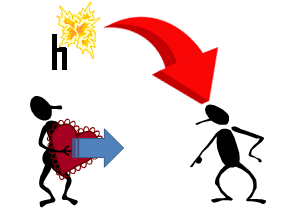
This first slide shows the reality of some problem between two people.  It can be two or a mob.  Whatever the relationship, there is going to be some kind of conflict.  (I know these are in a cartoon form, but let’s try to get the principle)

The human response is often to lash back or internalize and “carry” the pain OR a multitude of options in between those two actions.  Often, our response to someone is sin.  For example if I lash back at someone for sinning against me, I have just sinned.  Yes, even though I didn’t start it, I chose to respond in sin and think that I could solve the problem my way.  Sometimes it’s the sin of reaction and sometimes it’s the sin of internalization.  Both are wrong responses.

Instead I need to choose the biblical approach and forgive.  One of the Hebrew words for forgive is nasah, which means “to lift up.”  A second Hebrew word is salah, which means “ready to pardon.”  Both give a good picture of what we are supposed to do. Lift the sin (the penalty and pain of the sin) to the throne of God for Him to deal with it.  A third forgive word is a Greek word aphia-mi, which literally means “to send away.”  God wants us to send away to Him the sin pain and let Him deal with it.  We are not very judicial with offenses against ourselves.  Our flesh reacts and does all sorts of strange things, like think we are as smart as God.

“Lifting up” and “ready to pardon” demonstrate the ready attitude to lift it up to God.  The phrase “send away” means that I’m not going to deal with it against the offender, because I will trust the Lord to deal with it. 

In the next slide the offended person chooses to forgive, that is lifts up or sends away the penalty to the throne of God.  The black symbol with the yellow burst is supposed to be a  chair or throne as an illustration of the Shekinah Glory described in the Old Testament or the Presence of God in heaven.

Lifting up the conflict to the Lord fits well with 1 Peter 5:7, which says “casting all your cares on the Lord, for He cares for you.”  I first deal vertically with the problem and is the principle taught in Mark 11:25, “And whenever you stand praying, if you have anything against anyone, forgive him, that your Father in heaven may also forgive you your trespasses. (Mar 11:25)  Once you choose to deal with the problem vertically, then you can begin to deal with the horizontal relationship.

You may still feel the pain of the offense.  The relationship may still be struggling.  But you, because you’ve given it to God, you can choose to have a heart of love toward the offender.  That’s the third slide below.  Notice that God will deal with the other person in His way.  Unfortunately, it may not be in your timing.  It may not be in your lifetime.  Yet, God is infinite in wisdom, justice, power and mercy to know how best to deal with the relationship.  His way is far better than anything we can consider (Is. 55:8-9). The key is you now are able to have a heart of love toward the other person.  This is also the principle from 1 Peter 4:8, “And above all things have fervent love for one another, for “love will cover a multitude of sins.”  It’s covered, because you trust in the covering of the blood of Christ on the cross.


When a person lifts up the offense to God, he can have a heart of love toward the offender.  The person no longer has to have any kind of revenge desire, because he’s given it to God. It is a choice, to love at this point, but it is what God desires according to Luke 17:3-10; Matthew 18:15-17; Romans 12:14-21; and 1 Peter 3:8-12.

The last slide shows that God may want you to make the decision to reach out to the offender, or even confront the offender.  IF God is working through you to the offender it will be God’s love.  It may be firm and deliberate, because sin may need to be confronted (Luke 17:3-4), but it is done from God’s love, not personal vengeance (Romans 12:15-21)
 

These slides are a simplistic way of looking at forgiveness.  They do not answer all the questions in a relationship.  They begin the process of dealing with forgiveness. 

Do they help you?

Restoring Relationships for Him

Relationships: Restoring Relationships for Him
Matthew 18

This message is on restoring relationships, but the basis for restoring relationships  from man’s perspective begins with forgiveness.  Here’s a skit that explains man’s way of forgiveness. [ the skit actually shows how we often fall short of God’s way of forgiveness and we botch it.]

 Forgiveness is often tried, but often it falls short of what God intends. Relationships will push you beyond you.  They will take you beyond the range of your natural abilities and beyond the borders of your natural and acquired wisdom. That is part of God’s plan.  But also part of God’s plan is to see what can happen from God’s abilities. What would it take on your part for others to see Christ at work in your life? How can others see that you are a disciple of Jesus?  One of the greatest miracles is restoration of relationships, because it doesn’t often happen in everyday life. Why do you need to restore relationships?

            Normally, we think of forgiveness and restoration of relationships as a good thing to do from Scripture, because it helps us get along with people.  It helps in families, at work and at church for us to get along.  Is that why God wants us to forgive and restore relationships?  There is a much higher reason.  The first basis is because that is the pattern God established.  If we want to imitate God, and every believer is commanded to imitate God (Eph. 5:1), then we must mirror His pattern.

1)      God reconciled the world to Himself as our pattern 2 Cor. 5:18-19


I’m going to give you a quote that is utterly fantastic.  It’s a little long, but bear with me and you will greatly advance in spiritual understanding. It’s helpful to understand the antimony of God’s sovereignty and Man’s freewill.  An antimony is an apparently unresolvable conflict or contradiction, especially between two true statements.  For example, Scripture declares that God is Sovereign.  Scripture also declares that man has free will.  If one is true, the other cannot be some will say.  It’s like God is one and God is three.  Both are true statements, but man’s finite mind cannot fully understand, except by accepting them both by faith and making our best understanding of both true statements.

This is a quote that helped me greatly understand the antinomy of God’s sovereign work in salvation and man’s non-meritorious choice. It’s a quote from Merrill Unger who wrote Unger’s Bible Dictionary.  He defines what the word “reconcile.” He explains what God did to restore man to Himself.  Read this and I’ll break it down.

“Reconcile comes from a word that means to change thoroughly from one position to another (Eph. 2:16; Col. 1:20-21). It means that someone is completely altered and adjusted to a required standard. (Rom. 5:6-11).  By the death of Christ, the world is changed in its relationship to God. Man is reconciled to God, but God is not said to be reconciled to man.  By this change lost humanity is rendered savable.  As a result of the changed position of the world through the death of Christ, the divine attitude toward the human family can no longer be the same.  God is enabled to deal with lost souls in the light of what Christ has accomplished.  Although this seems to be a change in God, it is not a reconciliation; it is rather a ‘propitiation.’ God places full efficacy in the finished work of Christ and accepts it. Through His acceptance of it He remains righteous and the justifier of any sinner who believes in Jesus as his reconciliation.  When an individual heart sees and trusts in the value of Christ’s atoning death, he becomes reconciled to God, hostility is removed, friendship and fellowship eventuate.” 

            Let me break that down for you. 

“Reconcile comes from a word that means to change thoroughly from one position to another (Eph. 2:16; Col. 1:20-21). It means that someone is completely altered and adjusted to a required standard. (Rom. 5:6-11). 

He is saying that the word “reconcile” means that by the death of Christ on the cross, God changes a person to a completely altered state related to God and adjusts that person to the required standard of God.  What is God’s standard?  His own righteousness.  Because Jesus died on the cross for the sins of man, paying the penalty of sin, man is altered and adjusted to the righteousness of God.  Listen to what Paul writes in Romans,

10 For if when we were enemies we were reconciled to God through the death of His Son, much more, having been reconciled, we shall be saved by His life. 11And not only that, but we also rejoice in God through our Lord Jesus Christ, through whom we have now received the reconciliation. (Rom. 5:10-11)

We were considered as enemies by God, but because of the cross, we were altered and adjusted to the required standard. The sin barrier was removed by Jesus’ death, so that God could now look at man in a different way. Note that last phrase, “we received the reconciliation.” We’ll see that below. It is the part man must do for the fullness of reconciliation. Then Unger says,

By the death of Christ, the world is changed in its relationship to God. Man is reconciled to God, but God is not said to be reconciled to man.  By this change lost humanity is rendered savable.

Here the change is caused by the death of Jesus on the cross, Who died for our sins.  Notice he says that man is reconciled to God, but nowhere does it say in Scripture that God is reconciled to man.  THAT is very significant.  Furthermore, man is then placed in a “savable” condition, whereby man can be saved.  Man has been placed in an altered condition and adjusted to the righteousness of God and rendered savable.  But man is not saved at that point, because there is a second part of the reconciliation that is necessary.

            Unger continues addressing the relationship,

As a result of the changed position of the world through the death of Christ, the divine attitude toward the human family can no longer be the same. 

Because of the death of Jesus, God’s attitude had to change toward mankind.  It couldn’t be the same. Why couldn’t it remain the same, that is, considering man as an enemy (Rom. 5:10)?

God is enabled to deal with lost souls in the light of what Christ has accomplished.  Although this seems to be a change in God, it is not a reconciliation; it is rather a ‘propitiation.’

Because of the death of Jesus, God is enabled to deal with fallen man. How does that work?  Because God’s righteousness was propitiated – satisfied.  Legally, the penalty for sins was paid by Jesus and God was satisfied with His death payment.  However, there hasn’t been a full reconciliation, because a second part is necessary.  God was satisfied with the death of Jesus for the sins of the world, so God could no longer look at man as an enemy, but a soul waiting to accept what God had done for him.   Catch this next section,

God places full efficacy in the finished work of Christ and accepts it. Through His acceptance of it He remains righteous and the justifier of any sinner who believes in Jesus as his reconciliation. 

Jesus did the work.  God makes effective, or considers of great value, the work of Christ. Why?  Because God the Father accepted the work of Jesus on the cross and therefore can place man in a position of being justified, if man makes a non-meritorious decision of faith to accept what Jesus has done, that is believe in Jesus as his reconciliation.  Finally, Unger says,

When an individual heart sees and trusts in the value of Christ’s atoning death, he becomes reconciled to God, hostility is removed, friendship and fellowship eventuate.” 

So God calls you to salvation and waits on you to put your faith in Jesus Christ as your Savior.  When you do, then the fullness of the hostility is removed and you can grow in fellowship with God.  That is deep, I know, but is utterly important to understand as you grow in your relationship with the Lord Jesus Christ.


            Now, you may have been offended, harmed, hurt, or attacked by another Christian, even one in authority, like a husband, elder or pastor.  I don’t know the circumstances of your event, but I know they happen and they can cause great harm and pain.  But let me tell you about the One who has never offended or attacked.  Let me tell you about the One who reconciles, because at the base of reconciliation is forgiveness. Listen to the greatness of my Lord.

            It’s my Lord’s character to forgive,

16 “But they and our fathers acted proudly, Hardened their necks, And did not heed Your commandments. 17 They refused to obey, And they were not mindful of Your wonders That You did among them. But they hardened their necks, And in their rebellion They appointed a leader To return to their bondage. But You are God, Ready to pardon, Gracious and merciful, Slow to anger, Abundant in kindness, And did not forsake them. (Neh. 9:16-17)

We get a clear picture of Israel’s hardness and rebellion.  They even wanted to go back to the slave market of Egypt, even though God promised a land full  of milk and honey.  Even though they were stiff-necked, God was ready to pardon and merciful.  It makes a Christian want to sing of the mercy of the Lord forever! 

            When God forgives, it’s complete,

10 He has not dealt with us according to our sins, Nor punished us according to our iniquities.  11 For as the heavens are high above the earth, So great is His mercy toward those who fear Him; 12 As far as the east is from the west, So far has He removed our transgressions from us. (Ps. 103:10-12)

My God hasn’t treated me, or you, the way I deserve.  In fact, He removes my sins an infinite distant, as far as the east is from the west, because of Christ’s sufficient death on the cross. Additionally, there is a great illustration in Isaiah 38 about how God deals with my sin.  God speaks through Isaiah to Hezekiah to get his house in order because Hezekiah is going to die.  Well, Hezekiah is not ready to go and becomes very bitter about it.  He goes into his bedroom and faces the wall and weeps.  But he comes to his senses and he is filled with peace, because he realizes what God has done with his sins.

17 Indeed it was for my own peace that I had great bitterness; But You have lovingly delivered my soul from the pit of corruption, for You have cast all my sins behind Your back. (Is. 38:17)

 The picture Isaiah gives is of God taking my sins and putting them in the small of His back.  That is a place that you know is there, but you can’t see it.  God doesn’t look at my sins after they have been dealt with.  That’s the mercy of my God!  In Hebrews we have another aspect of how God deals with us.

14 For by one offering He has perfected forever those who are being sanctified.  15 But the Holy Spirit also witnesses to us; for after He had said before, 16“This is the covenant that I will make with them after those days, says the LORD: I will put My laws into their hearts, and in their minds I will write them,” 17 then He adds, “Their sins and their lawless deeds I will remember no more.” (Heb. 10:14-17)

God doesn’t forget our sins, He chooses not to remember them.  God is all knowing, or omniscient, so He cannot forget our sins.  Fortunately, He chooses not to remember them.  Finally, God’s infinite forgiveness costs me nothing, “For He made Him who knew no sin to be sin for us, that we might become the righteousness of God in Him.” (2 Cor. 5:21)  It was free to me, but cost the death of the Lord Jesus.  That’s what God is like!  He is ready to pardon, therefore we ought to be ready to pardon people also.  IT IS not easy.  It takes God the Holy Spirit to soften our hearts, and the decision of the will to forgive and begin the restoration process.  There is a second reason why Jesus wants you to restore relationships. 

2)      Restoring relationships is more important than worship  Matt. 5:23-24

             Does that make sense?  What could be more important that worship?  Isn’t that what God calls us to do?  Worship Him?  There is something more important according to the Lord Jesus.

23 “Therefore if you bring your gift to the altar, and there remember that your brother has something against you, 24 “leave your gift there before the altar, and go your way. First be reconciled to your brother, and then come and offer your gift. (Matt. 5:23-24)

That is what Jesus said.  He said, if you are coming to worship God, and you remember that a brother has something against you, then first go seek to restore the relationship, and then come back and worship.  That means we need to forgive, even when/if the other person hasn’t done what he needs to do.  Paul says it well,

31 Let all bitterness, wrath, anger, clamor, and evil speaking be put away from you, with all malice. 32 And be kind to one another, tenderhearted, forgiving one another, just as God in Christ forgave you. (Eph. 4:31-32)

I need to put off any bitterness and anger and put on forgiveness if I’m going to restore a relationship.  I’m going to have to forgive.  What does that mean? 

            Forgiveness is used many ways and this message only begins to address forgiveness.  There are three main words for the word, “forgiveness.”  The first is a Hebrew word, “nasah,” which means to “lift up.” You can remember the word because it sounds like NASA, which lifts rockets to space.  The second Hebrew word is “salah” which means “ready to forgive.”  God is ready and waiting on us and wants us ready and waiting on others to restore the relationship. The third word is a Greek word “aphia-mi,” which means “to send away.”  God wants us to send away the penalty of the offense from someone else away to God. That way we let God deal with the offense of the person toward us and we can trust God to do the right thing.  God is much better at helping people see their wrong, than we are!

            There are four slides at the end of the message that explain this process.  When we send the penalty and pain to God, then we are free to be in a position to love the person.  We are satisfied that God can deal with the person.  In fact, God may lead us to be a part of the restoration process.  We may need to act for the person by expressing love toward him.  That love takes the direction of Jesus and empowerment by the Holy Spirit.

            What does that look like?  Let me use Matthew 18 as the illustration that Jesus wants us to restore relationships more than even approaching Him in worship.

            In Matthew 18, the disciples are discussing with themselves who is the greatest and they approach Jesus and say, “Jesus, who is going to be the greatest in the Kingdom?”  Jesus takes a little child and putting the child in front of them, He says, “Unless you are converted and become like this child, you will not enter into the Kingdom of Heaven.”  He added, “And so whoever humbles himself like this child is the greatest in the Kingdom. And whoever receives this child in My name, receives Me.”  In other words, this is available to all people. All people can be restored, but it takes the humility of a child who trusts in the one in authority.

            Jesus wanted the disciples to understand how serious sin is, so He continues to say that whoever causes one of the little ones to sin, well it would be better to have a millstone put around his neck and be cast into the sea, so you can’t cause anyone else to sin.  It’s a horrible thing to cause another to sin. 

            Then Jesus describes the seriousness of sin with an hyperbole. He says, that if your hand or foot causes you to stumble, cut it off.  It would be better to enter the Kingdom with one hand or foot, than to have two and be cast into the everlasting fire.  Or if your eye causes you to stumble (maybe through pornography or window shopping and lusting after wanting more clothes), to pluck it out, for it would be better to enter into the Kingdom with one eye than to have two eyes and be cast into hell fire.  But Jesus doesn’t just stand there like a stern judge.  No He reveals the compassion we all need to have toward others.

            He continues saying, if a shepherd has 100 sheep and one sheep strays away.  He will leave the 99 to seek the one.  And when he finds the one, he will rejoice more than having the 99.  That’s a big deal!  So we should have that kind of compassion that the Father has toward all people.

            Forgiveness also includes the process of dealing with sin in a gracious and orderly way.  Jesus describes a case where a brother sins against you.  Well, you go to him and tell him his fault in private, alone.  If he listens and repents, then you’ve won your brother and the relationship is restored.  But if he doesn’t listen, then go get one or two witnesses, because Scripture says that the word is established based on the testimony of two or three witnesses. 

            If the brother listens and repents, then you’ve won your brother and restored the relationship.  But if he doesn’t repent, then take it to the church leadership and establish the truth with them.  Let the church know so they will fear God and want to do what is right.  If the brother doesn’t listen or repent, then treat him like a heathen or a tax collector.  He is likely not a believer. You’ll need to lead him to Christ.

            So Peter hears all this and asks Jesus, “Jesus, if my brother sins against me, how many times do I have to forgive him? Do I have to forgive him up to seven times?”  Jesus said, “Not up to seven times, but up to seventy times seven”  And Jesus continued the explanation by describing a king who wanted to settle accounts with his servants.  So he brought the servants in and one servant owed him ten thousand talents (that’s about 12 million ounces of gold).  The servant didn’t have the resources to pay, so the king commanded that he be sold along with his wife and children and all that he had. The servant fell down before the king and begged, “Master, be patient with me and I will pay you all.” The king was moved with compassion, released him and forgave him the debt completely.

            Then the servant went out and found another servant who owed him 100 days wages.  He went to the servant and choking him said, “Repay me what you owe!”  But the servant said, “Be patient with me and I’ll repay you all.”  But the first servant would not listen and threw the servant in prison.  There were fellow servants who saw what happened and reported to the king who called for the first servant.  The king said, “You wicked servant, I forgave you all the debt because you begged me.  Shouldn’t you have compassion on your fellow servant as I had pity on you?”  Then the king said, “Deliver this one to the torturer, until he has repaid every last cent. 

            And Jesus succinctly said, “So My heavenly Father will do to you, if you do not from your heart forgive your brother his sins.”

Consider that forgiveness is an event and a process.  How many times do you forgive? It’s a process because you’ll be tempted to think about the sin when you see the person.

Forgiveness is canceling a debt.  You promise to leave it behind and not keep track of wrongs suffered. (1 Cor. 13:5) You are not to bring up the offense to others or slander the person who sinned against you.  You also promise not to dwell on the offense yourself or replay the offense over and over.

Forgiveness is costly, but lack of forgiveness is more costly.  You may not choke anyone, but you may shut them out of your life.  When you don’t forgive, you do at least three things.  First, you don’t imitate God. (Eph. 5:1)   Second, you show ingratitude to God. (1 Thes. 5:18)  And thirdly, you sin (Jam. 4:17).  Like Jesus said regarding the people while He hung on the cross, “Father, forgive them, they don’t know what they are doing.” (Luke 23:34)

Why do you need to restore relationships?  First, because God is our pattern of restoring relationships.  Secondly, because it is more important than worship to Him.  And thirdly, because restoring relationships is your responsibility to Him.

3)      Restoring relationships is my responsibility to Him  Luke 17:1-10

The first part of the passage is a parallel to Matthew 18.  Let’s start in Luke 17:3,

3 “Take heed to yourselves. If your brother sins against you, rebuke him; and if he repents, forgive him.

 4 “And if he sins against you seven times in a day, and seven times in a day returns to you, saying, `I repent,’ you shall forgive him.”

 5 And the apostles said to the Lord, “Increase our faith.”

 6 So the Lord said, “If you have faith as a mustard seed, you can say to this mulberry tree, `Be pulled up by the roots and be planted in the sea,’ and it would obey you.

 7 “And which of you, having a servant plowing or tending sheep, will say to him when he has come in from the field, `Come at once and sit down to eat ‘?

 8 “But will he not rather say to him, `Prepare something for my supper, and gird yourself and serve me till I have eaten and drunk, and afterward you will eat and drink ‘?

 9 “Does he thank that servant because he did the things that were commanded him? I think not.

 10 “So likewise you, when you have done all those things which you are commanded, say, `We are unprofitable servants. We have done what was our duty to do.’” (Luke 17:3-10)

So if your brother sins, then you go graciously rebuke him.  Yes, he sinned against you, but he’s not responding or interested in restoring the relationship.  God gives you the opportunity to practice grace. Will you be like Jesus and initiate restoration?  If he repents, then forgive and if you have to do that seven times in a day (quite a few times), then forgive and restore the relationship.   Well the disciples are overwhelmed by the thought and ask Jesus for more faith.  Jesus doesn’t give them more faith, because the issue is not greater faith, but rather humility and trusting God to work through the relationship.  Just a little faith can uproot the mulberry tree and cast it into the sea, IF that is God’s will.  Restoration is God’s will is most circumstances.

            Then Jesus describes the kind of humility that is necessary in verses 7-10.  This is difficult to understand and very few pastors ever do a message on this paragraph. 

            Jesus describes a servant who has worked hard all day plowing or tending sheep and then comes in to eat.  But the servant doesn’t come in to receive a meal, but is expected to serve the master after which he is then allowed to eat.  The master isn’t even expected to say thanks to the servant for making the meal.  Why?  The master has the right to tell the servant what to do and the purpose of the servant is to serve the master.

When it comes to people who sin against you, God gives you no right to withhold forgiveness or harbor bitterness. When I withhold God’s love toward another, I set myself up as a judge and arbiter to others, rather than be a servant of the Lord.  I decide whether someone else is worthy of my love and relationship.  I deny God’s glory from flowing through me.  I become a spigot of God’s love, rather than a hose. Restoring relationships is my duty, because it is what He did for me.

Restore relationships for Jesus’ sake,
 because He has restored you!

·         Forgiveness is a vertical choice Mark 11:25 release it to God, so that you can unconditionally love as He does. In any situation.

·         Forgiveness starts vertically, the horizontal depends upon the offender admitting guilt and asking for forgiveness Luke 17:1-4.

·         Forgiveness is not forgetting. Jer. 31:34.  I will not treat you as your sins deserve.  I will instead forgive you.  When you don’t forget, you’ll think you haven’t forgiven and filled with doubts. Or you’ll give in to bitterness without realizing it, because you think that forgiving equals forgetting.

·         How do I know when I’ve forgiven?  I love God, I just can’t deal with a few of His people.  I’m better off without them. What about 1 John 4:20-21?

·         When you forgive, do not demand restitution (sometimes it cannot be retrieved or repaid), but instead demonstrate mercy and love toward him with a goal of reconciliation.   Restitution is part of the process of restoration and should lovingly be pointed out to the offender. God’s world has many other things to say about that.

At this point a second skit was done in the message to show God’s way of restoring a relationship.  God’s way takes the process of forgiveness and restoration seriously and seeks to make sure the people are actually walking in unity of the Spirit again and working together.  We restore relationships, not because it helps us, but because it’s what God’s pattern is, it is more important that worship and it is simply put – your duty. 

There are some times when you cannot restore relationships. A girl who has been violated, ought not seek restoration with her abuser.  There are cases where the person continues in sinful behavior and restoration is not possible.  You are required to forgive, but restoration of relational fellowship may not be possible and could be harmful. 

What do you do when you have to continue in a relationship that is not just hard, but very difficult?  What about a marriage that sets you off?  What about a relationship at work, or even church?  How do you continue walking in the Lord if that relationship is not restored? That message will follow in the message, “Overcoming Difficult Relationships for Him.”


Message Based Discussion Questions

1)      What bothers you most about religious fanatics?

Digging Deeper:

2)      How many steps does Jesus give in Matthew 18 for restoration? ___________ How would you describe the restoration process to a child?  What are danger points in the process? 

3)      What are at least five description of love in 1 Cor. 13.?  _______; __________; ___________; ____________; _______________. How does 1 Corinthians 13 influence the practical aspect of forgiveness?

4)      To Whom are you to offer your body a living sacrifice in Romans 12:1? ______________   What are other principles regarding forgiveness can we learn from Romans 12?


Implementing the message to your life:

5)      In what relationship situations is restoration difficult?  What do you do?  What counsel would you give another on what to do?


Five Questions: Bridge Building with the Gospel


Five Questions: Bridge Building with the Gospel

I have a growing concern for the lost in the world.  My concern has gone through ebbs and flows over the years, but as I realize the lack of many days left in life (maybe thirty years), I realize I may not have much time to reach out to others.

There are few things in life more moving than to watch a person put their faith in Jesus’ substitutionary death on the cross and His resurrection.  There are few things more fantastic than to watch a rebirth happen before my eyes.  There are few things that motivate me more than witnessing a person who becomes my spiritual brother or sister!

Do you get that opportunity very often? 

One of the tools I use to transition to talk through the good news of Jesus Christ is to ask five questions.  The questions are merely a tool to build a bridge to someone so I can share the greatest news in the world – that Jesus died on the cross for his/her sins and that he/she can grow in a relationship with the God of the universe.  The questions are a tool to share that God loves him/her so much that God sent His only begotten Son to die on the cross for the sins of the world and that whoever believes in Jesus would have eternal life.  That’s fantastic news!

Here are the five questions I use to start a discussion and build a bridge to a person:

  • Do you ever talk about spiritual things?
  • In your opinion, who is Jesus Christ?
  • Do you believe in a heaven and a hell?
  • If something tragic were to happen, do you know where you would go?

           [If God asked, “Why should I let you into heaven?” what would you say?]

  • If what you believed were not true, would you want to know the truth?

The answers to the first four questions don’t really matter too much, but they do tell me a great deal about where the person is spiritually.  They tell me what the person is trusting in for salvation, if anything.  They get the person talking and allow me to gain credibility that I am interested in them as a person (and I am!). 

The main question is question number five, “If what you believed were not true, would you want to know the truth?”  If they say yes, then I have a free and open door to walk through and share my faith.  I’m not forcing myself onto the person.  I give the person an opportunity to say no, before I start talking about Jesus.  But once they say yes, then I can take them through a gospel presentation, whereby they can make the greatest decision of all time – accepting Jesus as Savior to become a child of God.

What do you use to build a bridge to talk to people about the Lord Jesus Christ?  Does it work well?  I’m interested in your feedback, because I want to be effective in building bridges and sharing Christ.  Let’s go reach the world for the sake of Jesus!

Excuses

Sunday, I did a little skit with Moses and the voice of God to introduce the final message on Strategy for Grace: Pursuing the Role in Jesus.  I found the conversation between Moses and God so revealing and convicting that it needs to be highlighted here.

Moses had been raised in the best environment of the world at that time – around B.C. 1500.  He grew up in the Egyptian Pharaoh’s court and was ready to be the Second in Command if he had “stuck with the program.”  Moses didn’t because he wanted God’s will.  After fleeing from Egypt, he spent forty years in the backside of the Midian desert. 

After forty years of divine training, God appears to Moses in the burning bush.  You know the overall story at this point.  God tells Moses that He is sending Moses to bring God’s people out of Egypt.  Moses balks and makes his firstexcuse, “I’m inadequate.”  Haven’t we all done that?  God tells us to be witnesses for Him and we come up with all sorts of excuses why we don’t think we can share our faith with others.  Don’t we?  Doesn’t God want us to be who we are and just tell others what we know (Acts 1:8)?

Then God firmly but patiently like a parent, tells Moses that He will be with Moses.  What could be more comforting than the God of the universe is going to be with you on a mission?  Moses makes his second excuse that Israel’s possible erroneous view is more important to him than God’s presence.  Looking back on that excuse seems like it is crazy!  But don’t I do that?  Don’t you do that?  We get more concerned about a person’s possible rejection of us in sharing the gospel, than knowing He will be with us as we go and make disciples (Matt. 28:19-20)?

God again patiently answers Moses’ question regarding His name with, “I am who I am.”  God assures Moses with a brief history lesson of God’s promises to great grand daddies Abraham, Isaac and Jacob.  Then He tells Moses they will come out with an abundance, but Moses gives his thirdexcuse, “I can’t handle the conflict with them.”  But don’t we do that?  We have conflict with someone and we walk the other way, or turn our head so we don’t catch their eye, or avoid going somewhere if we might be near a person with whom we have a conflict?  Don’t we?  Doesn’t God want us to reconcile and restore relationships for His purpose (Rom. 12:18; 2 Cor. 5:19-20)?

God once more is patient, but firm as a parent.  He gives Moses two object lessons of Moses’ rod turning into a serpent and his hand becoming leprous.  Moses is likely surprised by both incidents.  I would be; wouldn’t you? Consider the rod that Moses used to protect himself from harm, now it becomes a serpent that would harm him.  What’s more, God tells Moses to pick up the serpent by the tail.  Now everyone ought to know that you don’t do something foolish like that!  You would go for the neck right behind the head, so the serpent couldn’t swing around and strike a deadly poisonous bite!  But when God tells you to do something, you obey, even if it goes against man’s way of thinking!  Then when Moses’ hand becomes leprous like snow, God reveals that Moses is unclean for any task God would want from him.  But God shows how He moves in our life, whether an illness, handicap, or personal attack against us, how God can work it together for good and direct that we continue with the mission. But Moses makes his fourthexcuse that he is not eloquent and is slow of speech.  Don’t we do that?  Don’t we make excuses like Moses?  Don’t we look at ourselves, our weaknesses, our lack of eloquence or ability to be smooth in a gospel presentation and we remain in the background waiting for someone else to do the witnessing?  Doesn’t God want us to just use what He has given us and do the best we can (2 Cor. 11:6)?  Doesn’t He want us to leave the results to Him?

Yet one more time, God reminds Moses who made his mouth.  God directs Moses to consider Who made us the way we are and therefore God knows the means of His message and  how He will work out His results.  Finally, Moses makes his fifth excuseand in utter fear says, “I don’t want to.  I can’t.”  Whoa. 

Scripture says the “anger of the Lord was kindled against Moses.  After five excuses, God’s anger is kindled.  Does that mean I can become angry when people refuse to listen?  Can I get frustrated when I’ve been patient for a while?  Think about that number five.  Five is the number of grace.  God is patient and merciful.  But there is a line by which we lose out on seeing how great our God is if we trust Him.

I realized this week, that my frustrations are always about me.  I rarely become angry when other people sin against God.  I do, but my anger is normally aroused when someone is snide against me, or lies to me, or is hypocritical to me.  It’s normally about me.  If I am filled with the Spirit, I’ll remain firm but calm like a spiritual parent, and disciple the person to the truth.  If I am filled with God’s Spirit I will become righteously angry, but it is only in the other person’s actions toward God.  He is the holy One.  He is the righteous One.  I don’t need to become upset at them.

As you reflect on this passage, consider two things.  First, consider how many times you make excuses to not do the right thing.  I’m not talking about not stealing, lying, or committing adultery.  How many times do you make excuses not to do what is right, and you do not?  Whether it is witnessing your faith to a lost soul or serving in a needed capacity or discipling a person who needs to grow up spiritually, what excuses to you make?  Secondly, in your relationships, do you become frustrated with people, maybe your children, because they don’t relate with you the way you want them to act.  Will you be firm and patient like a parent is with a child?

May the Lord bless you in His work.

Danger of the term “Christian maturity”

Danger of the term “Christian maturity”

I’ve asked many people what Christian maturity is and I get a variety of answers.  Some answers describe a person who knows the Bible well. Some add it’s one whose Bible study influences their life.  Some say Christian maturity is obedience to God, i.e. one who goes to church, takes their children to church and no longer carouses.  Some say it is someone who gets along with others. Some say maturity refers to those who don’t do drugs, steal or lie. There is truth in all of those statements. However, there is a message that is hidden by those definitions.  Christian maturity is none of the above.

            Who are some who might satisfy the above definitions?  The Pharisees were not mature and yet they knew the Bible well (distorted as they knew it).  There are some people who are brains on a stick, but they use that knowledge to impress others rather than disciple others.

            There are some who don’t do the wrong things.  That is, they don’t do drugs, steal or lie, but they also don’t disciple other people. They do struggle with worry, doubting God, bitterness toward certain individuals who have hurt them and struggle with not forgiving past offenses.  They consider those acceptable in life, because “everyone deals with those.”  God calls them sins.  Man calls them acceptable.  Acceptable sins are not characteristic of Christian maturity.

There are some who are comfortable in their own setting and don’t care whether other people “get it” or not.  Oh, they wouldn’t say they don’t care, but they don’t take the time to come alongside new believers who grew up having never attended church.  The one who doesn’t do wrong things, do they do the right things? Do they disciple others?

            There are some who say maturity is obedience to God by going to church, taking their children to Sunday School and not carouse.  But a person can do that in his own power for his own purposes.  He takes his children, because he isn’t willing to raise his children to the holiness of God and he expects the church to do it. Obedience is often so vague that it merely means one who doesn’t do obvious sins.  There is little personal sanctification or spiritual transformation.  There is little spiritual accountability. That’s no measure of maturity.

            What is maturity?  It’s often just a nebulous, vague and cloudy term to take a person away from their God given responsibility of the fulfilling the Great Commandment and Great Commission.

Let’s get real.  Christian maturity is one who humbly loves God with all his heart, soul and strength, who is dependent on the Holy Spirit for every thought, word and action, and who submits to the Lordship of Jesus Christ raising up disciples to Jesus Christ.  Christian maturity is not a spiritual infant, who does not know Scripture and is focused on self.  Christian maturity is not a spiritual child, who likes learning Scripture, but is still focused on self and what self wants to do.  Christian maturity is developing in spiritual young adult status, where the person has changed his focus from self to God and others.  He shows this by serving and teaching others.  True maturity is seen in the spiritual parent.

Christian maturity is defined in one way.  It is a spiritual parent who loves God, loves others and is making disciples to Jesus Christ.  If there are no disciples, mentees, or followers, the person is not a spiritual parent and is not yet become spiritually mature.  The person who has not arrived is just as valuable as any other, but he has not arrived to the role of being a spiritual parent like Jesus, Paul and many others.  John calls the mature, spiritual parents “Fathers” in 1 John 2:13.  They know God and are living out the Father’s will.

Are you mature?  Are you discipling others?

Peer Pressure – Part 4

Most people like to fit in with others.  Peer pressure can easily cause us to walk down the wrong road.  David understood it well, “Blessed is the man who walks not in the counsel of the ungodly, nor stands in the path of sinners, nor sits in the seat of the scornful.”1  David said you will be blessed if you don’t walk in ungodly counsel, or stand thinking about the way the sinful walk or considering their lifestyle, nor sit contemplating or being pressured into listening to the scornful or mockers of God.   Yet, when you look at the society and culture around you, you see this all the time.

There are many temptations in which peer pressure can influence you wrongly.  We saw the drinking scenario in the last segment.  Unfortunately the age at which young people are having sex is becoming younger and younger according to surveys, of which peer pressure is a huge influence.  Peer pressure influences people to any kind of immoral or abhorrent behavior.

You have to decide what you are going to do.  If you give into peer pressure, you’ll become a follower, just like Adam became a follower in the Garden of Eden.  He should have been leading Eve and protecting her from the deception of the serpent, but he was standing idly by and foolishly accepted the fruit and ate it in direct disobedience to the Lord.2  As you consider how you are in dealing with peer pressure, ask yourself these questions and spend some time thinking through the Scriptures:

·         Do I realize how much other people can influence me?   Proverbs 1:10-13

·         Do I realize my decisions are often based on how others influence me?  Proverbs 1:15-19

·         Do I listen to the voice of Scripture? Proverbs 1:20-23

·         Do I know my own strengths and weaknesses? Proverbs 1:24-28

·         Do I love God’s Word more than what friends say, even good friends? Proverbs 1:29-30

·         Do I understand the consequences of my decisions? Proverbs 1:31-33

·         Do I trust myself? Proverbs 5:6

·         Do I know how to say no? Proverbs 5:7-9

·         Do I know how to practice self-control? Proverbs 5:12-14

·         Do I know my own sin patterns? Proverbs 5:20-23

Do you know who you can talk to about peer pressure?  Are your parents open?  Do you have a church leader who is willing to listen in order to understand?  Maybe you need a trusted friend.  While everyone wants to have friends, it’s far better to have a few good friends than attempt to fit in with everyone.  There is ultimately one person you need to please in life and that is the Lord Jesus Christ, “Therefore we make it our aim, whether present or absent, to be well pleasing to Him.3

When you know who you are in Jesus Christ and are positionally already complete in Him, you’ll stand up to the peer pressure and it will back down from you.4

1Psalm 1:1; 2Genesis 3:1-6; 32 Coriinthians 5:9; 4Colossians 2:9-10

Peer Pressure – Part 3

So what is it about peer pressure that often makes life difficult?1  Here’s a scenario.  It’s Monday night.  You are tired after work and some of the guys invite you to go over to a restaurant with them.  They know you have a family.  You are new to the job and want to fit in.  So you think, “Well, just this time.”  You call your wife and tell her you’re going to go out with the guys.  After all, you just spent Sunday afternoon with the family. 

At the restaurant, everyone is having drinks before their meal, so you don’t want to be the odd one out and you order something to fit in – peer pressure.  You would never do this in public, but you let down your guard.  The meal is full of laughter and good bantering and this is the most you’ve laughed in a long time. You have only two additional drinks during the meal, but it’s not what you were planning – peer pressure.  You are struggling inside from the guilt of going against your conscience, but you’ve never felt so accepted. They invite you over for Monday Night Football and you’re thinking, “I might as well.  This will help me fit in with the guys at work.”  So, you call your wife and she even encourages you to go at this point. You didn’t tell her the whole story.

The peer pressure continues at Sam’s house, because he has the huge screen television and the beer is flowing – peer pressure.  You’re helping yourself to chips and dip and confine yourself to three more beers – peer pressure.  You’re thinking the food will absorb the alcohol.  You’re thinking, “I would never normally have one drink let alone so many.”

Fortunately, you have a big day at work tomorrow, so you excuse yourself at half time.  On the way home, you drive only slightly erratically.  You haven’t had that much to drink since you were in college and when you decided enough was enough.  It was, however, enough to get the police officer’s attention and a breathalyzer test.  He measured you at .08 blood alcohol content and gave you a ride to the county jail with a DUI.  Life changed overnight.  Why did this happen?  Not only does it go against your spiritual values, but you just weren’t thinking.

Social situations put us in danger unless we are confident and strong on values.  Certain peers, like work friends, can invite you into a world you may not normally enter.  You may sense something is wrong or even make you afraid that something doesn’t feel right.  That’s likely your conscience telling you something IS wrong. Scripture says, “Now the purpose of the commandment is love from a pure heart, from a good conscience, and from sincere faith, from which some, having strayed, have turned aside to idle talk… having faith and a good conscience, which some having rejected, concerning the faith have suffered shipwreck.2  God gave you a conscience to discern right from wrong.  When you fill your conscience with Scripture, you’ll be able to discern godliness.3  You cannot trust what you see or hear, but you can trust God’s Word.  Ask yourself when you are in a peer pressure situation, “What would God’s Word guide me to do?”

Think about the consequences of your potential decisions.  “Would drinking here bring dishonor to the Lord’s name? Would drinking put me in a situation, like getting a DUI?”  Or, “Will this decision affect my health?”  “Will people whom I care about or care about me, be affected or disappointed by my decision?”  “What will I be thinking tomorrow if I choose this decision today?”  Once the decision is made, the consequences may be out of your hands.  You’ll have to live with the consequences.

When you make your decision against peer pressure, stick with it.  Nancy Reagan, former first lady, had a campaign called, “Just say No.”  It was a good campaign and was acceptable in all realms of sociology and religious networks.  However, it’s not enough.  If you say no to something, make sure you are saying yes to something and make that God’s Word. 

When someone pressures you to try something you question or know you shouldn’t participate in, try these responses.  Tell them, “No, thanks,” or “I’d rather not,” or “I’m not interested.”  If  the peer pressure continues, let them know you don’t appreciate the extra questions or just walk away.  It’s far better for you to walk away, or even run, because eventually the flesh on its own will give into the pressure.  Paul said it well, “Flee also youthful lusts; but pursue righteousness, faith, love, peace with those who call on the Lord out of a pure heart.4  I love the last part of the verse, “Pursue…with those who call on the Lord out of a pure heart.”  Friends can pull you away from the Lord, or friends can strengthen your stand with the Lord.  Who are your friends?

The next segment will consider several other situations with which peer pressure can be difficult.

1I’m taking peer pressure in a negative way.  There is positive peer pressure, but for this article it is negative; 21 Timothy 1:5-6, 19; 3Hebrews 5:12-14; 42Timothy 2:22

Peer Pressure – Part 2

This continues the initial discussion on peer pressure and the over arching mandate to consider who you are in Christ.

How do you deal with peer pressure?  Many people just ignore what other people say.  They are wired to shrug it off.  It’s like water off a ducks back.  But sometimes the pressure to conform is hard to discern and a tough challenge to know when to say, “No.”  Let’s consider four action steps for dealing with peer pressure.

The firstaction step you can take is “know your values” or “know what you believe.”  That might seem like a big concept, but it really comes down to the principles by which you live.  What is important to you?  What are the things you believe in?  They might be honesty, integrity, purity and getting along.  Getting along is a good team concept.  It helps people function well in a family or on a team. Yet getting along can influence you to go along with peer pressure if you are not careful.  What do you believe about what you will not compromise? 

Values can even be costly.  Scripture records, “And everyone who has this hope in Him purifies himself, just as He is pure.1Sometimes it means you’ll have to take a stand or that you will lose out on an opportunity. You can never lose from God’s perspective if you choose for purity, for example. You may take a stand for purity and that means foolish people will make fun of you for being prudish or a goody-two-shoes.  Take the stand.  You’ll be the one who smiles twenty years from now when others are suffering for their foolish decisions.  Because you chose purity, you will always have the confidence knowing that you won’t have regrets.

The second action step you can take is to set realistic goals.  When you have goals or direction, you’ll be less influenced to follow the crowds.  Scripture records, “See then that you walk circumspectly (carefully), not as fools but as wise, redeeming the time, because the days are evil. Therefore do not be unwise, but understand what the will of the Lord is.2  Some people have no goals.  As the saying goes, they who fail to plan, plan to fail.  But the one who searches the Scriptures will be like the ant who works through the summer and will have provisions for the winter.3  Don’t become a workaholic.  God never intended us to work all day and night.4  Set realistic goals.  You may not be able to accomplish as much in one year, but you’ll see that in five years time, you’ll have accomplished far more.

The third action step is enjoy God’s creation around you.5  When you enjoy God’s creation, you’ll be less apt to be influenced by what the crowds think is something you need. Get rest; take time for a walk, do some reading and choose friends wisely.  Trust God in all your decisions by studying Scripture and depending on His Holy Spirit.  Life is short, so take time to cultivate what you know about God’s creation.

The fourth action step is seek after God’s purposes.  Scripture says, “But seek first the kingdom of God and His righteousness, and all these things shall be added to you.6  When you seek God’s purposes, you’ll be less influenced by peers to their desires.  When you develop eternal interests, you’ll be less concerned about temporal desires like get rich quick schemes, desires to satisfy the flesh, gluttonous desires for foods beyond what exercise and work does not consume, desires for relationships that corrupt, or other earthly pursuits.

Preemptively overcome peer pressure by stepping out by faith in the actions steps and you’ll put on the armor of God to stand firm for godly principles.7 

The next segment will look at a specific situation of peer pressure and how to deal with it.

11John 3:3; 2Ephesians 5:15-17; 3Proverbs 6:6-9; 4Psalm 127:2; 5Psalm 19:1-6; 6Matthew 6:33; 7Ephesians 6:10-18