Q & A: Silent Treatment Prelude – Malachi Introduction

The following are suggested answers for the Message Based Discussion Questions for the message posted on May 20, 2013.  These will hopefully begin the thought process, but not replace the thought process.  How would you answer the questions?

Silent Treatment Prelude
Malachi Introduction
(May 19, 2013)
 

Why is there divine silence after Malachi?  Malachi 2:17           

They asked:

1:2 In what way have You loved us?
1:6 In what way have we despised Your name?
1:7 In what way have we defiled You?
1:9 But now will you not entreat God’s favor, that He may be gracious to us?  Where’s our blessing?
1:12-13 Oh, what a weariness! the assemblies and sacrifices…
2:13-14 you cover the altar of the Lord with tears..For what reason?
2:17 In what way have we wearied Him?
3:8 In what way have we robbed You?
3:13 What have we spoken against You?
3:14 What profit is it that we have kept His charge?           

Today, you ought to ask:

1:2  Do I experience God’s love for me?
1:6  Do I treat God’s name as holy?
1:7  Do I approach God with reverence, awe and holiness?
1:9  Do I ask for blessing, when I am not in fellowship with Him because of sin?
1:13 Do I say, how tiresome it is to assemble for church?
2:13-14 Do I grumble about my situation and not trust God’s sovereignty?
2:17 Do I go through religious rituals without passion?
3:8   Do I keep from the Lord my time, talents, and treasures?
3:13 Do I make light of God and grumble or blame-shift?
3:14 Do I act like obedience is a duty, rather than a joyous response?


1)      Israel is indifferent to God’s love     Malachi 1
2)      Israel is indifferent to God’s law     Malachi 2
3)      Israel is indifferent to God’s message     Malachi 3
4)      Israel is indifferent to the Day of the Lord     Malachi 4


1)      Author – Malachi – “My Messenger.”

2)      The Religious Setting – Israel was in the pits.  While the Lord reached down to pull Israel out, Israel said, “We’re not in a pit.”

·         Israel was indifferent, rather than eagerly waiting: Religiously 1:6-10; 2:17; Morally 2:11-16; Socially 3:5; Materially 3:8-10
·         Failure to remember God’s covenant1:2-5; 4:4; cf.  Deut. 8:3-14

3)      Christ in Malachi:

·         “Great King”   Mal. 1:14
·         “The Messenger of the Covenant” Mal. 3:1
·         “The Sun of Righteousness” Mal. 4:2


Respond in awe to God’s Word or hear His silence.


Message Based Discussion Questions 

1)      How does it make you feel when someone you love gives you the silent treatment?

Digging Deeper:

2)      What was the problem in the church of Laodicea (Rev. 3:14-22)?  How is it the same as Israel in the time of Malachi?

3)      How would you describe how people communicate without saying anything?  What do the following passages say about non-verbal communication (Gen. 3:7-10; 4:5-6; 40:6-7; Josh 7:6; 1 Sam. 18:4; 1 King 9:3-4; 21:4; 1 John 3:17)? What do you think people are saying to God by their actions?

4)      How would you describe Israel in the time of Malachi religiously (Mal. 1:6-10); morally (Mal. 2:11-16); socially (Mal. 3:5); and economically (Mal. 3:8-10)?

Making application from the message to life:

5)      What was God’s message through Jeremiah to Israel in Jeremiah 14:13 – 15:6? Do you suppose God has a point or line that when crossed He says, “Enough!”?  What discernment should that give us in life application?

6)      How do you think USA would fare related to a message like Malachi?  What do you think would be said if USA were a biblically chosen people by God?

7)      What are spiritual indicators of “indifference” or “anticipation”?


Message Based Discussion Questions
1)      How does it make you feel when someone you love gives you the silent treatment?

a)      “What is going on with their life?”

b)      “Did I do something to offend them?”

c)      “I wonder if they are having a bad day?”

d)     “Did I forget something?”

e)      “I wonder when we can talk?”
 

Digging Deeper: 

2)      What was the problem in the church of Laodicea (Rev. 3:14-22)?  How is it the same as Israel in the time of Malachi?

a)      Laodicea was indifferent toward the Lord.

i)        They thought they were doing well.

ii)      They thought they had their act together and were well off.

iii)    They didn’t know their standing before God.

b)      Laodicea didn’t realize they were living in their own standards, independent of the Lord.

i)        They were living in denial of the Lord’s holiness.

ii)      They were comfortable with their own level of holy achievement.

iii)    They needed to seek after the Lord’s face and acquire what He wanted for them.

iv)    They didn’t realize God’s attitude of wanting to spew them out of His mouth.

v)      They went through the religious rituals without thinking about them and without dependency on the Lord.
 

3)      How would you describe how people communicate without saying anything?  What do the following passages say about non-verbal communication (Gen. 3:7-10; 4:5-6; 40:6-7; Josh 7:6; 1 Sam. 18:4; 1 King 19:3-4; 21:4; 1 John 3:17)? What do you think people are saying to God by their actions?

a)      Our tone of voice and non-verbal communication is far more powerful than the content of our words.  The medium of communication is more powerful than the actual words. That is why texting or email can be dangerous – you might be thinking your words are conveyed politely, but someone who thinks otherwise, might read your words as from someone who is angry.

b)     The following passages communicate through non-verbals:

i)        Gen. 3:7-10- hiding = conviction of sin and fear of the Lord

ii)      Gen. 4:5-6 – anger = Cain’s countenance had fallen.  He didn’t get his way and was mad at God for not accepting what he thought would be a good sacrifice.

iii)    Gen. 40:6-7 – sad countenances of the baker and cup bearer.  They had dreams that they did not understand.  They hadn’t said anything yet.

iv)    Josh 7:6 – tore clothes = he knew something had gone wrong and tearing of the clothes is a sign of repentance.  He was seeking answers from the Lord.

v)      1 Sam. 18:4 – Jonathan gave David his armor = this was a sign of genuine friendship and protection.

vi)    1 King 19:3-4 – Elijah ran, because he was afraid of Jezebel. He had just stood up against 450 prophets, but he ran from one woman.  After victory, there is vulnerability for defeat.  Elijah ran in fear – defeat.

vii)  1 King 21:4 – Ahab laid down and turned his head away and would not eat = he was full of self-pity, because he didn’t get his way.

viii)            1 John 3:17- giving to the needy = sign of God’s love moving through the believer.

c)      Our actions are more powerful than our words.
 

4)      How would you describe Israel in the time of Malachi religiously (Mal. 1:6-10); morally (Mal. 2:11-16); socially (Mal. 3:5); and economically (Mal. 3:8-10)?

a)      Religiously (Mal. 1:6-10) – They questioned God and were wondering if religion was worth it.

b)      Morally (Mal. 2:11-16) – They dealt treacherously in their marriages by infidelity and lack of oneness with their mates.  They were failing to raise up a godly offspring.

c)      Socially (Mal. 3:5) – They were involved with sorcerers, perjurers and adulterers, but would not reach out to the widows and aliens.

d)     Economically (Mal. 3:8-10) – They didn’t think what they gave really mattered.  They didn’t think the lack of giving was actually robbing what belonged to God.
 

Making application from the message to life:
 

5)      What was God’s message through Jeremiah to Israel in Jeremiah 14:13 – 15:6? Do you suppose God has a point or line that when crossed He says, “Enough!”?  What discernment should that give us in life application?

a)      I’ve heard enough.  Your tears don’t matter to me.  Judgment is coming and I will not stop it.

b)      There is a line that when crossed, He says, “Enough,” and will impose divine discipline or divine punishment.

c)      We ought to walk in the fear of the Lord and not trust ourselves. 

6)      How do you think USA would fare related to a message like Malachi?  What do you think would be said if USA were a biblically chosen people by God?

a)      The USA is a mirror to Israel right now.

b)      If the USA was biblically chosen as a people of God, it should prepare itself for silence from God, that is removal of God’s Word from the country.  That is going on in all areas of life. 

7)      What are spiritual indicators of “indifference” or “anticipation”?

a)      Spiritual indicators of indifference are:

i)        Attending church, but not singing.

ii)      Attending church, but not giving, serving, leading, teaching, helping.

iii)    Living one way on Sunday and another way the rest of the week.

iv)    Taking a Bible to church, but not reading it at home.

v)      Taking your family to church, but not leading the family at home.

vi)    Looking spiritual, but not enjoying the presence of the Lord.

vii)  A Bible that looks new, but is ten years old.

b)      Spiritual indicators of anticipation are:

i)        Preparing for corporate worship beginning on Monday.

ii)      Willingness and readiness to give, lead, serve and help at church.

iii)    A spiritually passionate life all through the week.

iv)    A regular devotional life at home throughout the week.

v)      Humbly recognizing the inability to walk spiritually apart from the filling of the Holy Spirit.

vi)    Leading your family at home into Scripture throughout the week as well as on Sunday.

vii)  Passionate about the presence of the Lord (Ps. 16:11).

MSG: Malachi Introduction: Silent Treatment Prelude

This message was presented on May 19, 2013 as the introduction to a series on Malachi.  The parallels to the United States are incredible.

Silent Treatment Prelude
Malachi Introduction 

            Do people ever give you the silent treatment?  Do they give you the cold shoulder? What do you do?  Some you ignore.  Some you approach and listen for understanding.  In a family, we should approach the person to find out how to get along.  Family should be an example of unity and oneness.  That can only happen when people are agreed about their direction.  Amos 3:3 records, “Can two walk together unless they are agreed?”  How do people get to an agreement?  They have to talk. 

            We have a Communication Team. Their responsibility is to communicate to the church important information and events.  The team does a great work, although we’re always trying to improve what we do, so you can have better information.   Israel was about to enter a time when they would not hear a word from God – for 400 years. What was going on 400 years ago?  How many of you use a King James Version Bible?  It was written 402 years ago.  That is a long time ago.  Let us get some background information on God’s Word as we begin our study of Malachi.  

            The Old Testament is composed of 39 books written between B.C. 1600 and B.C. 400.  The New Testament is composed of 27 books written between  40 and 96 A.D.  From B.C. 400 to the birth of Christ, there was silence from God.  Why was there silence? There is often silence because people are mad.  But why is there silence after Malachi? Was God mad at Israel? 

            Why was God silent for 400 years and then all of a sudden He began speaking at the coming of the Messiah, Jesus Christ?  Malachi helps us understand why there was divine silence.  Malachi reveals the condition of the people around B.C. 425-400.  They had an attitude of spiritual indifference and spiritual mediocrity and an attitude that questioned why God was not blessing them.  They treated God like He was supposed to be their Sugardaddy.           

            Remember God sent Israel into exile by sending the Babylonians under Nebuchadnezzar’s leadership beginning in B.C. 606 and destroying the temple in B.C. 586. Nebuchadnezzer took Israel into exile in Babylon.  God allowed a remnant to return to Israel and the temple was completed in B.C. 516. Israel was in exile for 70 years.  The 70 years was for the 70 Sabbath years Israel failed to honor God. Later, in B.C. 460, Ezra returned to Israel to restore worship.  In B.C. 444, Nehemiah returned to rebuild the walls of Jerusalem.  So even though God allowed Israel to return, she failed to humble herself completely, and did not seek after God with all her heart, and with all her soul and with all her might [Deut. 6:5.]   

            Israel thought she was doing right.  She couldn’t figure out why God was not blessing her. from her perspective!  Sacrifices were done every day.  Giving in the form of tithes and offerings were made, sometimes. Most people had a family and a business.  Yet, Israel was falling into a morass of empty religiosity.  Let me first show you how Israel thought she was doing right. Here are ten questions Israel asked of God as God recorded them through Malachi: 

1:2 In what way have You loved us?

1:6 In what way have we despised Your name?

1:7 In what way have we defiled You?

1:9 But now will you not entreat God’s favor, that He may be gracious to us?  Where’s our blessing?

1:13 Oh, what a weariness! the assemblies and sacrifices…

2:13-14 you cover the altar of the Lord with tears..For what reason?

2:17 In what way have we wearied Him?

3:8 In what way have we robbed You?

3:13 What have we spoken against You?

3:14 What profit is it that we have kept His charge? 

            These ten passages reveal the human versus divine viewpoint of Israel.  She was going through rituals, assembling in the temple for sacrifices, and yet she did not have the answers to these questions.  Why?  Why?  We are going to answer those, because the answer to these questions are going to help us understand why the United Statesis suffering so much today.   

            Now I still didn’t answer the question, “Why 400 years of silence?”  Remember the patriarchs went down to Egypt when Joseph was the prime minister?  That was around B.C. 1950. Israel went down and enjoyed an abundance in contrast to the famine they experienced in Israel. Once the famine was over, they should have gone back to the land promise, but they stayed in Egypt.  Israel became saturated with the idolatry of Egypt. How do we know Israel became idolatrous? While Israel was waiting for Moses, who was up on the mountain receiving the Ten Commandments from God, what was the first thing they did? They made a golden calf.  Finally, when Israel cried out for deliverance God brought that deliverance through Moses.  The only thing we know about the time of Joseph’s death until Moses is Exodus 1 and extra-biblical writings on the Kingdoms of Egypt. The extra-biblical writings reveal that Egypt became a super-power.  Why did Egypt become so powerful?  Because, wherever God’s people are, God is and there will be great blessing.  Egypt was blessed, while Israel came under oppression. How many years was Israel in slavery? We read in Acts 7:6 that they were enslaved and oppressed 400 years.  Israel enjoyed a short abundance of blessing in Joseph’s time, but they did not return to the land of promise.  So, God allowed them to remain in Egypt until Moses delivered them.   

            In Malachi’s time, about 1000 years after Moses, Israel was in the land, the temple was rebuilt, the walls were restored, but Israel did not change. They were not passionate about their pursuit of worshiping God.  Hence they lost their freedom to the Greeks and to the Romans for 400 years when God sent Messiah.  Yet Israel rejected the Messiah and God began the Church Age. 

            So what brought on the silence of God?  Malachi answers that.  The people asked in Malachi 2:17, “How have we wearied Him?”  Have you ever been around someone who grumbles?  Someone who grumbles or whines a lot?  It gets very tiresome.  Israel became a nation of indifferent grumblers. They did not know God well, because they were not seeking Him with all their heart, soul, and might! 

            Here are those questions again Israel defamed the Lord with according to God:

1:2 In what way have You loved us?

1:6 In what way have we despised Your name?

1:7 In what way have we defiled You?

1:9 But now will you not entreat God’s favor, that He may be gracious to us?  Where’s our blessing?

1:13 Oh, what a weariness! the assemblies and sacrifices…

2:13-14 you cover the altar of the Lord with tears..For what reason?

2:17 In what way have we wearied Him?

3:8 In what way have we robbed You?

3:13 What have we spoken against You?

3:14 What profit is it that we have kept His charge?

 Are those questions, you might ask?

            Listen, maybe you won’t ask those questions, but you ought to ask these parallel questions:

1:2 Do I experience God’s love for me?

1:6 Do I treat God’s name as holy?

1:7 Do I approach God with reverence, awe and holiness?

1:9 Do I ask for God’s blessing, when I am not in fellowship?

1:13 Do I say, how tiresome it is to assemble for church?

2:13-14 Do I mourn about my situation and not trust God’s sovereignty?

2:17 Do I go through religious rituals without passion?

3:8  Do I keep from the Lord my time, talents, and treasures

3:13 Do I make light of God and grumble or blame-shift?

3:14 Do I act like obedience is a duty, rather than a joyous response? 

            Malachi begins to answer the cynicism, the disbelief and the distrust of God’s people.  They had become disillusioned that the Messiah had not come.  They no longer really believed that God would come at any time to fulfill His covenants made to Abraham.  The people wondered if it was worth serving God at all.  They had an attitude of mechanical observances, empty rituals, stealing from God by not giving, and gross indifference to God’s moral and ceremonial law.  Even the priests were immoral and corrupt.  They could not understand why they were not being blessed. 

            Malachi is a series of accusations by God and indifferent questions by the people and convicting arguments again by God. In fact, 47 of the 55 verses are spoken by God and the book ends in a way that no other prophet ends his book – judgment. The rest of the prophets end their books with hope or blessing.   The last word in Malachi is “cursed.”  What a horrible way to end a conversation, yet the Lord did and that began 400 years of silence. What a way to end and begin silence!

            Here’s a simple historical outline of Malachi: 

1)      Israel is indifferent to God’s love 1

a)      The Lord’s declares His love 1:1-5
b)      Israel despises the Lord’s love 1:6-14

2)      Israel is indifferent to God’s law 2

a)      The religious leadership violate the law 2:1-9
b)      The people violate home laws 2:10-17

3)      Israel is indifferent to God’s message 3

a)      God declares a coming judgment 3:1-6
b)      God declares a current judgment 3:7-15
c)      God draws together His faithful 3:16-18

4)      Israel is indifferent to the Day of the Lord 4

a)      A great day of judgment will expose the wicked 4:1
b)      A great day of joy will expose the righteous 4:2-3
c)      God’s final admonition 4:4-6


            Let us note several other aspects of Malachi before I make application.  First, Malachi is the author of Malachi. We know nothing of Malachi besides in the first verse, his name means “My Messenger.” He is the final prophetic voice as a contemporary with Ezra, who actually wrote the last words in the Old Testament of 2 Chronicles, and assembled the books in the Hebrew Bible.  In the Hebrew Bible, Chronicles is the last book. Malachi was the final voice ministering about 1000 years after Moses, the first prophet, wrote.

            Secondly, the religious setting is one of spiritual indifference. The temple was rebuilt in B.C. 516 by Zerrubbabel and  worship system restored B.C. 457 by Ezra.  The walls were rebuilt by Nehemiah in B.C. 444.   Israel was in the pits, spiritually.  While the Lord reached down to pull Israel out, Israel said, “We’re not in a pit.”  Israel was indifferent, rather than eagerly waiting.  In contrast to their fathers who went into the land, braving many savage obstacles, they became self-righteous, arrogant, and impatient in their attitude toward the Lord.

Religiously, Israel questioned God and were wondering if religion was worth it (Mal. 1:6-10; 2:17). Morally, they dealt treacherously in their marriages by infidelity and lack of oneness with their mates.  They gave up their Jewish wives and married heathen women. They were failing to raise up a godly offspring (Mal. 2:11-16). Socially, they were involved with sorcerers, perjurers and adulterers, but would not reach out to the widows and aliens (Mal. 3:5). Economically, they didn’t think what they gave really mattered.  They didn’t think the lack of giving was actually robbing what belonged to God (Mal. 3:8-10).  They failed to remember God’s covenant (Mal. 1:2-5; 4:4; cf. Deut. 8:3-14).

Thirdly, we see Jesus Christ mentioned three times in Malachi. In Malachi 1:14, He is the “Great King.” Indeed, He is greater than the governor. Israel would not think of offending the governor, but they are not aware of the offense against the “Great King.”  In fact the Lord would be king over all the earth as Zech 14:9 declares. In Malachi 3:1, He is “The Messenger of the Covenant.”  However, His coming would not be of blessing, but of judgment, beginning with the Levites.  The cleansing of the temple in John 2:14-16 and Matthew 21:12 were a foretaste of the Second Coming. And in Malachi 4:2, He is the Sun of Righteousness who brings healing and great joy, but He will condemn the wicked.

There are almost exact parallels of Israel in the attitude and lifestyle of the United States.  It is amazing how self-righteous we see ourselves, but are failing to understand life from God’s perspective. Consider the following:

  • America tolerates radical Muslims who despise America and is intolerant of Christians who seek the America as it was originally founded.
  • America tolerates those who choose an alternative lifestyle and is intolerant of Christians who adhere to what the Bible says about those lifestyles.
  • America tolerates those who sleep around and is intolerant of Christians who promote fidelity in marriage of one man and one woman.
  • America tolerates political lying and IRS targeted audits and is intolerant of Christians who seek after the truth according to the constitution.
  • America tolerates the murder of babies and is intolerant of Christians defending the rights of the unborn.
  • America tolerates the Clinics of Horror just like the WW2 Germans tolerated death camps and is intolerant of organizations that will not give adoptions to same-sex couples.
  • America tolerates a press that will not expose to the public what happens in clinics of horror, and is intolerant of Christians who want the audacious evil exposed.

Speaking of that, a jury in Philadelphia on Monday convicted Kermit Gosnell, a doctor who does not deserve that title, of three counts of first-degree murder. The details of the crimes are horrible.  Mr. Gosnell conducted illegal late-term abortions, past the 24-week mark, which, in some cases, resulted in live births. Gosnell then instructed his employees to plunge scissors into the babies’ necks to kill them.  Where was the justice for the tens of thousands of babies not born?

  • America tolerates a government that prints money to cover indebtedness, runs without a budget and rewards those who do evil and is intolerant of Christians for seeking Tea Party economic standards
  • America tolerates filth and evil over radio and television air, but is intolerant of a UCLA Christian woman who wanted to thank her Lord and Savior Jesus Christ in her graduation speech.
Furthermore, the Council on American-Islamic Relations (Los Angeles) requested an investigation of the desecration of a Quran, Islam’s revealed text, as a hate crime. Conversely, when Palestinians tore up Bibles for toilet paper (May 15, 2002, The Washington Times) there was no outrage, and after a church in the U.S. saved and held fundraisers to afford the cost of buying and shipping requested Bibles in the Pashto and Dari language to an American sergeant in Afghanistan, the Bibles were confiscated, thrown away, and burned. The only official comment about burning the Bibles was this one, by a Defense Department spokesman, “Troops in war zones are required to “burn their trash.”
Read more at http://www.christianpost.com/news/growing-intolerance-for-christianity-in-us-49588/#qf2ruIEgsiRS1rFh.99
 

Christians in America have to tolerate the defamation of their holiest images in national museums, including particularly provocative, offensive acts defined as “artwork,” some receiving taxpayer-funded grants from the National Endowment for the Arts. On the other hand, several college editors who cited freedom of speech when republishing anti-Muslim cartoons first published in a Danish newspaper, were fired or disciplined because they were offensive to Muslim students
Read more at http://www.christianpost.com/news/growing-intolerance-for-christianity-in-us-49588/#qf2ruIEgsiRS1rFh.99
 

We in America are just like Israel was in B.C. 425.  Will we wake up?  Are you indifferent toward God?  You can change today.  Come to the cross and become a part of God’s plan with passion, desire to walk with God and enjoy His presence.  We don’t have to be like the rest of America.  We can be different, passionate and ready to disciple others. 

Have you been a Christian more than two months?  Then who are you discipling?  It is through each Christian discipling another person that a difference will be made in the United States.  The front of the bulletin says,

Connecting together to worship God.
Equipping together in grace to be more like Jesus Christ.
Multiplying together with the gospel to reach the world for Jesus Christ.

Who are you discipling?  I’m going to go to that side room and you can join me in prayer as the music closes and final prayer is made.  I would like to pray with you.  Come to the foot of the cross.  Believe on the Lord Jesus Christ and you will be saved.

Respond in awe to God’s Word or hear His silence.

Message Based Discussion Questions

1)      How does it make you feel when someone you love gives you the silent treatment? 

Digging Deeper: 

2)      What was the problem in the church of Laodicea (Rev. 3:14-22)?  How is it the same as Israel in the time of Malachi? 

3)      How would you describe how people communicate without saying anything?  What do the following passages say about non-verbal communication (Gen. 3:7-10; 4:5-6; 40:6-7; Josh 7:6; 1 Sam. 18:4; 1 King 9:3-4; 21:4; 1 John 3:17)? What do you think people are saying to God by their actions? 

4)      How would you describe Israel in the time of Malachi religiously (Mal. 1:6-10); morally (Mal. 2:11-16); socially (Mal. 3:5); and economically (Mal. 3:8-10)? 

Making application from the message to life: 

5)      What was God’s message through Jeremiah to Israel in Jeremiah 14:13 – 15:6? Do you suppose God has a point or line that when crossed He says, “Enough!”?  What discernment should that give us in life application? 

6)      How do you think USA would fare related to a message like Malachi?  What do you think would be said if USA were a biblically chosen people by God?

7)      What are spiritual indicators of “indifference” or “anticipation”?


Q & A: Mothers Predict the Future

These are suggestions to the Message Based Discussion Quesions (MBDQ) from the message given on Mother’s Day, May 12, 2013.  The manuscript was posted on May 13, 2013.  Please use this only to help in the process of thinking through the message and making application to honoring mothers.

Mothers Predict the Future
2 Timothy 1:3-5
 

Why are mothers important?
1)      Mothers establish the spiritual groundwork for children to grow 2 Tim. 1:3-5
·         Acts 16:1-2

2)      Mothers help determine the future by how their children continue in their word 2 Tim. 3:14-15
Mothers predict the future in discipling children to Jesus!
 

Message Based Discussion Questions

1)      What is your earliest recollection of your mother or the woman who raised you?

Digging Deeper:

2)      Read Luke 2:40-51. As Jesus was growing up, who had a deep love for Jesus? ___________________ What do you learn about mothers from this passage?
3)      Who was Samuel’s mother (cf. 1 Sam. 1:2-28 [it’s lengthy, but take the time to read the entire passage]) __________________  Upon  whom was she dependent? How did she respond to the answer she received? What were the consequences of her obedience?
4)      Note Proverbs 31:10-31. Who is the subject of this passage? ________________ What are some of the good qualities of this person?  Why are some people troubled by this passage?

Making application from the message:
5)      How well are mother’s fulfilling their role of training up children to take their position as spiritual leaders in the world? What influences your thinking?
6)      What are three things you could do for young moms at church to help determine the future for our church?
7)      Make a list of 31 things your wife/mother does for you and the family. Make a point of thanking her specifically for one on each day of the coming month. On each day of the following month pay her a new compliment on one of her good attitudes, character qualities, habits or talents. Be prepared for a better relationship than you’ve enjoyed in quite a while!

Message Based Discussion Questions 

1)      What is your earliest recollection of your mother or the woman who raised you?

a)       Great cook, disciplinarian, kind and compassionate.

b)       She sang a lullaby when I had trouble sleeping.

c)       She dug a piece of glass from my heel that came from a shattered light fixture. 

d)       She had her head bowed before the church service started.

e)       She handled us kids, when dad was away.
 

Digging Deeper:
 

2)      Read Luke 2:40-51. As Jesus was growing up, who had a deep love for Jesus? _Mary__ What do you learn about mothers from this passage?

a)       Mary was dedicated to the Lord and went to Jerusalem for the festival.  She was pursuing a relationship with God (2:41).

b)       She went every year for Passover (2: 41).

c)       They trusted Jesus to be on His own.  She didn’t hover over Him (2:42).

d)       Mary trusted Jesus to be with another neighbor or family member when it was time to return to Nazareth (2:43).

e)       She did pursue Him before they made it home.  She was concerned (2:44).

f)        She went back to find Jesus, even though He had gone through His Barmitzvah (2:45).

g)       She would not stop looking until she found Him (2:46).

h)       She wasn’t perfect and thought of her responsibilities, more than God’s purposes (2:48).

i)         She didn’t understand, but she didn’t discipline Him (2:50).

j)        She continued oversight of Him (2:51).

k)       She kept thinking about these godly issues (2: 52).

l)         One person at my discipleship group said, “She would have been guilty of a felony for child neglect in the USA.”  That seemed like an astute comment.


3)      Who was Samuel’s mother (cf. 1 Sam. 1:2-28 [it’s lengthy, but take the time to read the entire passage]) _Hannah__  Upon  whom was she dependent? How did she respond to the answer she received? What were the consequences of her obedience?

a)      She was dependent on the Lord.

b)      She was trusting of the Lord to give up her child to Samuel for tabernacle ministry.

c)      She had three more sons and two daughters (2:21).  She was greatly favored by the Lord and loved by Elkanah.


4)      Note Proverbs 31:10-31. Who is the subject of this passage? __a noble woman__ What are some of the good qualities of this person?  Why are some people troubled by this passage?

a)      Some of the good qualities are:

i)         Her worth is far above rubies (31:10)

ii)       Her husband safely trusts her, because she keeps working (31:11)

iii)      She does her husband good all her life (31:12)

iv)     She makes material to be a seamstress ( 31:1 3)

v)       She is a trader of food and gifts from merchant marines (31:14)

vi)     She is not hesitant to get up early to work and feeds her house and workers ( 31:15)

vii)    She buys real estate and multiplies her business (31:16)

viii)  She works hard and increases her strength (31:17)

ix)     She is diligent with her stewardship and works hard (31:18)

x)       She is open and a blessing to others (31:19)

xi)     She is not afraid of bad weather and prepares her family for it (31:20)

xii)    She works with good material and is not a vagabond (31:21)

xiii)  She works more diligently, so her husband can disciple others (31:23)

xiv)  After clothing herself and family, she sells clothing to others (31:24)

xv)   Her inner character is more important than outer flash (31:25)

xvi)  She is a woman of truth and wisdom (31:26)

xvii)She is diligent about discipling her family (31:27)

xviii)           Her children honor her (31:28)

xix)  She has great inner beauty (31:30)

xx)   She is well-known by her works in life (31:31)

b)       Some people are troubled by this passage, it seems, because they do not see how they could possibly do all that this woman does.  None of us can do what Jesus does either, but that does not prevent me from seeking conformity to the image of Jesus (Rom. 8:29)


Making application from the message:


5)      How well are mothers fulfilling their role of training up children, so that children take their position as spiritual leaders in the world? What evidence influences your thinking?

a)      Based on the number of children in America who have turned from God, not very well.  It would seem mothers in America are more concerned with just biological growth of their children than spiritual growth.

b)      There are great spiritual leaders in America, but American is more greatly influenced down the spiral, than up the upward path of life to God’s holiness.


6)      What are three things you could do for young moms at church to determine its future? in other words, how can you help young moms raise their children, so they will be spiritually strong and effective in building God’s kingdom?

a)      Develop a relationship with her boys (and children) to affirm them in their masculinity.  I counseled one family for a year in a “Peace-making” curriculum.

b)      Encourage the mom by coming alongside her rather than ignoring her.  Talk to her and listen to her talk about her children.

c)      Help her when she has a need at home.  Make a visit there to see where she lives and how the children are living. Include her children in activities at church so they are a part of the normal growth of the body and they are connected, being equipped and are becoming multipliers for the kingdom, especially if there is no dad in their lives.


7)      Make a list of 31 things your wife/mother does for you and the family. Make a point of thanking her specifically for one on each day of the coming month. On each day of the following month pay her a new compliment on one of her good attitudes, character qualities, habits or talents. Be prepared for a better relationship than you’ve enjoyed in quite a while!

a)      You’ll have to make this list for your wife/mother!

b)      Follow through and we’ll all be amazed.


MSG: Mothers Predict the Future

This message was delivered May 12, 2013 on Mother’s Day.  There were seven child dedications and two baptisms.

Mothers Predict the Future
2 Timothy 1:3-5
Happy Mothers’ Day! Every one of us had a mother and a father, for there is no other combination that produces children. Let me make several statements: Continue reading

Book Review: Worship in Song: A Biblical Approach to Music and Worship by Scott Aniol

Book Review: Worship in Song: A Biblical Approach to Music and Worship by Scott Aniol
 

Worship in Song, by Scott Aniol, is the best book I’ve read on music and worship.  I have read many volumes regarding music and worship, because I have been perplexed for many years regarding what kind of music is appropriate for worshiping God.  I have transitioned from the perspective of enjoying anything to being very restrictive in the kinds and styles of music.  I have also tried to develop a system of rhythms of music for what is appropriate.  I know I will continue to refine my perspective as I understand our infinite God and how to connect with people to worship God.  Unfortunately, the music debate has caused too many problems in churches and created too many walls between Christians.

Scott Aniol insightfully developed a balance in explaining music in biblical worship.  He puts the emphasis where it belongs: on God. His bottom line seems to be that God is most pleased with the process of people dependent on God to determine what honors Him, rather than merely choosing a particular style.

He begins by examining worship in its foundation.  Worship is about God, not man. Therefore, “A Christian’s number one concern in life should not be his rights or his preferences. It should be the glory of God,” writes Aniol (p. 40).  Offense is not whether my feelings are hurt or not, but whether my actions lead another into sin (p. 41).  Additionally, he writes,

If you are not actively pursuing sanctification; if you are not daily in God’s Word, striving to know His mind and think His thoughts; if you not willing to give up what might be legitimately your right, then you cannot expect to discern what music styles are pleasing to the Lord. (p. 42)

Aniol continues by describing “affections” as a missing link (p. 45f). Love for God is not a duty, but something we choose to do. He writes, “Love in the portrayal of pop media is something we “fall into,” something involuntary, even accidental. But biblical affection is not that way. Biblical affection intricately involves the mind, the will, and the emotions.” (p. 54) Affections are a choice to focus on God and worship Him, not a response of emotions that we don’t control.

Aniol records an excellent synopsis on history of music, culture and the church.  It was in the 18th century when the church was dethroned and secular culture and the Industrial Revolution became more influential to replace folk culture.  This pop culture began to govern church music (p. 77).

He makes an excellent analogy regarding  “beauty.”  Most people would say, “Beauty is in the eye of the beholder.”  However, beauty is not subjective according to what man likes.  Some are so perverted, they think pornography is beautiful.  True beauty rests with God, not man (cf. Pro. 2:3-6).  The same is true with music.  Aniol writes,

If certain forms of music draw a listener into a sensuous experience of physical pleasure only without deflecting its finite representation of beauty to the divine, they are not worthy of Christian use.  In other words, music that merely stimulates the passions instead of uplifting the affections is dangerous. (p. 116)

There is clear distinction between what is beautiful and what is wicked.  The middle ground of acceptability is large.  So, where is the line?  The issue can be made for music also. Aniol writes,

Recognizing clearly immoral music is fairly easy—any Christian can do it.  Trying to determine where the line between good and bad music, is, however, remains difficult, if not impossible for finite man.  Therefore staying away from the middle may be prudent for the Christian. (p. 140, author’s emphasis).

            After an exceptional analysis of music and worship, Aniol summarizes with four statements:

  • God created all things.
  • God created all things for His own pleasure.
  • God is worthy of our worship because He created all things for His own pleasure.
  • God is worthy enough for us to consider carefully how we worship. (pp. 238-244)

This is a must read for every pastor, especially those leading with music.  Scott Aniol provides a fresh, solid approach to music and worship.  Aniol is a tremendous communicator and pastor, always thinking of how to bring glory and honor to the Lord.

Q & A: How do you Evaluate Music?

This Question and Answer serves as suggested answers regarding the Message Based Discussion Questions from the message presented on April 28, 2013. These are only suggestions and there is room for many more in discussion groups. The manuscript for the message was posted on April 29, 2013.

How do you Evaluate Music?
Ephesians 4:29


What music is appropriate to worship God?
1)      Music communicates meaning Ex. 32:17-19
  • Music communicates war Ex. 32:17-19 
  • Music communicates refreshment 1 Sam. 16:14, 17-18, 23
  • Music communicates emotionally
    • Laments Job 30:31; Love song Is. 5:1
2)      Music communicates by association like a symbol
  • A symbol communicates something
  • Conventional Association
  • Natural Association
 3)  Evaluate music by Scripture Eph. 4:29

  • There is both edifying and corrupt communication Eph. 4:29
  • Bad association can corrupt 1 Cor. 15:33
  • Associate with what edifies 1 Cor. 10:23 
  • Application:
  • 1 Cor. 8:4, 9-13   

Corrupt
Edifying
 
Avoid at all times
Fitting
Unfitting
Negative Association
Positive Association
 
Avoid for this occasion
Room for preferences

Evaluate your music by Scripture to what is fitting for the King!
Philippians 4:8-9
 

Message Based Discussion Questions
1)      What kinds of music do you like?
Digging Deeper:
2)      According to Ephesians 5:18-20, how is the Christian to be filled?  __________________  What will be the result if a Christian is filled with the Holy Spirit?  What will that look like in Church?
3)      What idea is found in both Eph. 5:20 and Rom. 1:21? ________________________  What is the contrast between the two verses?  What will be true of the believer who is filled with the Holy Spirit compared to the unbeliever who is not filled?  So, if a believer is not giving thanks, what does that say about his life?
4)      As a reference to Satan, what does Ezek. 28:12-15 say Satan was good at (cf. 28:13c)? ______________________________  How do you suppose this might have caused his fall?
Applying the message to life:
5)      If music is like a plate that serves food, why should the plate fit the occasion?
6)      What are several examples of conventional associations in regard to music?  When you hear a particular song, what do you think of without hearing the lyrics?
7)      If there is room for preference, how do I discern what I should not listen to in life? 

Message Based Discussion Questions

1)      What kinds of music do you like?

a)      Classical, Country Western, Big Band, Traditional church music, Contemporary, Gregorian chants, Men’s Chorale and Military Marches.

b)      I like most music, depending on the setting, but there are some that seem corruptible.

Digging Deeper:

2)      According to Ephesians 5:18-20, how is the Christian to be filled?  __with the Spirit; dependence upon Him__  What will be the result if a Christian is filled with the Holy Spirit?  What will that look like in Church?

a)      The result will be speaking to one another in psalms and hymns and spiritual songs , i.e. singing to one another.  We will be giving thanks to God for the salvation we enjoy, the relationship with God and the opportunity to serve Him in worship.

b)      It will look like a unified chorus of people singing to God, while also singing to and for each other.  There will be joy on their faces as they consider what can happen in life when God the Holy Spirit is filling (controlling)(Gal. 5:22-23).  People will warmly welcome and encourage each other, exhorting to love and good deeds and talking about God’s mighty deeds.
 

3)      What idea is found in both Eph. 5:20 and Rom. 1:21? _giving thanks to God__  What is the contrast between the two verses?  What will be true of the believer who is filled with the Holy Spirit compared to the unbeliever who is not filled?  So, if a believer is not giving thanks, what does that say about his life?

a)      The contrast between the verses is the contrast of the Spirit-filled believer and the rebellious unbeliever.

b)       The Spirit-filled believer will be in the habit of giving thanks in everything (1 Thes. 5:18) and displaying a thankful heart in prayer (Phil. 4:6) rather than grumbling (Phil. 2:14).  The unbeliever who is not filled might give thanks for benefits he gets, but he doesn’t see how God works things together for good and doesn’t thank God in all situations for His watch-care and provision.  The unbeliever certainly doesn’t give thanks in singing to God.  He doesn’t glorify God as God and he exchanges the glory of the Father for the corruptions of the creature.

c)      If a believer is not giving thanks, he is not filled with the Spirit.   He is living a carnal, fleshly life.  He is depending on himself and he is not living by faith.  He is living in sin, even though he is a child of God (1 Cor. 3:1-3).

4)      As a reference to Satan, what does Ezek. 28:12-15 say Satan was good at (cf. 28:13c)? _ The workmanship of your timbrels and pipes –this refers to his musical abilities, both instrumentally and vocally___  How do you suppose this might have caused his fall?

a)      He was leading worship of God among the angels.  He had the voice of a pipe (pipes) organ. With the power of music, he led 1/3 of the angels to rebel against God and thus be condemned. 

b)      Somehow this may have led to his arrogance of ability and leadership to cause the angels to fall.  Note Is. 14:12-14. 

Applying the message to life: 

5)      If music is like a plate that serves food, why should the plate fit the occasion?

a)      The dish is the medium or mechanism that delivers the food.

b)      The dish conveys meaning to the food and to the occasion.

c)      A paper plate is great for picnics; fine china is fitting for a king and special occasions.

d)     Music also says something about the occasion and the truth that it (music) serves.


6)      What are several examples of conventional associations in regard to music?  When you hear a particular song, what do you think of without hearing the lyrics?

a)      Movie scores, like “Out of Africa” convey the great vastness of the continent of Africa or “Star Wars” the majesty of space or “The Sound of Music” that lifts the heart to the mountains. Other associations might include:

i)        Snare drum with marching

ii)      Salpinx trumpet marked pronouncements and fanfare of something important.

iii)    Flute playing soft, gentle flowing emotional music, but it can also play strong alive Scottish music.

iv)    Star Spangled Banner represents freedom, men and women who fought and died for liberty.

v)      Music of “Jesus Loves Me” is universal.

vi)    Lullaby for putting babies to sleep as gentle quieting music.

vii)  Hard Rock and Roll for rebellion and sex.

viii)            Death Metal for raging angry rebellion.

b)      When I hear the song, I think of the symbol it conveys.  For example:

i)        Soft music – caring, soothing

ii)      Death Metal for raging madness.  Maybe this would be good for soldiers going into battle when hand-to-hand combat is expected.  What do you think?

iii)    Put in different words and the original meaning is still what comes out.  Put different words to music and the message may not change.  How loud or powerful is the music compared to the lyrics.  For example, the lyrics of “Amazing Grace” fit the metrics of “House of the Rising Sun,” but the words are not a good fit for the music, because the music and lyrics of “House of the Rising Sun” carries dark meaning from the drug years of the 60s and 70s.


7)      If there is room for preference, how do I discern what I should not listen to in life?

a)      First go to the lyrics. If they are not appropriate, then avoid.

b)      Then consider how secular artists describe their music.  Many Hard Rock artists define their music is about rebellion and sexuality.  What is the meaning behind other music like Death Metal or Hip hop or other forms of music?  Do we want to be named by them?  Just because Christian lyrics can be put to modes or forms of music, is it wise?

c)      Then, and from the beginning, stay in Scripture searching for the holiness of God and ask what is appropriate for carrying the truth of God’s Word and exalting a holy God.  It is not a question of what I (my flesh) like(s).  What honors the Lord? 

MSG: How do you Evaluate Music?

This message was presented on April 28, 2013 as the fourth of four messages on “Music and Worship.”

How do you Evaluate Music?
Ephesians 4:29 

Harold Best, Dean of Music at Wheaton College, wrote, “There is nothing un-Christian or anti-Christian about any kind of music. By the same token, there is no such thing as Christian music. If there were, what would it be?”  This is a very popular position to take among Christians today. Is music completely neutral?   Because Scripture does not define a style of music, can we define what is Christian and what is not? What music is appropriate to worship God?

Let’s begin by noting that music communicates meaning and provide some examples. 

1)      Music communicates meaning Ex. 32:17-19 

a)      Music communicates war Ex. 32:17-19   

Joshua heard some kind of noise and it sounded like “the noise of war.”

And when Joshua heard the noise of the people as they shouted, he said to Moses, “There is a noise of war in the camp. (Ex. 32:17)

He likely went on red alert, putting his hand on his sword ready to defend the people.  Joshua thought it sounded like chaos and the tumult of war, but Moses knew the sound was something else.  

Moses knew, because the Lord told him, that the people had turned to an idol.

18 But he said: “It is not the noise of the shout of victory, Nor the noise of the cry of defeat, But the sound of singing I hear.”
 19 So it was, as soon as he came near the camp, that he saw the calf and the dancing. So Moses’ anger became hot, and he cast the tablets out of his hands and broke them at the foot of the mountain. (Ex. 32:18-19)

It was the sound of war, and used in worship.  Joshua associated it with war. This passage says nothing about the kind or style of music, but just that it suggested strong associations in Joshua’s mind.  Music also suggests a contrast of refreshment. 

b)     Music communicates refreshment 1 Sam. 16:1-23 

King Saul disobeyed God’s command to destroy the Amalekites  and Samuel told him the kingdom would be torn from him.  Samuel anointed David as king of Israel and “…the Spirit of the LORD departed from Saul, and a distressing spirit from the LORD troubled him.” (1Sa 16:14) This is likely a troubling spirit, just as when a person is angry, the devil gets a foothold and can influence your life. Ephesians 4:26-27 uses anger as the mechanism that opens the door for Satan’s influence, but any sin, like rebellion or worry can likely open that door.

Saul was astute enough to understand the power of music and requested someone to help him when he was struggling with life.

17 So Saul said to his servants, “Provide me now a man who can play well, and bring him to me.”
 18 Then one of the servants answered and said, “Look, I have seen a son of Jesse the Bethlehemite, who is skillful in playing, a mighty man of valor, a man of war, prudent in speech, and a handsome person; and the LORD is with him.” ( 1 Sam. 16:17-18)

The music addressed Saul’s emotions and provided a temporary calm.

And so it was, whenever the spirit from God was upon Saul, that David would take a harp and play it with his hand. Then Saul would become refreshed and well, and the distressing spirit would depart from him. (1 Sam. 16:23) 

This passage implies that music calmed Saul with peace and serenity to bring about a change of emotions, however, it did not cause a change of heart or bring about repentance.  Saul reveals no sign of repentance.  In fact, his heart becomes hardened as he reacts to God blessing David’s leadership as a soldier.  There are other ways music communicates.  

c)      Music communicates emotionally  

Some music is used for laments or mourning.  For example, Job writes, “My harp is turned to mourning, And my flute to the voice of those who weep.” (Job 30:31)  There is also particular music that is used for love songs as Isaiah wrote the music for God’s love for Israel, “Now let me sing to my Well-beloved A song of my Beloved regarding His vineyard: My Well-beloved has a vineyard On a very fruitful hill.” (Is. 5:1)

The Bible uses many musical instruments to describe certain emotional states.  For example, the harp is used for mourning and the flute for weeping and wailing.  These are universal emotions that all peoples share. 

Scripture implies that music communicates meaning, but not how it does. How does music communicate as a medium (or mechanism) of communication? 

2)      Music communicates by association like a symbol 

a)      A symbol communicates something 

We use symbols everywhere.  For example, what does a USA flag communicate?


What does a rose communicate? 

Symbols have associations according the culture in which it is used. Scott Aniol wrote, “Music is not emotion; it is merely symbols of emotion.  Music communicates certain moods and emotions to us because we associate its symbols with various emotional states” (Worship in Song, 62) 

There are two ways symbols communicate meaning.  One is by “Conventional Association” and another is by “Natural Association.” 

b)     Conventional Association 

Conventional Association is when a symbol is used by a particular group of people for connecting to another idea.  For example, some symbolism is man-made like “red, white and blue.”  When I asked my three-year-old granddaughter what that stood for, she said, “The American flag!”  I said, “Yes, you are right!”  Then I asked her, “What if we were in Paris, France.  What would “red, white and blue” stand for?”  She said, “The American flag!”  I responded, “Yes, it would mean that to us, but in France, the French flag is red, white and blue and the French people would think of their flag.  Then I asked her one more question, “If we were in Russia, and I said, “What does “red, white and blue” stand for?  She said, “The American flag!”  I answered, “Yes, it would mean that to us, but to the Russian people it would stand for their Russian flag.”  I added, “All three flags are made of red, white and blue, but there are different arrangements of the colors.” 

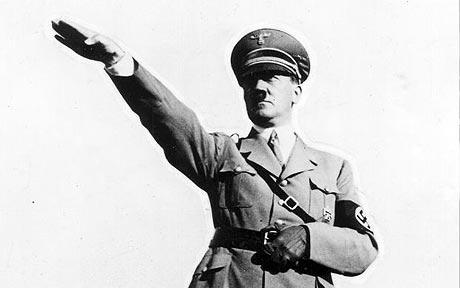
What about raising your right arm at a straight 45o angle in front of your body.  Is that associated with anything?  Remember the German Nazi salute? 


The salute is associated with terrible times.  In fact, just this Spring, one Greek soccer player has been banned from his country’s national team for life after making a Nazi salute during a game.

What about Rossini’s overture to the opera William Tell?

What picture is often associated with that music? 


How about a picture of the Lone Ranger? 


What does this song remind you of? 


http://www.hymnsite.com/lyrics/umh731.sht  Yes, “Glorious Things of Thee are Spoken.”  Shortly after World War II, an American missionary used that song in a church service in England.  Unfortunately, a British man who was visiting the missionary’s church,  stood up and stomped out. Why did he leave so abruptly? There was nothing wrong with the music in itself, because it is a great hymn of faith, but to that British man, he knew it as the German National Anthem and it was clearly associated with wickedness. 

c)      Natural Association 

There are also natural associations that we make.  For example, dark looming clouds are associated with a coming storm,

Or the symbol of a curve in the road is associated with curves in the road,


Or even a frown is associated with sadness,


They are universal symbols that convey a meaning without a word spoken.

There are some kinds of natural associations from the dynamics, tone colors, rhythms and tempos of music to help us feel a certain way.  Natural associations must fit with the context, or that kind or style of music is not used.  For example, Mendelssohn’s wedding march is not played at a football game; it is played in a church.  You will hear different kinds of music  at a tavern and the songs played in an nursery where babies are will be much different.  Again, they are universal around the world, in most cases. 

Consider the kinds of musical scores used for movies.  The scores are written to enhance the moods and emotions with a given scene regardless of the age, demographic, culture or gender of the audience.  For example,


What does this evoke?


 This is the “Star Wars” theme song.  The language used changes from country to country, but the music stays the same.  Or what about,


Sound of music.

So what does this mean?  Music by its nature is a form of communication, Music possesses some natural meanings and also conventional meanings by association.  At the heart of music is communication.  Some times the conventional association corresponds to the natural meaning like Pachelbel’s Canon in D.


The point is music communicates through symbolic associations and such association can be either conventional or natural, depending upon whether or not they correspond to something that occurs naturally in all human experience.

Now, add lyrics to a musical selection, and we have two additional layers of meaning: the obvious content of the text and the poetic “mood.” We must remember that symbolic meaning (in this case, the meaning music conveys), if it is natural, always trumps the text. This is extremely important. For instance, if I were to approach my wife with a frown, furrowed brow, and loud tone of voice (natural symbols of anger) and say to her, “I love you,” my negative tone of voice and body language would certainly overpower the positive meaning of the statement. The medium trumps the words, no matter what the words are. The same is true for music. So we must take Scripture, apply what we know to music. 

3)      Evaluate music by Scripture Eph. 4:29 

a)      There is both edifying and corrupt communication Eph. 4:29

29 Let no corrupt word proceed out of your mouth, but what is good for necessary edification, that it may impart grace to the hearers. (Eph. 4:29)

This is a great verse on communication.  The word “corrupt” means “rotten,” “causing to become foul,” or “putrid.”   Consequently, we should have lyrics that edify, not that corrupt.  Would we even want to have music that has lyrics that promote sexual immorality, impurity sensuality,…etc.?

19 Now the works of the flesh are evident, which are: adultery1, fornication, uncleanness, lewdness,
 20idolatry, sorcery, hatred, contentions, jealousies, outbursts of wrath, selfish ambitions, dissensions, heresies,
 21envy, murders1, drunkenness, revelries, and the like; of which I tell you beforehand, just as I also told you in time past, that those who practice such things will not inherit the kingdom of God. (Gal. 5:19-21) 

Lyrics that would promote sin are obviously something we wouldn’t want.  In fact, Paul becomes clear that we should be very careful to not let that be named among us.

3 But fornication and all uncleanness or covetousness, let it not even be named among you, as is fitting for saints;
 4neither filthiness, nor foolish talking, nor coarse jesting, which are not fitting, but rather giving of thanks. (Eph. 5:3-4)

God doesn’t want  things like foolish talk and crude joking. It is not even to be named among them. But are the lyrics the only thing we should judge as Christians?  Since music is a medium of communication through emotional metaphors, music can communicate the kinds of emotions that naturally represent sinful deeds.

b)     Bad association can corrupt 1 Cor. 15:33

Scripture is clear that we should avoid bad company.  Paul writes, “Do not be deceived: ‘Evil company corrupts good habits.’“(1 Cor 15:33)  If evil company corrupts, can music not corrupt? If music promotes certain kinds of emotions, is it any different than hanging around with the wrong kinds of friends?

As Christians, we are to avoid any kind of corrupt communication, this would include music that promotes a cacophony of sounds, whether by sinful lyrics or emotions of music associated with sin. Instead a Christian’s communication must be edifying. As Paul writes, “Let no corrupt word proceed out of your mouth, but what is good for necessary edification, that it may impart grace to the hearers.” (Eph. 4:29)  Christians are called to use edifying music. 

Note Paul’s desire to run to the righteous standard of God, rather than be satisfied with what is “not sinful.”  He writes, “All things are lawful for me, but not all things are helpful; all things are lawful for me, but not all things edify.”(1 Cor. 10:23)  Paul makes a distinction between what is “lawful” and what is “edifying.”  He is saying that we shouldn’t be content with what is lawful.  We shouldn’t fill our lives with what is “neutral.”  As Paul says, “…but not all things edify.”  Rather than asking the question, “What’s wrong with it?”  we should really be asking, “What’s right with it?”  What does this music communicate?

Listen to music that expresses noble affections as a way of approving what is good and “good music promotes good morals.”  So how do we make application to music from these principles?

This should cause us to realize there are two kinds of music.  There is one kind that is edifying and one that is corrupt.  This does not mean that music is black and white as we might like it to be.  Where music has liberty, there will be great choices for preference. 

 Corrupt
Edifying
Avoid at all times
Room for preference


This does not mean, as stated, music is black and white, but there is communication, and therefore music, that communicates corruption and some that edifies.  For example, a child wouldn’t eat rotten, smelling food.  They know better by their senses.  But if left to himself, what would a child eat?  He would eat what tastes good, not necessarily what IS good.  If you put a plate of mixed vegetables and a box of Long’s donuts, what would the child eat?  He’d eat the donuts far quicker than the vegetables!  They taste better to me too! The same is true for music.   

c)      Associate with what edifies 1 Cor. 10:23 

The next question is, “Is this song or style fitting for this circumstance? When I was three years old, struggling with God’s plan for my life, trying to figure out who I was going to marry in life and what I was going to do, I couldn’t sleep.  My mom would take me on her lap and sing a lullaby. I still remember her sweet, comforting voice.  I had a tough time going to sleep and her singing helped me to relax.  But how fitting is that lullaby at a basketball game?  A John Philip Sousa March is great for the military, marching or a pep band, but would it be fitting to put my granddaughter to sleep?

So when it comes to sacred music, we have to ask, “What is fitting for this occasion?”  For example, if we were to express joy, like the joy Paul talks about in Philippians 4:4, “Rejoice in the Lord always, again, I say rejoice!”  Would that be done in a flippant, care-free frivolity or would it be done with a majestic, sober, stand-tall praise?  What kind of music captures David dancing before the ark as it was entering Jerusalem?  Or what kind of music would you use for a court jester doing a little ditty?  They certainly wouldn’t be the same.  Why do we say that music is neutral?  Is it because we like certain kinds of music in the same way my taste buds would prefer to eat Long’s donuts rather than asparagus?  What music expresses or communicates what is appropriate for expressing God’s truth?

This requires that we expand the chart.  There is corrupt music that we should avoid at all times in worshipping God.  I would  say music like “Death Metal.”  Under the category of Edifying, there is music that would be “Unfitting” for worshiping God, but may be okay on another occasion. That should be avoided for that occasion of worshiping God.  Under the “Fitting” category, there is great room for preferences. 

Corrupt
Edifying
Avoid at all times
Fitting
Unfitting
Room for preferences
Avoid for this occasion


Evaluating musical style carries great importance, because it is what you are using to express biblical truth!  You are using a medium to communicate God’s Word!  We should pay particular attention to the kind of music we use to sing God’s Word.  Let me illustrate.  I treat my Bible carefully. I don’t knowingly put anything upon my Bible.  I won’t put another book on it, or even my notes on it.  I will store notes in my Bible, but not on it.  I don’t want anything to be “above” my Bible in any way.  I also never put my Bible on the floor.  My Bible is holy and precious.  I try to treat it like it is the most valuable thing I have.  I would not give a Bible to a child and let him treat it anyway he wants.  I would give a Bible to a child, even a picture Bible, but I would put parameters on how it is treated and stored so the child would learn to treat God’s word as holy. 

Let me illustrate the importance of music in another way. Let us say you are serving baked chicken.  You are having a picnic at a park and have chicken, potato salad, beans and carrots.  What would you serve it on?  You would likely use a paper plate.  That is fitting for the occasion. That is appropriate. But if you were to have Governor Pence to your home for baked chicken, would it be fitting to use paper plates at the dining table if you had dishes in the cabinet? Regardless of what you think of Governor Pence, and I have a great deal of respect, his position as governor deserves your best.

Music is like the dish for delivering the truth. We consider the music style, because we are concerned about the truth and those who hear the truth.  Therefore, we want to make sure the music is edifying and fitting.  We have to decide what is fitting for those who hear.  Ultimately we must make it fitting for our holy, sovereign and merciful God. What musical style is fitting for a time of corporate worship?

There is one more area that must be considered.  We need to consider conventional and natural associations.  Paul addressed love in 1 Corinthians 8.  Some of the Corinthian believers were bothered about eating meat, because they had come out of a cult, whereby the meat at certain meat markets had been used for worshiping idols.  Some of the excess meat, which wasn’t consumed in the idolatrous worship, was sold to the public and it happened to be good meat. This is what Paul said about that.

4 Therefore concerning the eating of things offered to idols, we know that an idol is nothing in the world, and that there is no other God but one. (1 Cor. 8:4)

For Paul, where the meat came from didn’t matter, because there is nothing to idols, so he wouldn’t make any association to idolatry and the meat. However, because some in Corinth associated the meat with idols, the association reminder would cause them to think, “Maybe there is nothing wrong with the idols,” and they would slip back into thinking about the idols and even worship them. They are what Paul described as the “weaker brother.” 

Yet by the end of the chapter, Paul says, “I’ll not eat meat if it causes my brother to stumble.”  Why  did Paul conclude that?  The meat carried a conventional association to pagan worship and the immoral activities that occurred there.  If Paul ate the meat, that would indicate to a weaker brother that Paul was endorsing the practices of pagan worship.  Paul and most believers knew better, but the weaker brother did not think the way Paul and you do.  The meat is not the problem. The problem is the conventional association.

9 But beware lest somehow this liberty of yours become a stumbling block to those who are weak.
 10 For if anyone sees you who have knowledge eating in an idol’s temple, will not the conscience of him who is weak be emboldened to eat those things offered to idols?
 11 And because of your knowledge shall the weak brother perish, for whom Christ died?
 12 But when you thus sin against the brethren, and wound their weak conscience, you sin against Christ.
 13Therefore, if food makes my brother stumble, I will never again eat meat, lest I make my brother stumble. (1 Cor. 8:9-13)

 The same is true with musical choices. That is what happened when the British chap stomped out of a missionary’s church service over the song, “Glorious things of Thee are spoken.”  If a kind of song is strongly associated with a particular sinful lifestyle then don’t use it.  Especially consider children.  What kind of music are we feeding to children?  If you give them what they like all the time, what happens if you give them healthy, wholesome music?  Will they reject it?  We need to be discerning.

Consider where spiritual maturity enters the picture. Paul, who is spiritually mature makes a clear case that he is willing to deny what he should be willing to enjoy for the sake of the gospel.  Paul notes that he has several rights in 1 Corinthians 9.  He gave up the right to financial support from most churches in 1 Corinthians 9:4.  He gave up the right to marriage in 1 Corinthians 9:5.  And, as a spiritual leader, he was supposed to make his living from leading, teaching and giving the Word to churches and pastors, so he was exempt from manual labor, but he gave up that right in 1 Corinthians 9:6.  He makes no use of any of these rights.  For some reason, receiving money from churches, taking a wife and refraining from manual labor had conventional associations that would have hindered evangelism. He was willing to give up freedoms to win some to Christ for the sake of the gospel.  He said, “…to the weak I became as1 weak, that I might win the weak. I have become all things to all men, that I might by all means save some.” (1 Cor.  9:22) 

The principle would apply to musical choices when an otherwise good song or musical style would hinder evangelistic endeavors because of some kind of conventional association.  A mark of spiritual maturity is the choice to give up a legitimate right for the sake of others.  So now the chart looks like this:

Corrupt
Edifying
 
Avoid at all times
Fitting
Unfitting
Negative Association
Positive Association
 
Avoid for this occasion
Room for preferences

 Evaluating music is important because truth is important and we are using music to convey God’s truth!  Just like the plate we use to serve a delicious meal is important for the occasion, so music selection is important for the occasion. It is up to us to discern and to determine the meaning, appropriateness, associations of songs and style and then make wise decisions about what music is chosen. This is key: God is more interested in the process of discernment than the style, because it shows we are dependent on Him.

However, someone might say, “I can’t help what I like.” “I eat junk food, but my wife fixes healthy food.  What do I do?”  My taste buds may like a certain kind of food, but I must ask , “What is best for me?”  I, and you, can learn to eat what is healthy. 

We like what we know.  We can learn something new and that becomes what we know.  If what we know is healthy, then we will change what we are eating and begin to eat more healthily. We can change what we like, by changing what we know.  Spend time with what is wholesome and your tastes can change.  In fact, we are obligated to love what God loves,

8 Finally, brethren, whatever things are true, whatever things are noble, whatever things are just, whatever things are pure, whatever things are lovely, whatever things are of good report, if there is any virtue and if there is anything praiseworthy– meditate on these things.
 9 The things which you learned and received and heard and saw in me, these do, and the God of peace will be with you. (Phil. 4:8-9)

Here’s the conclusion: 

Evaluate your music by Scripture to what is fitting for the King!


Message Based Discussion Questions

1)      What kinds of music do you like?

Digging Deeper:

2)      According to Ephesians 5:18-20, how is the Christian to be filled?  __________________  What will be the result if a Christian is filled with the Holy Spirit?  What will that look like in Church?

3)      What idea is found in both Eph. 5:20 and Rom. 1:21? ________________________  What is the contrast between the two verses?  What will be true of the believer who is filled with the Holy Spirit compared to the unbeliever who is not filled?  So, if a believer is not giving thanks, what does that say about his life?

4)      As a reference to Satan, what does Ezek. 28:12-15 say Satan was good at (cf. 28:13c)? ______________________________  How do you suppose this might have caused his fall?

Applying the message to life:

5)      If there is room for preference, how do I discern what I should not listen to in life?

6)      What are several examples of conventional associations in regard to music?  When you hear a particular song, what do you think of without hearing the lyrics?

7)      If music is like a plate that serves food, why should the plate fit the occasion?


*I am indebted to Scott Aniol for his excellent instruction a the Chafer Theological Seminary Pastor’s Conference March 4-6, 2013 in Houston, Texas at the West Houston Bible Church.  Much of the thinking and content was derived from Scott’s presentation at that conference.  His book, “Worship in Song” is an excellent resource for thinking through the issues.  I’ll have a book review on his book shortly.

Q & A: Drawing Near to God in Music

This Q & A is for the message presented on April 21, 2013 and posted April 22, 2013.  The insert is provided first, then considerations for suggestions to the questions for the “Message Based Discussion Questions.”  The purpose of this is to help with the thinking process as there is far more than could be stated and the application questions answers could be doubled in size easily.

Drawing Near to God in Music
Hebrews 10:19-25
(April 21, 2013)
 

Exodus 3:13-14; 1 Peter 1:15-16

How then should you worship?

1)      Enter boldly to worship God Heb. 10:19-21

·         2 Sam. 6:3-8
·         Heb. 7:25

2)      Draw near with full assurance of faith Heb. 10:22

·         Draw near (cf. Heb. 4:16; 7:25; 10:1, 22; 11:6; 12:22)
·         Ps. 100:2;  Heb. 12:18-22, 25-29
·         Hab. 1:13; Is. 6:5
·         Phil. 3:19
·         Heb. 11:1; 12:18-19

3)      Let Us draw near to God Heb. 10:22-25

·         Let us (cf. Heb. 4:1,11,14, 16; 6:1; 10:22,23,24; 12:1, 28; 13:13,15)

Draw Near to Jesus and you’ll worship God in music!
 

Message Based Discussion Questions

1)      What kind of music did your church (home) have when you were growing up?
Digging Deeper:
2)      Read Isaiah 6:1-8. What does Isaiah see? ___________________ How does his response teach us to respond to God in worship?  How do you relate Hebrews 10:19-25 to Isaiah 6:1-8?
3)      What are six attributes of God? ________________; ______________; ________________; __________________; _________________; ________________  How do those relate to how we worship Jesus according to Phil. 2:9-11?
4)      Who is the main subject of Romans 11:33-36?  ___________________ How does your understanding of this passage affect how you should worship God?
Making application of the message to life:
5)      What can you do to prepare during the week to draw near to God on the weekend service?
6)      How can you help others draw near to God and experience His presence?
7)      What kind of assurance should people have when they leave a worship service at Grace?


Message Based Discussion Questions 

1)      What kind of music did your church (home) have when you were growing up?

a)      Traditional hymns with a big pipe organ.  The youth used a guitar for some of the songs, especially while camping.

b)      The music in the home was very traditional, conservative, Big Band and some pop music.
 

Digging Deeper:
 

2)      Read Isaiah 6:1-8. What does Isaiah see? _The linen train of glory of Jesus Christ filling heaven___ How does his response teach us to respond to God in worship?  How do you relate Hebrews 10:19-25 to Isaiah 6:1-8?

a)      We should be in such awe of God, that we are humbled and recognize our sinful self. We should also accept that we have been purchased, so we can be considered as messengers of the Most High.  Therefore, we should be humble messengers desiring to tell others how great and awesome our God is.

b)      Isaiah expresses the holiness of God and how unworthy we are to be in His presence, while Hebrews tells us to draw near to God with full assurance of faith.  The tension needs to be there so our flesh does not become prideful, but also that I’ll enter into His presence to honor all that He has done for me.
 

3)      What are six attributes of God? _Love_; __Holiness__; _Justice_; _Truth_; ___Unchangeable__; __All-powerful__  How do those relate to how we worship Jesus according to Phil. 2:9-11?

a)      Love – I can’t help but bow my knee and confess His as Lord because of His love.

b)      Holiness – There is no one else with whom I would bow my knee or confess with my tongue, because He alone is holy.

c)      Justice – all that He does is just, therefore I would bow my knee and confess that He is Lord.  No matter what happens to me, I know He will right all things and I can praise Him.  He is Just.

d)     Truth – Everything I need to know about Him is found in His Word and therefore I would bow my knee and confess with my tongue that He is Lord.

e)      Unchangeable – He never changes, even though I do and I can trust that He will do what is right and can bow my knee and confess with my tongue at any moment and every moment.

f)       All-powerful – I will bow my knee in the fear of the Lord, for He is able to do exceedingly abundantly beyond all that I can ask or think.
 

4)      Who is the main subject of Romans 11:33-36?  __God, who knows all things and is able_ How does your understanding of this passage affect how you should worship God?

a)      His understanding is beyond my understanding, and I will worship Him.

b)      I can be so amazed at His glory and infinite wisdom, that I can passionately express my love and adoration of who and what He is and does!

c)      Peter calls it joy inexpressible (1 Pet. 1:8).
 

Making application of the message to life: 

5)      What can you do to prepare during the week to draw near to God on the weekend service?

a)      Begin on Monday to consider how to approach Him corporately with the rest of the Body at church.

b)      Find out what subject will be preached on so you can read the passage and meditate on it.

c)      Read the passage as a family to prepare the family to hear the message.

d)     Get a good night sleep on Saturday, so you will be alert and refreshed to gather and worship Him.

e)      Put out your clothes so you don’t have to spend much time making decisions on Sunday morning.

f)       Go into church early and join the prayer meeting.

g)      Join the Welcome Team and welcome people to church. 

h)      Get into the service five minutes early, so you can quiet your heart and be ready to express worship and receiving God’s Word.
 

6)      How can you help others draw near to God and experience His presence?

a)      Do the things from above.

b)      Welcome people to church.

c)      Invite neighbors to come to service.

d)     Ask the upper room people or pastoral staff if there is anything that can be done to help in support of the morning.

e)      Be in service five minutes early as an example to others.

f)       Be dressed and have body language that you’re excited to be at church waiting for God to receive your worship.

g)      Encourage young parents with help to get their children in the door and to their classes.

h)      Teach in the children’s ministry, so young parents can be refreshed in the service.

i)        Talk to others about what God made you think about regarding the message.

j)        Help others see how you are drawing near to God and the intimacy you enjoy with God.
 

7)      What kind of assurance should people have when they leave a worship service at Grace?

a)      That the service was true to God’s Word.

b)      That the truth was proclaimed.

c)      That they had an opportunity to gather with the rest of the Body to worship God.

d)     That they can leave knowing they can return to rejoin the Body next week.

e)      That they can leave knowing they can put into application what they learned.

f)       That the body gathered to worship God, not have their ears tickled.

g)      That the Spirit is moving to create unity in the body.

h)      That the worship service is the place to be.


MSG: Drawing Near to God in Music

This message was presented on April 21, 2013 as the third part of four message on music and worship.

Drawing Near to God in Music
Hebrews 10:19-25 

What is at the heart of music in worship?  There are authors on all ends of the music spectrum.  Some say because Scripture is not clear in regard to music, it doesn’t matter what we do.  Others are far more rigid and say that we must choose from within a small spectrum of music to be holy before God. What is the answer? Worship is, after all, not about us, but all for God. Worship is about God.  Let me give an example.

When God called Moses to lead Israel out of Egypt, God called them to worship on that mountain where Moses was. Moses questioned God, “Indeed, when I come to the children of Israel and say to them, ‘The God of your fathers has sent me to you,’ and they say to me, ‘What is His name?’ what shall I say to them? God said to Moses, “I AM WHO I AM.” And he said, “Say this to the people of Israel, ‘I AM has sent me to you.'” (Ex. 3:13-14) Worship is all about God, who was, is and will be.  Then we read in 1 Peter 1:15,16, “He who called you is holy, you also be holy in all your conduct, 16 because it is written, “Be holy, for I am holy.” (1 Pet. 1:15-16)  God is the eternally existent One, the holy One, and we are to be holy, i.e. set aside, for Him.  How then should you worship?

1)      Enter boldly to worship God Heb. 10:19-21 

19 Therefore, brethren, having boldness to enter the Holiest by the blood of Jesus,
 20 by a new and living way which He consecrated for us, through the veil, that is, His flesh,
 21 and having a High Priest over the house of God, (Heb. 10:19-21)

We note in Hebrews 10:19 that we have access to God and we are to enter boldly into His presence.  But how do we enter boldly, when we are sinful? That boldness is based on His work on the cross, not anything we can do or become.

In Israel’s time, the outer tent kept people away from the Holy of Holies.  God is holy and people must approach Him in a reverent, holy way.  People were not to approach God casually. There was one access to get into the tabernacle complex and then the Holy place where the Menorah or Golden Lampstand sustained burning oil for light, the Table of Shewbread and the altar of incense.  Through the veil was the Holy of Holies, where the high priest entered only once each year to sprinkle blood on the mercy seat.  When Solomon constructed the temple, the layout was similar, only more permanent. 

No Jew would consider entering into the Holy of Holies, the presence of God, except for the high priest annually. Why?  They remembered what happened to Uzzah. Do you remember Uzzah? David was anointed king and had defeated the Philistines, so he sought to bring the Ark of the Covenant to Jerusalem.  They went to Abinadab’s house where it was kept and they placed it on a new cart. Unfortunately, when the oxen stumbled on the road, the Ark began to fall from the cart and Uzzah reached out to steady the ark.  Note God’s action,

3 So they set the ark of God on a new cart, and brought it out of the house of Abinadab, which was on the hill; and Uzzah and Ahio, the sons of Abinadab, drove the new cart.
 4 And they brought it out of the house of Abinadab, which was on the hill, accompanying the ark of God; and Ahio went before the ark.
 5 Then David and all the house of Israel played music before the LORD on all kinds of instruments of fir wood, on harps, on stringed instruments, on tambourines, on sistrums, and on cymbals.
 6 And when they came to Nachon’s threshing floor, Uzzah put out his hand to the ark of God and took hold of it, for the oxen stumbled.
 7 Then the anger of the LORD was aroused against Uzzah, and God struck him there for his error; and he died there by the ark of God.
 8 And David became angry because of the LORD’S outbreak against Uzzah; and he called the name of the place Perez Uzzah1 to this day. (2 Sam. 6:3-8)

Uzzah did what he thought was right, but Israel had violated God’s directions on moving the Ark (Ex. 25:14).   God directed the Ark to be carried, not riding on an cart.  God’s word must be treated holy and obeyed.  Why? God is holy.  Israel gained a fear of the presence of God.  Too often today, many Christians have little fear of the presence of God.

In Hebrews 10:20, the word “new” is prosphatos, which means “lately slaughtered,” or “freshly killed.”  Christ’s sacrifice was 40 years before, but it was recent in their memories. Christ’s sacrifice was a totally new type of sacrifice that removed the veil between God and man.  We can approach God, because of what Jesus had done.  Before, men trembled before God and kept their distance.  Now God invites believers to enter boldly.  It’s almost incomprehensible how fantastic what Jesus had done!

In Hebrews 10:21, Jesus is that high priest who made the way possible for us all.  In the Old Testament, only the high priest could draw near to God and enter only once each year.  It was an anxious moment, because no one knew if the high priest would come out of the Holy of Holies. The new access is through Jesus.  The writer to the Hebrews wrote, “Therefore He is also able to save to the uttermost those who come to God through Him, since He always lives to make intercession for them.” (Heb. 7:25)

That leaves us several questions. Are we to pattern our worship services for believers or unbelievers?  Worship is about God.  Worship is not about unbelievers, it’s about God.  We need to have an evangelistic appeal, but is that the priority in worship?  Have we made everything so casual to help unbelievers fit in so that we have lost awareness of the holy?  The worship service is not a show, but a drawing near to God, the holy One. It is not entertainment, but a drawing near to the sovereign One. It is not a pay for view, but our expression to God.

We should not only enter boldly to worship God, but we should also draw near with full assurance of faith.  

2)      Draw near with full assurance of faith Heb. 10:22 

22 let us draw near with a true heart in full assurance of faith, having our hearts sprinkled from an evil conscience and our bodies washed with pure water. (Heb. 10:22) 

The writer beckons us, “Let us draw near,” not to a physical location, but to a spiritual connection with God through the spiritual presence of Jesus Christ by faith.  The specific verb “draw near” in Hebrews 10:22, is also found in Hebrews 4:16; 7:25; 10:1, 22; 11:6; 12:22, and translated, “let us come” or “draw near.” Will you today?  Will you accept what God has done for you?  What does it mean to draw near?

One of the concepts of “draw near” means we’ll sing, “Serve the LORD with gladness; Come before His presence with singing.” (Ps. 100:2). It is not a “casual walk by.”  Note the transition from the tangible form of worship to the spiritual emphasis in Hebrews 12,

18 For you have not come to the mountain that  may be touched and that burned with fire, and to blackness and darkness and tempest,
 19 and the sound of a trumpet and the voice of words, so that those who heard it begged that the word should not be spoken to them anymore.
 20 (For they could not endure what was commanded: “And if so much as a beast touches the mountain, it shall be stoned  or shot with an arrow.”
 21 And so terrifying was the sight that Moses said, “I am exceedingly afraid and trembling.”)
 22 But you have come to Mount Zion and to the city of the living God, the heavenly Jerusalem, to an innumerable company of angels, (Heb. 12:18-22)

Note that the emphasis is not on the physical senses of touching or  hearing.  God wants us to relate with Him in Spirit and Truth. And the writer continues in Hebrews 12:25,

25 See that you do not refuse Him who speaks. For if they did not escape who refused Him who spoke on earth, much more shall we not escape if we turn away from Him who speaks from heaven,
 26 whose voice then shook the earth; but now He has promised, saying, “Yet once more I shake  not only the earth, but also heaven.”
 27 Now this, “Yet once more,” indicates the removal of those things that are being shaken, as of things that are made, that the things which cannot be shaken may remain.
 28 Therefore, since we are receiving a kingdom which cannot be shaken, let us have grace, by which we may serve God acceptably with reverence and godly fear.
 29 For our God is a consuming fire. (Heb. 12:25-29)

God calls us to draw near, but we don’t go to God on our own initiative or our own way. We must put on a “true” heart.  The word “true” here means “real,” “genuine,” or “sincere.” When I served in the military, the commander determined the uniform.  Even in the field, he determined if it was garrison cap or Kevlar helmet for headgear.  We wore what he directed.  We didn’t have any other options to incorporate our own ideas, like, purple bandanas. God calls us near.  We draw near with a true heart.  Why?

I can’t draw near because of my sin.  I have no right to draw near.  God cannot look upon sin. Habakkuk declared, “You cannot look upon wickedness.”(Hab. 1:13)  Isaiah recognized his unworthiness before holy God when he saw the Lord in heaven. “5 So I said: “Woe is me, for I am undone! Because I am a man of unclean lips, And I dwell in the midst of a people of unclean lips; For my eyes have seen the King, The LORD of hosts.” (Is. 6:5)

How do you draw near to God with a true heart, in Spirit and Truth, when we are physical beings? We want something tangible, something our senses can “sense,” especially something we can feel. Then we can say, “That’s worship.”  And if we don’t feel “worship,” sometimes we begin to question if we have really drawn near in worship?  If I don’t have a certain kind of stimulating music, will I begin to question my experience by means of my physical senses? 

Certainly experience and feelings are good. Certainly I will experience and have some kinds of emotions in worship. The question is, “Are they the measure of worship?”  Paul said to the Philippians that the carnal types, those who relied on the flesh, those who were not filled with the Spirit, worshiped their belly, “whose end is destruction, whose god is their belly” (Phil. 3:19). In the ancient world, they called the belly the seat of emotions.

We can move emotions from the outside in.  For example, it is similar to a tickling stimulation, where laughter results from an outside influence. When I was a boy, my dad could let out a terrific roar when we were in the dark and scared us half to death.  That was an outside stimulus. 

Certain church movements have stretched the limits bycreating music that stimulates the emotions, and people often think that this is “worship.”  They teach that the external, physical signs accompany “true, spiritual” experiences.  So they stimulate through music to create that “physical sense of worship.”  Hence the church often has a longing or temptation to create worship that people can feel, experience and touch.  That is natural for people, who live by their senses.  However, it does not indicate true worship. It may be like what Cain offered and was not accepted by God. God also did not accept the worship of the Samaritans, because they had their own ideas about worship.  If we engage in music that stimulates physical responses, we expect that kind of experience from all music in worship and may get disappointed if we don’t get it.  We begin to depend on the physical experience rather than a spiritual relationship with God.

The writer exhorts that we draw near in “assurance” or certainty of being sprinkled pure by the blood of Jesus by faith.  The writer to Hebrews wrote, “Now faith is the substance of things hoped for, the evidence of things not seen. (Heb. 11:1)  Faith is what you cannot see, feel, taste, touch or hear. There is no material basis for faith. There is no physical evidence, no experience and no feeling that tells you worship is pure.  It is by faith, or dependence upon God’s character of holiness and mercy.

Note that emphasis in Hebrews 12:18-19 that is no longer on the physical or tangible,

18 For you have not come to the mountain that  may be touched and that burned with fire, and to blackness and darkness2 and tempest,
 19 and the sound of a trumpet and the voice of words, so that those who heard it begged that the word should not be spoken to them anymore. (Heb. 12:18-19)

Old Testament worship was tangible. They could see the gold, fine linen garments and sacrifices.  They could touch the animal before its throat was slit, hear the silence when the sacrifice was killed and smell the sacrifice as it was offered.  Everything was physical and tangible.

When I was in boot camp, I was away from my wife for seven weeks.  I did have a picture of her, but I couldn’t touch her hand, smell her fragrance, hear her voice, taste her good food, or look at her beauty, but I had full assurance of her faithfulness.  I enjoyed a relationship with her because of all the letters she wrote, steamy as they were!

Finally, the writer insists that the assurance is by “faith.” There is everything right with experience and feelings.  However, to require them in order to describe worship, you cross what God has defined as worship and practice legalism, or as Paul said, “God is their belly.”  We worship by faith, not by sight or senses or feelings.  In fact, true worship is demeaned, or cheapened, when it is moved by manipulative music.  Should you be afraid of moving or clapping?  Not at all.  That may be a godly response of worship, but that does not measure worship.  David danced before the Lord, but that does not measure worship.  We worship by drawing near to Jesus Christ with full assurance by faith.

Let us summarize the tension of worship with two illustrations.  First, this illustration of Noah’s Ark:

[The picture would not transfer. It is a picture of Noah’s Ark for pre-school with two animals of each kind sitting on the Ark.]


What does this picture communicate?  There was an Ark and there were two of each kind of animal on the Ark.  That explains how God repopulated the earth after the flood.  Everything is nice, clean, fun and it explains an aspect of the Genesis narrative, especially for children. 

However, does it really explain the flood in Genesis?  What is the emphasis with the flood? Consider this picture.


[The picture would not transfer.  It is a picture of people clinging to a rock surrounded by a storm and waves crashing against them with the Ark in the distance]


This also has the Ark, but no animals.  What it does portray is the destruction of the people, because of the judgment of God.  Which is more realistic?  Should not our worship be true to who God is rather than what we want?  Do we want to have worship focused on us and be like children or focus it on God?

How should we worship?  We should enter with boldness to worship Him and draw near with full assurance by faith.  We should also emphasize the last part of this passage and the emphasis of this passage. 

3)      Let Us draw near to God Heb. 10:22-25 

This last portion of the passage helps us understand that worship is about the body of Christ worshiping together, not as individuals,

22 let us draw near with a true heart in full assurance of faith, having our hearts sprinkled from an evil conscience and our bodies washed with pure water.
 23 Let us hold fast the confession of our hope without wavering, for He who promised is faithful.
 24 And let us consider one another in order to stir up love and good works,
 25 not forsaking the assembling of ourselves together, as is the manner of some, but exhorting one another, and so much the more as you see the Day approaching. (Heb. 10:22-25)

The writer may have been a a gardener, for twelve times in Hebrews we have “Let us” exhortations (cf. Heb. 4:1,11,14,16; 6:1; 10:22,23,24; 12:1, 28; 13:13,15. The exhortations admonish us to draw together as one body.  Worship is about the corporate body, not the individual.  The writer exhorts us to draw near, hold fast and consider one another.  We’ve looked at the exhortation to draw near. There are two additional exhortations.

We are to hold fast our confession.  Our confession is Jesus Christ is Lord (Rom. 10:9-10).  Jesus will draw us together in unity of purpose in relationship with the Godhead (John 17:20-23). Additionally, we are to consider one another to stir up love and good works.  As the spiritual forces seek to divide, isolate and conquer Christians, we must “consider one another,” which phrase means to “concentrate on one another” to determine how best to “stir up” or provoke to love and good works.  The word “love” refers to thinking more highly of others than self and the word “good” refers to the intrinsic value of the works, which can only be accomplished by the filling of the Holy Spirit.  When the Holy Spirit does the work through the individual, then it has intrinsic value and is “good.” (1 Cor. 3:12)

As the body considers others more important than self, then worship will be about God rather than self.  When worship is about God, then there will be a crescendo of singing!
 

Draw Near to Jesus and you’ll worship God in music!


Message Based Discussion Questions

1)      What kind of music did your church (home) have when you were growing up?

Digging Deeper:

2)      Read Isaiah 6:1-8. What does Isaiah see? ___________________  How does his response teach us how we should approach God in worship?  How do you relate Hebrews 10:10-25 to Isaiah 6:1-8?

3)      What are six attributes of God? ________________; ______________; ________________; __________________; _________________; ________________   How does that relate to how we relate to God according to Phil. 2:9-11?

4)      Who is the main subject of Romans 11:33-36?  ___________________  How does your understanding of this passage affect how you should worship God?

Making application of the message to life:

5)      What can you do to prepare during the week to draw near to God on the weekend service?

6)      How can you help others draw near to God and experience His presence?

7)      What kind of assurance should people have when they leave a worship service at Grace?

Q & A: Choose Music Wisely for Holy Worship

This is provided for the Message Based Discussion Questions from the message presented on April 7, 2013.  Below is a copy of the message insert and listing of questions, with considerations for answers given after the entire insert.  This is only a guide and not designed to be a complete set of answers.  The questions are designed to assist in the thought process.  The real work is allowing God the Holy Spirit work in the heart for transformation.

Choose Music Wisely for Holy Worship
John 4:19-24           

What is worship and how does music affect worship?  

1)      Worship is declaring God’s worth  John 4:19-24
          a)      We worship in Truth Rom. 15:13-14
        ·         We worship God alone  Is. 45:18, 22; Phil. 2:9-11
        ·         God has given us elements for worship: Scripture reading (1 Tim. 4:13); preaching
                   (2 Tim. 4:2-4); singing (Eph. 5:19-20; Col.. 3:16); prayer 1 Tim. 2:1, the ordinances of
                   baptism and the Lord’s Supper (Acts 2:41-42) and giving (2 Cor. 16:2)    
          b)       We worship in Spirit
          c)       We worship the Lord
2)       Music will rightly or wrongly move you – is it worship? 
          a)       Scripture identifies many kinds of songs:
          ·         Work Num. 21:17-18; War Ex. 15:20; Love Sol 2:12; Entertainment Job 21:12; Lament
                     Job 30:31; Praise Ps. 150
          b)       Music often causes you to respond OR react in certain ways
          c)       Music helps us express right affections toward the Lord

           ·         Music educates and guides our emotions Acts 16:23-25
           ·         Music is a part of worship under pastoral leadership  Heb. 13:17
           ·         Singing is not optional   Eph. 5:18-19
           ·         Use music that expresses appropriate emotions 1 Cor. 14:40  
           ·         Musical choices matter, because music shapes our affections 1 Sam. 16:23


Worship is declaring God’s worth!
Wisely choose your music, because it affects how you worship!


Message Based Discussion Questions
(See below for suggested answers)

1)       What were some of the first religious songs you ever sang?
Digging Deeper:
2)      Read John 8:31-36.  What did Jesus say the truth would do? _____________  Why did the Jews
          not see their slavery?  Can a person be enslaved to a certain kind of music?  What biblical
          principles can you think of to help determine what kind of music is edifying? 
3)      Read Gal. 5:1; 3:1-3. According to Paul, what is the contrast between these two passages?
          ________________________________  What is the purpose of the Law in American?  What is
         the purpose of the Mosaic Law?  How can someone get enslaved to the Mosaic Law?  How can
         someone get enslaved to laws in worship?
4)       According to Gal. 5:13, what was Paul concerned about with liberty?
          ________________________________ How should a Christian use liberty?  What does that
          look like in worship?
Making application of the message to life:
5)      Based on the message, why is music good? How does it help you?
6)      How can you ensure you are worshiping in Spirit and in Truth?
7)      How can you help in corporate worship at Grace?  What specific things can you do?


Component
Discipline
Proper Use
Sinful Use
Chemical Elements
Chemistry
Vaccine
Poison
Colors/light
Art
Michelangelo
Pornography
Spoken letters
Speech
Bible teaching
Lying, slander
Written letters
Composition
Music lyrics
C.S. Lewis, “Messiah”
Moral filth
Gangsta Rap
Sound waves
Music
Refreshing the spirit and body
Stimulating lust Instant gratification


Message Based Discussion Questions 

1)      What were some of the first religious songs you ever sang?

           a)      One of the first songs was “This is my Father’s World.”
           b)      I also learned “Jesus loves me, this I know.” 

Digging Deeper: 

2)      Read John 8:31-36.  What did Jesus say the truth would do? __set me free_  Why did the Jews
          not see their slavery?  Can a person be enslaved to a certain kind of music?  What biblical
          principles can you think of to help determine what kind of music is edifying? 

a)      They were focused on their rituals as a list of things to do and by doing them, they thought God
         would be pleased.  They were more interested in the act, rather than the relationship.

          i)        They saw physical slavery in the Roman Empire and didn’t see their spiritual slavery to
                     sin.
          ii)      As long as they could not do temporal or physical things, they focused on those rather
                    than on the spiritual bondage to the Mosaic Law or their traditions.

b)      A person can be enslaved to a certain kind of music in several ways:

          i)       They may have their list of acceptable forms of music.
          ii)      They may restrict themselves from forms they consider unacceptable.
          iii)    They say music must be done in a certain way (often what they grew up with or were
                   used to hearing)

c)      Scripture is not clear on the kind of music God considers edifying, however, it does say that
         communication must be edifying and not corruptible.  Does the music corrupt or edify?  Does it
         enslave a person, or does it set them free?  What are  the results or what is produced from the
         “form” of music?

3)      Read Gal. 5:1; 3:1-3. According to Paul, what is the contrast between these two passages? __Be
          set free ( do not be enslaved) vs. why do you think that you can do it on your own__  What is
          the purpose of the Law in American?  What is the purpose of the Mosaic Law?  How can
          someone get enslaved to the Mosaic Law?  How can someone get enslaved to laws in worship?

          a)      The purpose of the law in America is to provide stability for the country, protect the
                   people from within and without and ensure people have equal opportunities to pursue life.

          b)      The Mosaic Law was to provide stability in Israel, protect the people from within and
                    provide a way for the people to worship God.  The Law also demonstrated that people
                    could not keep the Law and would need a Savior to deliver them.

          c)      People were enslaved to the Mosaic Law by thinking overt obedience to the Law put a
                   person in good standing with God.  They thought by keeping the Law, God would give
                   them eternal life.

          d)      People can get enslaved to laws in worship by legalism or saying music must be done a
                   particular way.  They do not leave room for flexibility or preference. They also become
                   enslaved by restricting themselves to one form of worship.


4)      According to Gal. 5:13, what was Paul concerned about with liberty? _not using liberty in
         Christ for personal use______ How should a Christian use liberty?  What does that look like in
         worship?

         a)      A Christian should use liberty to worship God

                   i)        Use liberty to serve others.
                   ii)      Use liberty to reach others with the gospel.
                   iii)    Use liberty to worship together in different cultures.

          b)      Liberty in worship looks like a variety of different worship forms, but all expressing
                   dependence and enjoyment in the presence of God.

                    i)       Liberty is freedom from legalism or oppression.
                    ii)      Liberty is willingness to worship with people who are different than you or
                             worship in a different way. 

Making application of the message to life: 

5)      Based on the message, why is music good? How does it help you?

          a)      Music is good because it is a mechanism to speak the truth.  It allows the Spirit to work
                   through us. 
          b)      It helps because it touches the emotions of life and assists in expressing passion toward
                   God in the same way that romance expresses passion in marriage.
           c)      Music is something many people can enjoy doing together. It is something people can do
                    repetitively. 

6)      How can you ensure you are worshiping in Spirit and in Truth?

             a)      I must have confessed my sins to God and be dependent on the Holy Spirit.(1 John 1:9)
             b)      I must have a repentant heart. (2 Cor. 7:9-11)
             c)      I must not have any idols of the heart, but be filled with the Spirit. (Eph. 5:18)
             d)      I can support the lyrics and practices by the guidelines of the Scripture (1 Pet. 1:15-16).
             e)      I am humbly dependent on God loving Him with all my heart, soul and mind (John
                       5:19, 30).


7)      How can you help in corporate worship at Grace?  What specific things can you do?

            a)      Participate in instrumental or singing teams.
            b)      Offer to help in the upper room.
            c)      Offer to help with stage help or music assistants.
            d)      Make a joyful noise with the congregation.
            e)      Tell the music team they did a great job, if they did.
            f)       Encourage people to participate with their musical abilities.
            g)      Be early and prepare your heart to worship the Lord.